Anterior Pelvic Tilt and Hip Flexor Treatment Oakville

Our Oakville Chiropractic and Physiotherapy clinic has been treating hip flexor pain and anterior pelvic tilt for 20 years. We understand the underlying causes of tight hip flexors and how to effectively correct the psoas muscle and pelvic tilt, helping you move better and live pain-free. Our goal is to address the root cause of your anterior pelvic tilt discomfort and guide you back to your normal routine with expert care.

With over 40 years of combined experience, our hip flexor specialists use evidence-based protocols and proven techniques to diagnose and treat psoas and hip flexor issues. Whether your pain stems from poor posture, muscle imbalances, or overuse, we provide personalized treatment plans tailored to your needs.

Both our chiropractors and physiotherapists focus on shockwave therapy for hip flexor tightness and correcting anterior pelvic tilt.

If your hip flexor pain symptoms are related to a workplace injury, learn how to start a WSIB claim and access approved treatment in Oakville.

Book an appointment

IFC treatment being used to treat patient's PSOAS pain

What is Anterior Pelvic Tilt?

Anterior pelvic tilt happens when your hips tip forward — kind of like your body is stuck in a mini “lean forward” position. When that happens, it can cause low back pain, stiffness, or even tingling down the leg. You might notice it after sitting at your desk too long… or even while walking your dog around the block.

With more screen time and less movement these days, tight hip flexors are becoming very common at our Oakville clinic. When those muscles — especially the psoas — tighten up, they pull the spine and pelvis out of balance. This often stresses the SI joint, and in many cases creates an inferior SI joint dysfunction, which needs to be adjusted differently than a typical superior SI issue.

The good news? This is very treatable — when it’s diagnosed properly. Many patients are told they simply have “low back pain,” but the real driver is anterior pelvic tilt combined with tight hip flexors and a specific inferior SI joint problem.

Correct the imbalance. Release the tight muscles. Restore proper SI joint motion.
That’s how you get lasting results.

Book an appointment

Hip Flexor and Psoas Anatomy Video

What Our Patients Are saying

  • My husband and I have been attending the Nottinghill Family Wellness Centre for almost a year now, and we are so pleased. Dr. Jenn is consistently professional, caring and helpful to both of us for our physio well-being. She is a brightness to our day every time we visit. The... read more

    Elle S Avatar Elle S
    February 13, 2025

    so good!!! the people are lovely and the service is so effective! felt results after session one!

    lilly montelongo Avatar lilly montelongo
    August 7, 2024

    Awesome experience. Very welcoming and always left feeling rejuvenated

    John Stones Avatar John Stones
    July 7, 2024
  • As a dance instructor, I was suffering from severe pain in my calves and tendons in my legs. Dr. Steve is a true expert in his field. After just one session, I noticed a significant improvement in my pain. I immediately received additional information on how to improve my leg.... read more

    cesar gonzalez Avatar cesar gonzalez
    September 7, 2024

    Dr Jenn is great! Love her holistic approach! Not only does she do chiropractic work but also adds physio and acupuncture as needed. She has immensely helped with my back pain. She definitely has a healing touch The centre’s prices are also affordable in comparison to other places in... read more

    Nida Siddiqui Avatar Nida Siddiqui
    December 7, 2024

    Very helpful team. Physiotherapist Vinaya has now helping me on 2 different inquiries and RMT Jessica helps remove the aches, pains and stress

    Mark Silva Avatar Mark Silva
    December 17, 2024
  • Great clinic. Pain free after few visits.

    Mario M Avatar Mario M
    February 6, 2025

    Dr Steve and his staff are amazing. Love his high energy and enthusiasm. Have seen several Dr’s for my shoulder injury and Dr Steve is the only one that has fully explained what’s going on that made sense. Only had a few treatments but already noticing an improvement. Front desk... read more

    Steve & Angela Pinder Avatar Steve & Angela Pinder
    October 7, 2024

    Love Dr. Steve and the staff. Everyone is great and helpful and efficient and you don’t feel rushed or just a number. They take time to listen to you. Laura (the one with the kind eyes) is just the best. She explains the machines really well and is easy to... read more

    Kiran Chauhan Avatar Kiran Chauhan
    July 7, 2024

Hip Flexor and Anterior Pelvic Tilt Treatment:

At our Oakville Chiropractic and Physiotherapy clinic we treat anterior pelvic tilt in many ways.


Hip Flexor and Psoas Treatment

5 Steps in Treating Anterior Pelvic Tilt and Hip Flexor

1. Interferential Current (IFC)Therapy

IFC is an evidence-based form of electrical stimulation that our skilled, qualified healthcare professionals use to relieve pain and accelerate healing. During your session, soft silicone suction cups are placed on the skin over the injured area. These cups deliver two gentle electrical currents that cross beneath the surface, making your muscles contract and relax in a smooth, rhythmic pattern.

You may notice a slight twitch or “jump” in the muscle and hear a buzzing sound, but most people describe the feeling as comfortable—even soothing—rather than painful. The controlled contractions increase local blood flow, flush out inflammatory waste products, and bring fresh oxygen and nutrients to the tissues. Backed by solid scientific research, IFC is a personalized treatment plan that helps to optimize recovery from sprains, strains, tendonitis, and many other muscle or joint conditions.

IFC treatment being used to treat patient's PSOAS pain


2. Shockwave Therapy for Anterior Pelvic Tilt and Hip Flexor

As part of our evidence-based and comprehensive approach to pain relief and mobility restoration, we use Shockwave Therapy to target deep muscle dysfunction—especially in hard-to-reach areas like the psoas and hip flexors.

Shockwave Therapy is a non-invasive treatment that uses high-energy sound waves to stimulate healing deep within the muscle and tendon tissues. It breaks up scar tissue, improves circulation, and helps your body repair itself faster. For hip flexors and the psoas muscle—common culprits in lower back pain, hip stiffness, and postural issues—shockwave therapy is especially effective. These muscles are deep in the body, making them hard to treat with standard massage or stretching. But shockwave can penetrate deep without needles or surgery, delivering relief right where it’s needed.

Shockwave therapy is a personalized treatment plan that’s backed by science, delivered by skilled professionals, and designed to help you move better, faster.

Book an appointment

shockwave device being used on female patients hip flexor with ultrasound gel.


3. Instrument Assisted Soft Tissue Release:

At our clinic, Instrument-Assisted Soft Tissue Release (IASTR)—commonly referred to as “scraping”—is an advanced technique used by our chiropractors to treat chronic muscle tension, scar tissue buildup, and inflammation. It involves using specially designed tools to gently but effectively glide across the skin over affected muscles and soft tissue. This motion helps break down adhesions, stimulate blood flow, and promote the body’s natural healing response.

While scraping may cause some temporary discomfort—especially in areas with a lot of scar tissue or tension—many patients report immediate relief and improved flexibility right after treatment. It’s one of those “hurts-so-good” therapies that delivers fast, noticeable results.

This technique is especially useful when treating deep or stubborn issues like tight hip flexors, psoas muscle dysfunction, or chronic low back pain. When combined with shockwave therapy or percussion therapy, scraping helps release restrictions in muscle fibers, increase your range of motion, and reduce inflammation in areas that are hard to target with hands-on therapy alone.

Think of it as a scientific, evidence-based upgrade to traditional deep tissue massage—used by professionals to help you move, feel, and heal better. Whether you’re dealing with sports injuries, posture-related tension, or chronic stiffness, scraping is an effective part of a personalized treatment plan designed to get you back to living pain-free.

graston tool, like metal scraper being pressed against female patients thigh


4. Active Release Therapy for Tight Hip Flexors and Anterior Pelvic Tilt

Both our chiropractic and physiotherapy teams use a strategic combination of Trigger Point Therapy and Active Release Therapy (ART) to treat tight hip flexors and the muscle imbalances associated with anterior pelvic tilt.

Trigger point therapy involves applying precise, sustained pressure to tight “knots” within a muscle. These knots restrict blood flow, limit movement, and can refer pain into the low back, hip, or even down the leg. By releasing these areas, we help restore normal muscle tone and reduce tension pulling on the pelvis.

ART takes this a step further. While applying specific tension to the muscle, the practitioner moves the joint to actively shorten and lengthen the tissue. This helps break up adhesions, improve glide between muscle layers, and restore proper movement patterns. It’s controlled, targeted, and highly effective for stubborn hip flexor tightness.

Dr. Steve finds that combining ART and trigger point therapy produces the best results for anterior pelvic tilt. In most cases, ART is performed on the psoas and quadratus lumborum (QL) muscles — two key drivers of pelvic imbalance. Trigger point therapy is often applied to the glutes and deep hip rotator muscles, which commonly become weak, inhibited, or overworked in compensation.

When you release the tight structures and re-activate the right muscles, the pelvis can finally return to a more neutral position — and that’s when patients truly start to feel the difference.
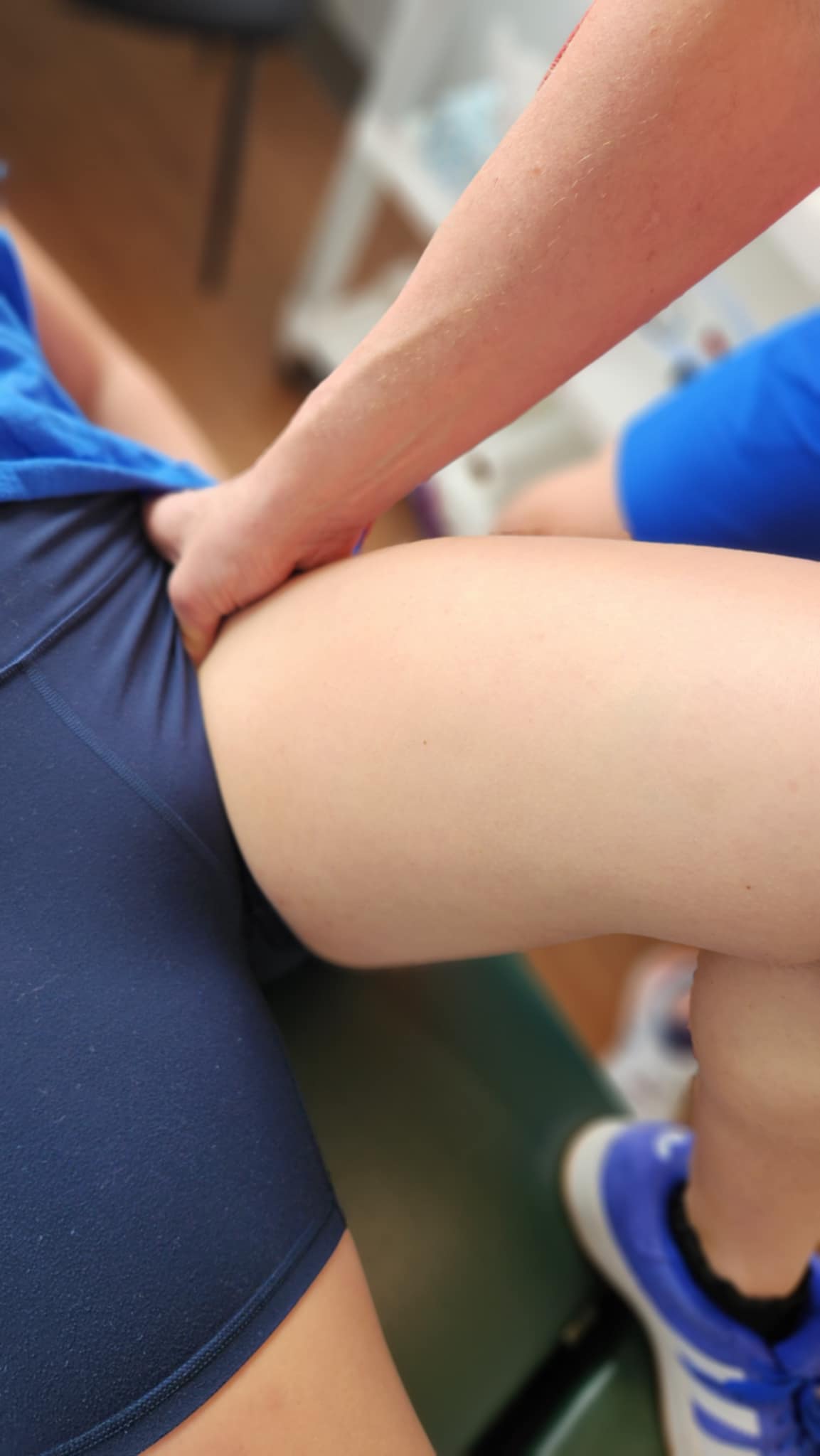
Female patients, lying on her back, therapist has thumb pressed deep into the front of her hip flexor just to the lateral side of the groin


5. Chiropractic Spinal Adjustments:

Also known as spinal manipulation, this treatment helps restore proper motion to restricted joints. When you hear that small crack or popping sound, it’s simply gas releasing from the joint — and it often brings immediate relief. By improving joint movement, we help relax the surrounding muscles, reduce pressure, and ease pain and tightness.

If you’ve seen Dr. Steve draw his famous hip-flexor and low back diagram in the clinic, you know there are multiple factors involved. The truth is, pain rarely comes from just one structure. Rather than guessing at a single cause, Dr. Steve addresses all the likely contributors. This comprehensive approach often produces faster, longer-lasting results than focusing only on tight hip flexors.

Treatment commonly includes adjusting the lumbar spine and lower thoracic spine to help patients stand taller and improve the angle of an anteriorly tilted pelvis. In many cases, there is also an inferior SI joint dysfunction on the tighter hip flexor side. That joint requires a slightly different, specific chiropractic adjustment to restore proper motion and balance.

Book an appointment

male chiropractor adjusting a female patients low back


Acupuncture for Anterior Pelvic Tilt:

This is when a tiny needle is put into your skin where the affected muscles are. The needle will be placed there for about 12 minutes and will loosen up the muscle and promote new blood to flow to the area. Bright side is you don’t even know it is there!

Book an appointment

3 acupuncture needles in a female patients upper thigh.


What Causes Anterior Pelvic Tilt?

Anterior pelvic tilt is caused by a tight muscle called the psoas, which is a deep muscle found in your low back. When this muscle gets tight it pulls your pelvis forward causing the tilt. This muscle can get tight by many reasons but the most common reason is sitting for prolonged periods of time without a break. That is why Dr. Steve recommends taking breaks during your work day and walk around. His favorite prescription for tight hip flexors is getting up every 30 minutes and doing 10 deep squats!

Learn more about the psoas muscle

Symptoms of a Tight Hip Flexor

Some frequent symptoms of psoas pain are lower back pain (which can feel quite severe), pain in the front of the hips, pain with coughing or sneezing and difficulty with transitions (for example – sitting to standing or turning over in bed).

Pain from a psoas/hip flexor injury may also be felt in the front of the hip or top of the thigh. Pain may even radiate down into the quad. Pain may be felt with activities like climbing the stairs, lifting the leg and sitting for extended periods of time.

Are you looking for Oakville Physiotherapy for your anterior pelvic tilt? Check out Vinaya our Physiotherapist and book today!

If you think this muscle may be causing some of your pain, come let Dr. Steve or Dr. Jenn sort it out for you!

Book an appointment

Dr. Steve treating patient for tight hip flexor

Exercises for Anterior Pelvic Tilt and Psoas Injury:


Video on Anterior Pelvic Tilt Stretches

There are home stretches that are can help reduce some of the muscle tension. When stretching, you should feel the pull in the front of the thigh/groin area. It is important that the stretches are held for 30 seconds. It is ok if the stretch is uncomfortable, but it should not be excruciatingly painful.


Here are some chiropractic approved hip flexor and quad stretches!


The most basic hip flexor stretch!

A person showing exercise steps for PSOAS A person showing exercise steps for PSOAS


Psoas and Anterior Pelvic Tilt FAQs