Content Reviewed By: Dr. Steve Knighton, B.Sc., D.C. on October 16, 2026
Chiropractic License Number: 5580
Thoracic Outlet Syndrome Treatment Oakville
Dr. Steve Knighton has been assessing and treating patients with Thoracic Outlet Syndrome for almost 20 years. Over that time, one thing has become very clear: not every numb, tingling or heavy arm is the same problem, and not every patient with TOS needs the same treatment.
Arm numbness, tingling and heaviness are common reasons patients visit our chiropractors in Oakville, and the first job is determining whether the symptoms are actually coming from thoracic outlet syndrome, the neck or another source.
Some patients tell Dr. Steve their hand goes numb every time they drive. Others get tingling when they work overhead, carry a backpack, lift weights or sleep with an arm above their head. Some have significant neck and first-rib involvement, while others have symptoms that look like TOS but are actually coming from somewhere else.
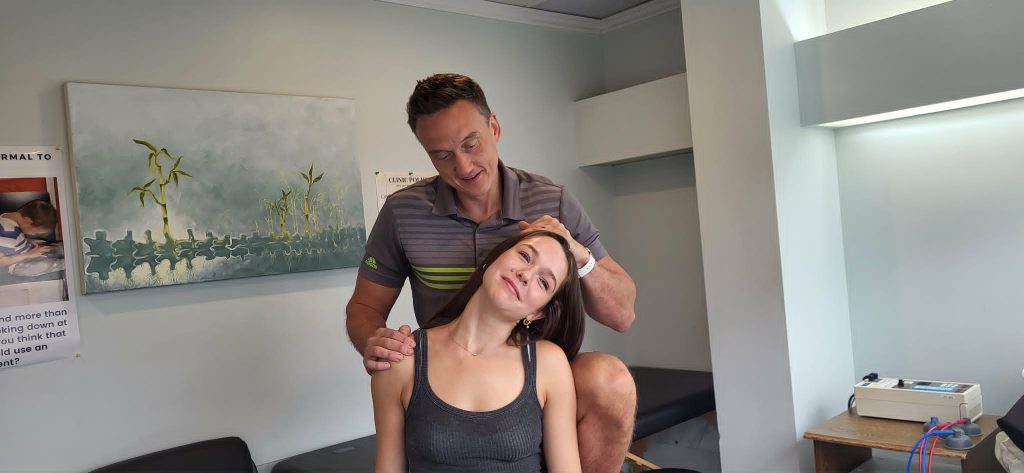
At our Oakville clinic, Dr. Steve and our physiotherapy team assess the neck, first rib, shoulder, scalene and pectoral muscles, shoulder-blade movement, neurological findings and the actual positions that reproduce your symptoms.
The first goal is figuring out what we think is causing the problem. Neurogenic TOS involving the nerves is managed differently from vascular TOS involving an artery or vein, and patients with signs of vascular involvement require appropriate medical assessment.
For appropriate musculoskeletal and neurogenic presentations, treatment may include exercise, rehabilitation, activity modification, manual therapy, chiropractic care and other treatment options based on what Dr. Steve actually finds during your assessment.
Thoracic Outlet Syndrome Treatment Video
What is Thoracic Outlet Syndrome?
Thoracic Outlet Syndrome (TOS) describes a group of conditions involving compression or irritation of the nerves or blood vessels that travel from the neck into the arm through the thoracic outlet — the relatively narrow area between the neck, first rib and collarbone.
Symptoms vary depending on which structures are involved. Some patients notice aching or pain around the neck, collarbone, shoulder or upper back. Others experience tingling, numbness, weakness, heaviness or fatigue extending into the arm or hand.
Symptoms may be aggravated by working overhead, repetitive arm use, carrying a heavy backpack or bag, certain sleeping positions, prolonged computer work or holding the arms in particular positions.
Possible contributing factors include anatomical differences such as a cervical rib, previous trauma such as whiplash, repetitive overhead activity, changes in muscle or movement patterns and compression involving the scalene or pectoral region.
Thoracic Outlet Syndrome can also produce symptoms similar to a pinched nerve in the neck, shoulder problem or carpal tunnel syndrome.
That is why the diagnosis matters. Treatment should be based on what appears to be producing the symptoms rather than assuming every numb or tingling arm is Thoracic Outlet Syndrome.
Thoracic Outlet Syndrome Anatomy Video
What Is the Most Common Type of Thoracic Outlet Syndrome?
Neurogenic Thoracic Outlet Syndrome is the most common form of TOS. It involves irritation or compression of the brachial plexus nerves as they travel from the neck toward the arm.
Symptoms may include pain, tingling, numbness, weakness, heaviness or an arm that becomes tired during repetitive or overhead activity.
Neurogenic TOS is generally managed differently from vascular forms of Thoracic Outlet Syndrome. Conservative treatment and rehabilitation are commonly used first when the presentation is appropriate and there are no signs of vascular compromise.

What Are the Three Types of Thoracic Outlet Syndrome?
There are three main types of Thoracic Outlet Syndrome: neurogenic, venous and arterial TOS. The symptoms and appropriate treatment can be very different depending on which structures are involved.
Neurogenic Thoracic Outlet Syndrome
Neurogenic TOS involves irritation or compression of the brachial plexus nerves travelling from the neck toward the arm. It is the most common form and may cause pain, tingling, numbness, weakness, heaviness or fatigue in the arm or hand.
Venous Thoracic Outlet Syndrome
Venous TOS involves compression of a vein travelling through the thoracic outlet. Symptoms can include arm swelling, heaviness, bluish discoloration or unusually prominent veins. Blood clots can occur and require medical assessment.
Arterial Thoracic Outlet Syndrome
Arterial TOS is less common and involves compression of an artery. Symptoms may include a cold or pale hand, changes in colour, reduced circulation or pain in the arm or hand.
Neurogenic and vascular Thoracic Outlet Syndrome are not treated the same way. Conservative rehabilitation is commonly used for neurogenic TOS, while suspected arterial or venous TOS requires appropriate medical or vascular assessment.
Medical reference: Johns Hopkins Medicine – Thoracic Outlet Syndrome
What Is the First-Line Treatment for Neurogenic Thoracic Outlet Syndrome?
Conservative rehabilitation is commonly the first treatment approach for neurogenic Thoracic Outlet Syndrome — but Dr. Steve does not start by handing every patient the same sheet of stretches.
After more than 18 years of treating TOS and TOS-like symptoms, Dr. Steve starts by looking at what actually brings the symptoms on. Does your hand go numb when your arm is overhead? Does driving trigger tingling? Does your shoulder feel heavy after working at a computer? Do symptoms change when the neck, first rib or shoulder position changes?
Those details help determine what treatment should focus on.
Depending on the patient, treatment may include strengthening, shoulder-blade control, mobility work, neural mobility, changes to aggravating activities and appropriate hands-on treatment. Some patients need more emphasis on rehabilitation, while others may also benefit from treating associated neck, first-rib or muscular restrictions.
Our physiotherapy team and Dr. Steve can also progress the program as symptoms settle and strength improves rather than leaving you doing the same basic exercises indefinitely.
The goal is not just to make your arm feel better for an hour after treatment. It is to figure out why certain positions keep bringing the symptoms back and help you tolerate those activities better over time.
Research reference: Physical Assessment and Rehabilitation for Neurogenic Thoracic Outlet Syndrome – 2026 Review
What Patients Say About Dr. Steve and Our Oakville Clinic
-
Dr Steve and team deserve 50 stars - what an amazing experience! From the moment my son arrived and we met the friendly and organized front office to the bold and welcoming intros with Dr Steve, followed by his assessment of the TOS condition, we were confident we were in... read more

 Sonia Scrocco
February 13, 2025Dr. Jenn has worked her magic on my back over the past few years. I wish I could give her more than 5 stars.The Nottinghill team are always friendly and welcoming. I am so glad I found this amazing clinic.
Phil Bradley
August 12, 2026Dr. Steve & his team were amazing. Helped me with my back pain, always had great appointment times available and got me in and out in a timely manner. I would highly recommend for your chiropractic needs.
Nicole Romkema
September 7, 2024 -
I’ve been to Dr Steve more than once over past several years. I had severe sciatica pain stemming from lower back to right hip to all the way down to right tows. He has magical hands. His sessions healed the issue completely and now I am able to play... read more
C C
September 7, 2024One of the best choices I've made! Dr. Steve and his team are extremely warm and friendly, provide great care, and the service is great! I came here to fix my bunions, and I can already feel an improvement after a few sessions.
Elizabeth So
September 7, 2024Another great experience, thanks for keeping me going!
Guillaume Grincourt
June 7, 2024 -
Steve and his team are absolutely amazing. Very efficient. Absolutely knowledgeable and corrected my issue Very quickly. Steve and team are so friendly and such positive high energy in the office. Love seeing everyone 💕
Linda Paul
December 7, 2024Both Dr. Steve and Dr. Jenn are excellent at resolving your problems with back, neck or any other body pain you may have. The staff are friendly and caring and treat you as a part of their family. I travel from Hamilton for the service and treatment... read more
Cameron R
July 24, 2026Steve and his team are incredible. Highly recommend them!!!
Gloria Tilson
June 11, 2026


4 Steps to Treating Thoracic Outlet Syndrome:
After more than 18 years of treating patients with Thoracic Outlet Syndrome, Dr. Steve does not believe every TOS patient should automatically receive the exact same four treatments.
The “four steps” below represent treatment options we commonly have available at our Oakville clinic. Which ones Dr. Steve uses depends on what he finds during the assessment.
One patient may have significant neck, first-rib and muscular involvement. Another may need more exercise and shoulder-blade rehabilitation. Someone else may have symptoms that make Dr. Steve concerned enough about neurological or vascular involvement that the next step should be additional medical assessment rather than simply treating it.
For appropriate neurogenic and musculoskeletal TOS presentations, treatment may include IFC, radial shockwave therapy, soft tissue treatment, chiropractic treatment, exercise and rehabilitation.
We have the machines and treatment options available, but we do not use something just because it happens to be sitting in the clinic. The treatment has to make sense for the patient in front of us.
Contact our Oakville Clinic for Thoracic Outlet Syndrome treatment

Step 1. Interferential Current Therapy (IFC)

Can Electrical Stimulation Help Thoracic Outlet Syndrome?
Dr. Steve has used Interferential Current Therapy (IFC) in our Oakville clinic for many years as one possible way to help patients who are dealing with pain and muscular discomfort around the neck, shoulder and thoracic outlet.
IFC is a form of electrical stimulation that may provide temporary pain relief and muscle relaxation. At our clinic, it is commonly applied using suction electrodes and may be combined with heat before Dr. Steve begins hands-on treatment or rehabilitation.
Some patients love the suction IFC. Some could happily live without it. Either way, it is not the thing that “fixes” Thoracic Outlet Syndrome.
IFC does not remove an anatomical compression and does not decompress an artery, vein or nerve. Dr. Steve may use it as an adjunct when reducing pain or muscle discomfort makes it easier to move, receive treatment or work on rehabilitation.
Step 2: Shockwave Therapy for Thoracic Outlet Syndrome
Dr. Steve has used radial shockwave therapy in our Oakville clinic for many years, including in selected patients with Thoracic Outlet Syndrome.
That does not mean every person who walks through the door with TOS gets shockwave.
Dr. Steve may consider shockwave when the examination suggests that painful or sensitive muscles and surrounding soft tissues are contributing to the patient’s symptoms. Common areas around the thoracic outlet that may be assessed include the scalene and pectoral regions.
Our radial shockwave applicator delivers a series of pressure waves into the targeted tissue, and Dr. Steve adjusts the location and intensity based on what he is treating and how the patient responds.
Shockwave is generally one part of treatment, not the entire treatment plan. Depending on what Dr. Steve finds, it may be combined with exercise, rehabilitation, soft tissue therapy, activity changes or appropriate chiropractic treatment.
And there are times when Dr. Steve will not use shockwave at all. It does not physically decompress a nerve or blood vessel and is not a treatment for arterial or venous Thoracic Outlet Syndrome. If the symptoms suggest vascular TOS, that requires appropriate medical assessment.

Does Shockwave Therapy Break Up Scar Tissue in Thoracic Outlet Syndrome?
We used to hear shockwave described as a way of “breaking up scar tissue,” but that is an oversimplified way to explain what the treatment does.
Radial shockwave produces mechanical pressure waves that interact with pain-sensitive and musculoskeletal tissues. Dr. Steve uses it as an adjunct in selected soft-tissue presentations — not as a machine that physically destroys scar tissue or permanently removes compression from a nerve or blood vessel.
If shockwave makes sense for your particular TOS presentation, Dr. Steve will explain why he is using it and what role it has in the rest of your treatment plan.
Step 3. Soft Tissue Therapy for Thoracic Outlet Syndrome

After treating TOS patients for more than 18 years, Dr. Steve has found that the muscles around the thoracic outlet can be an important part of the picture in some patients — but tight muscles alone do not explain every case of TOS.
During the assessment, Dr. Steve may examine the scalene muscles, pectoral region, upper trapezius and other muscles surrounding the neck and shoulder girdle to see whether pressure, movement or certain arm positions reproduce the patient’s familiar symptoms.
When appropriate, manual soft tissue therapy and trigger point techniques may be used to address painful or sensitive muscles and make movement or exercise more comfortable.
Dr. Steve may combine soft tissue treatment with stretching, strengthening, shoulder-blade rehabilitation, changes to aggravating activities or appropriate chiropractic treatment.
The goal is not to “break up” every tight spot we can find. Hands-on treatment should have a reason for being there and should help move the patient toward better movement, strength and tolerance for the activities that are actually causing trouble.
Step 4. Chiropractic Treatment For TOS
This is an area where Dr. Steve’s clinical experience matters because not every TOS patient needs their neck adjusted and not every patient has a first rib that needs treatment.
When Dr. Steve assesses a patient with suspected neurogenic or musculoskeletal TOS, he looks at movement through the neck, upper back, shoulder girdle and first-rib region to determine whether any of those areas appear to be contributing to the patient’s symptoms.
If restricted or painful movement is part of the picture, Dr. Steve may use joint mobilization or an appropriate chiropractic adjustment as one part of treatment.
For one patient, treating associated neck or first-rib stiffness may make it easier to work on shoulder and arm movement. For another patient, the examination may point much more strongly toward exercise and rehabilitation rather than manipulation.
That is why Dr. Steve treats the patient rather than simply treating the diagnosis written at the top of the chart.
Hands-on treatment is generally combined with an active program designed to improve shoulder-blade control, strength, mobility and tolerance for whatever normally brings the symptoms on.
And if Dr. Steve sees findings concerning for arterial or venous TOS, chiropractic treatment is not used as a substitute for appropriate medical or vascular assessment.

Is It Thoracic Outlet Syndrome or a Pinched Nerve?
One of the most important parts of Dr. Steve’s assessment is figuring out whether the patient actually has Thoracic Outlet Syndrome in the first place.
A patient may come in saying, “My hand keeps going numb, so somebody told me it’s TOS.” Another has been told the problem is coming from their neck. Sometimes the symptoms overlap enough that you cannot determine the source just from where the patient feels tingling.
Thoracic Outlet Syndrome, a pinched nerve in the neck, carpal tunnel syndrome, ulnar nerve irritation and shoulder problems can all produce arm or hand symptoms.
Dr. Steve looks at where the symptoms travel, what positions reproduce them, neck and shoulder movement, neurological findings, the first-rib and thoracic outlet region and any signs suggesting vascular involvement.
Sometimes the answer is TOS. Sometimes it isn’t.
Dr. Steve would rather change the diagnosis and treatment plan than spend six weeks treating the wrong problem.
Thoracic Outlet Syndrome Stretches & Exercises
After almost 20 years of treating patients with Thoracic Outlet Syndrome, Dr. Steve has found that exercises are an important part of treatment — but giving every TOS patient the same three stretches usually doesn’t make much sense.
One patient may tell us their hand starts tingling every time they work overhead. Another notices their arm going numb while driving. Someone else wakes up at night because they sleep with an arm above their head. They may all have symptoms consistent with Thoracic Outlet Syndrome, but the movements and structures contributing to those symptoms can be different.
That is why Dr. Steve and our physiotherapy team select exercises based on what we actually find during the assessment.
Depending on the patient, a Thoracic Outlet Syndrome rehabilitation program may include scalene or pectoral mobility, shoulder-blade strengthening, postural exercises, neural mobility and gradual progression back to the activities that bring on the symptoms.
We also look at the things patients are doing for hours every day. That may mean changing a computer or work position, modifying repetitive overhead activity, adjusting how a backpack or bag is carried, or finding a more comfortable sleeping position while symptoms settle down.
There is no single “best exercise” for Thoracic Outlet Syndrome. An exercise that helps one patient may aggravate another, particularly when significant neurological or vascular symptoms are present.
As strength, movement and tolerance improve, Dr. Steve progresses the exercises rather than leaving patients doing the same basic stretches forever. The long-term goal is to give patients something they can actually use between appointments and help them get back to the work, sport and everyday activities that matter to them.
TOS Exercise Examples


Why Patients Travel to Oakville to See Dr. Steve for Thoracic Outlet Syndrome
We have had patients travel from well outside Oakville — sometimes close to two hours — to see Dr. Steve for Thoracic Outlet Syndrome and complicated neck, shoulder and arm symptoms.
The reason is not that Dr. Steve has one secret TOS adjustment or one machine that magically fixes everybody.
It is experience.
After almost 20 years of treating these types of problems, Dr. Steve knows that the person whose hand goes numb while driving may not have the same problem as the person whose arm becomes heavy every time they work overhead.
Dr. Steve actually likes figuring this stuff out.
He looks at the neck, first rib, shoulder, muscles around the thoracic outlet, neurological findings, movement patterns and the positions that reproduce your symptoms. Then he decides what makes sense — whether that is rehabilitation, hands-on treatment, shockwave, changing an aggravating activity or recommending additional medical investigation.
We also explain what we think is happening and what you can do between appointments. The goal is for you to understand your problem rather than simply being told to come back three times a week forever.
If you have been dealing with persistent arm tingling, numbness, heaviness or TOS-like symptoms and want another set of eyes on the problem, you can book an assessment with Dr. Steve at our Glen Abbey clinic in Oakville.

When Do Thoracic Outlet Symptoms Need Medical Assessment?
Most neck, shoulder and arm symptoms are not medical emergencies. However, some symptoms require additional medical assessment rather than routine musculoskeletal treatment.
New arm swelling, significant colour changes, a persistently cold or pale hand, rapidly worsening weakness or symptoms suggesting reduced blood flow should be medically assessed promptly.
These symptoms can occur with vascular forms of Thoracic Outlet Syndrome or other conditions requiring medical investigation.
Thoracic Outlet Syndrome FAQs
What Is Thoracic Outlet Syndrome?
Thoracic Outlet Syndrome (TOS) is a group of conditions involving compression or irritation of the nerves or blood vessels travelling between the neck and arm through the thoracic outlet.
The thoracic outlet is the relatively narrow area around the first rib, collarbone and muscles at the base of the neck. Depending on what is being compressed, TOS can cause pain, tingling, numbness, weakness, heaviness, swelling or changes in the colour or temperature of the hand.
What Are the Most Common Symptoms of Thoracic Outlet Syndrome?
Common Thoracic Outlet Syndrome symptoms include neck, shoulder or arm pain, tingling or numbness into the hand or fingers, arm weakness, heaviness and an arm that tires more easily than normal.
Symptoms may become worse while working with the arms overhead, exercising, driving, carrying a heavy bag or backpack, working at a computer or sleeping with an arm above the head.
A swollen arm, significant colour change or a persistently cold or pale hand may suggest a vascular problem and should be medically assessed.
What Are the Three Types of Thoracic Outlet Syndrome?
There are three main types of TOS: neurogenic, venous and arterial Thoracic Outlet Syndrome.
Neurogenic TOS involves irritation or compression of the nerves of the brachial plexus and is the most common type.
Venous TOS involves compression of a vein and may cause swelling, heaviness, bluish discoloration or prominent veins.
Arterial TOS involves an artery and may cause a cold or pale hand, colour changes or symptoms related to reduced blood flow.
The type matters because neurogenic and vascular Thoracic Outlet Syndrome are not treated the same way.
What Is the Most Common Type of Thoracic Outlet Syndrome?
Neurogenic Thoracic Outlet Syndrome is the most common form of TOS.
It affects the brachial plexus nerves as they travel from the neck toward the arm. Symptoms can include aching, tingling, numbness, weakness, heaviness or an arm that becomes tired during repetitive or overhead activity.
Conservative treatment and rehabilitation are commonly used first for appropriate neurogenic TOS presentations.
What Causes Thoracic Outlet Syndrome?
There is no single cause of Thoracic Outlet Syndrome.
Possible contributing factors include anatomical differences such as a cervical rib, previous neck or shoulder trauma, repetitive overhead activity, sports, work demands and compression involving muscles or other structures surrounding the thoracic outlet.
How Is Thoracic Outlet Syndrome Treated in Oakville?
Treatment for Thoracic Outlet Syndrome depends on the type of TOS and what appears to be contributing to the patient’s symptoms.
For appropriate neurogenic or musculoskeletal presentations, conservative treatment may include strengthening, mobility exercises, activity modification, shoulder-blade rehabilitation, neural mobility and appropriate hands-on treatment.
At our Oakville clinic, treatment may involve physiotherapy, appropriate chiropractic care, soft tissue therapy or other modalities depending on the examination findings.
Suspected arterial or venous TOS requires appropriate medical or vascular assessment rather than routine musculoskeletal treatment alone.
What Is the First-Line Treatment for Neurogenic Thoracic Outlet Syndrome?
Conservative rehabilitation is commonly the first treatment approach for neurogenic Thoracic Outlet Syndrome.
Treatment may include strengthening the muscles around the shoulder blade, improving mobility, changing activities or positions that repeatedly aggravate symptoms, neural mobility exercises and gradually increasing tolerance for overhead or repetitive activities.
Hands-on treatment may be used alongside rehabilitation when joint or muscular problems are also contributing to symptoms.
Can a Chiropractor Help Thoracic Outlet Syndrome?
Chiropractic care may be one part of conservative management for selected patients with neurogenic or musculoskeletal Thoracic Outlet Syndrome.
If an examination identifies restricted or painful movement involving the neck, upper back, shoulder girdle or first rib, appropriate joint mobilization or chiropractic treatment may be used alongside exercise and rehabilitation.
Chiropractic treatment does not replace medical or vascular assessment when arterial or venous Thoracic Outlet Syndrome is suspected.
Learn more about our chiropractic care in Oakville.
Can Physiotherapy Help Thoracic Outlet Syndrome?
Yes. Physiotherapy can play an important role in conservative treatment for neurogenic Thoracic Outlet Syndrome.
Depending on the patient, rehabilitation may focus on shoulder-blade control, strengthening, mobility, posture and movement patterns, neural mobility and gradually returning to activities that reproduce symptoms.
The program should be based on the individual examination rather than giving every TOS patient exactly the same exercises.
Can Shockwave Therapy Help Thoracic Outlet Syndrome?
Shockwave therapy may be used as an adjunct in selected patients when muscles and surrounding soft tissues appear to be contributing to pain, sensitivity or restricted movement around the thoracic outlet.
Our Oakville clinic uses radial shockwave therapy as part of some chiropractic and physiotherapy treatment plans when clinically appropriate.
Shockwave does not physically decompress an artery, vein or nerve and is not a treatment for arterial or venous Thoracic Outlet Syndrome.
Does Shockwave Therapy Break Up Scar Tissue in Thoracic Outlet Syndrome?
Shockwave therapy should not be described as literally breaking up or destroying scar tissue around the thoracic outlet.
Radial shockwave produces mechanical pressure waves that can affect pain-sensitive and musculoskeletal tissues. When we use shockwave for a patient with TOS, its role is as an adjunct for selected soft-tissue problems rather than a method of permanently removing compression from a nerve or blood vessel.
Can Electrical Stimulation Help Thoracic Outlet Syndrome?
Interferential Current Therapy (IFC) is a form of electrical stimulation that may be used for temporary pain relief or muscle relaxation during treatment.
At our clinic, IFC may be used before hands-on treatment or rehabilitation when appropriate.
Electrical stimulation does not correct the underlying anatomical cause of TOS and does not decompress an artery, vein or nerve. It is one possible adjunct within a broader treatment program.
What Are the Best Exercises for Thoracic Outlet Syndrome?
There is no single best Thoracic Outlet Syndrome exercise for every patient.
Exercises may include shoulder-blade strengthening, scalene or pectoral mobility, postural exercises, neural mobility and gradual return to overhead or repetitive activity.
For one patient the problem may show up while working overhead. Another may notice symptoms while driving, sitting at a computer or sleeping with an arm above their head.
Exercise selection should therefore be based on the patient’s symptoms, examination and type of TOS.
What Position Helps Relieve Thoracic Outlet Syndrome?
There is no single relief position that works for everyone with Thoracic Outlet Syndrome.
Some people find symptoms improve when they change the position of the neck, shoulder or arm and avoid prolonged overhead positions. Others may need to modify computer posture, sleeping position, backpack use or repetitive work.
A position that reduces symptoms can provide useful information during an assessment, but position alone does not tell us what type of TOS is present or what treatment is required.
Is It Thoracic Outlet Syndrome or a Pinched Nerve in My Neck?
Both Thoracic Outlet Syndrome and a cervical nerve problem can cause pain, tingling, numbness or weakness travelling into the arm or hand.
The difference is where the nerve is being irritated or compressed. With TOS, symptoms arise around the thoracic outlet. With a cervical nerve problem, the source may be closer to the spine.
Carpal tunnel syndrome, ulnar nerve irritation and shoulder conditions can also produce overlapping symptoms.
This is why an examination is more useful than assuming every tingling arm is TOS.
How Do I Know if I Have Thoracic Outlet Syndrome?
You may suspect TOS if you experience neck, shoulder or arm pain together with tingling, numbness, weakness, heaviness or fatigue in the arm, particularly when the arm is elevated or held in certain positions.
However, these symptoms are not unique to TOS.
Assessment may include examining the neck, shoulder, first rib, neurological function, circulation, posture and the movements or positions that reproduce your symptoms. Additional medical testing or referral may be appropriate when the diagnosis is uncertain or vascular involvement is suspected.
Do I Need a Medical Doctor to Diagnose Thoracic Outlet Syndrome Before Coming to Your Oakville Clinic?
No. You do not necessarily need to arrive with a previous medical diagnosis before being assessed at our Oakville clinic.
Our chiropractic or physiotherapy team can assess the musculoskeletal and neurological features of your symptoms and determine whether they appear consistent with TOS or another condition.
If vascular TOS, significant neurological compromise or another medical problem is suspected, medical referral or additional testing may be recommended.
When Should Thoracic Outlet Syndrome Symptoms Be Medically Assessed?
New arm swelling, significant colour changes, a persistently cold or pale hand, rapidly worsening weakness or symptoms suggesting reduced blood flow should be medically assessed promptly.
These symptoms may occur with vascular forms of Thoracic Outlet Syndrome or other conditions that require investigation.
Routine aching, stiffness or intermittent tingling is different from sudden swelling or obvious circulation changes.
Can Thoracic Outlet Syndrome Be Cured?
Some patients with Thoracic Outlet Syndrome improve substantially or have their symptoms resolve with appropriate treatment, rehabilitation and changes to the activities contributing to the problem.
However, the outcome depends on the type of TOS, its cause, severity and how long symptoms have been present.
Many patients with neurogenic TOS can improve with conservative management. Venous or arterial TOS requires medical assessment and may require specialist treatment or surgery.
For that reason, we prefer to talk about reducing symptoms, restoring function and helping patients return to normal activity rather than promising that every case of TOS can simply be cured.
How Long Does Thoracic Outlet Syndrome Take to Improve?
There is no standard recovery time for Thoracic Outlet Syndrome.
Some patients improve over several weeks, while persistent or complicated cases may require rehabilitation over a longer period. Recovery can depend on the type of TOS, how long the problem has been present, the activities provoking symptoms and whether there are anatomical or vascular factors involved.
Progress should be reassessed instead of putting every patient on the same predetermined treatment schedule.
Can Thoracic Outlet Syndrome Cause Headaches?
Some patients with TOS also experience neck tension or headaches, particularly when muscles around the neck and shoulder are involved.
However, headaches have many possible causes, so a headache should not automatically be blamed on Thoracic Outlet Syndrome.
Patients dealing primarily with headaches can learn more about our headache treatment in Oakville.
Can Thoracic Outlet Syndrome Cause Numbness or Weakness in the Hand?
Yes. Neurogenic Thoracic Outlet Syndrome can cause tingling, numbness, weakness, heaviness or fatigue extending into the arm and hand because nerves travelling toward the arm pass through the thoracic outlet.
However, hand numbness can also occur with cervical nerve irritation, carpal tunnel syndrome and other peripheral nerve conditions, so the location of the symptoms alone does not confirm TOS.
Does Thoracic Outlet Syndrome Require Surgery?
Most patients with appropriate neurogenic TOS presentations are initially managed without surgery.
Conservative treatment commonly involves rehabilitation, exercise and modification of activities that aggravate symptoms.
Surgery may be considered for selected patients who do not improve with appropriate conservative management or when anatomical or vascular problems require specialist treatment. Arterial and venous TOS should be evaluated medically because their management can be substantially different from neurogenic TOS.
Where Can I Get Thoracic Outlet Syndrome Treatment in Oakville?
Nottinghill Family Wellness Centre provides assessment and conservative treatment for appropriate Thoracic Outlet Syndrome presentations at 1131 Nottinghill Gate in Glen Abbey, Oakville.
Depending on your examination, care may include physiotherapy, chiropractic treatment, exercise rehabilitation, soft tissue therapy and other appropriate treatment options.
Patients with signs suggesting arterial or venous TOS will be directed toward appropriate medical assessment.
Contact our Oakville clinic to arrange an assessment.
Content Reviewed By: Dr. Steve Knighton, B.Sc., D.C. on October 16, 2026
Chiropractic License Number: 5580