Content Reviewed By: Dr. Steve Knighton, B.Sc., D.C. on September 28, 2026
Chiropractic License Number: 5580
Vertigo Treatment Oakville
Spinning when you roll over in bed, lie back or look up? Doctor Steve and our Oakville chiropractors assess vertigo and dizziness, perform positional testing for BPPV, and provide the Epley manoeuvre when appropriate. We also assess accompanying neck pain, stiffness and jaw symptoms to determine what care fits your findings.
New patients are welcome. Our clinic offers private treatment rooms, Saturday appointments and same-day appointments when available. Call 905-827-4197 or text 289-228-8858 to arrange your vertigo assessment.
The terms ‘vertigo’ and ‘dizziness’ are often used interchangeably. Our Oakville Chiropractic Team can treat both types of vertigo and have been treating it for nearly 20 years. Both terms refer to symptoms of feeling uneasy, unbalanced and unpleasant. T

How Is Vertigo Treated at Our Oakville Clinic?
Your visit starts with an assessment to determine whether your symptoms fit BPPV or Cervicogenic Vertigo (Vertigo coming from the neck). The first 3 steps are the same in most patients. The final step of the Epley’s manoeuvre or a cervical spine adjustment is where they differ with most patients. Some BPPV get a cervical spine adjustment at our clinic, depending on their presentation of vertigo!
Step 1: Suction IFC and Heat for Neck Tension
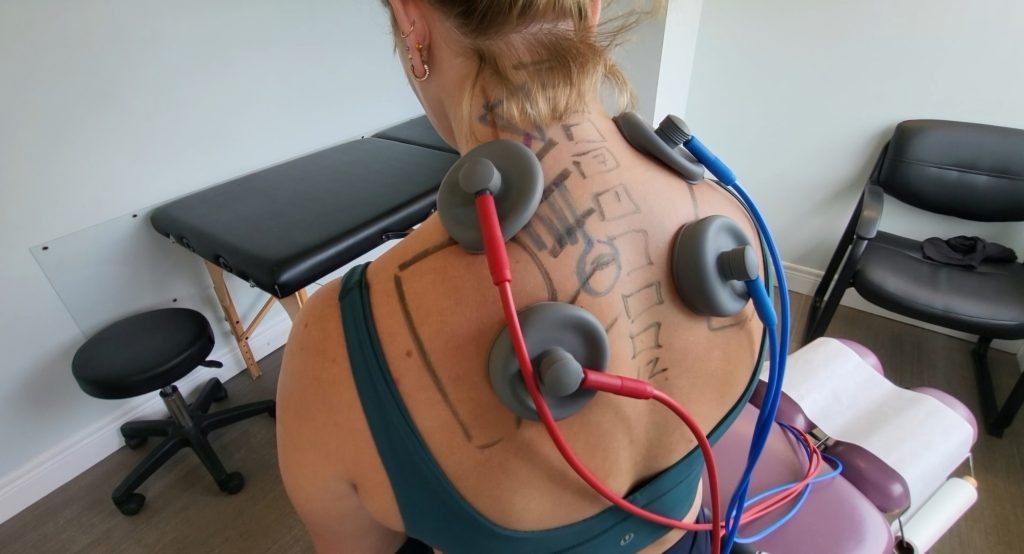
When neck pain and muscle tightness accompany your dizziness, we begin the neck-care portion of your visit with suction interferential current therapy, or IFC, combined with comfortable heat. Suction cups hold the electrodes against the muscles around the back of your neck and upper shoulders, delivering an adjustable electrical stimulation that feels like a steady tingling sensation.
The goal is to ease muscular discomfort and help you settle into treatment without repeatedly turning or stretching your head. We support your head and choose a position you can tolerate, particularly if lying back or changing position triggers spinning. The intensity and heat are adjusted to your comfort throughout this stage.
This step addresses accompanying neck symptoms in patients with BPPV or suspected neck-related dizziness. It does not reposition inner-ear crystals. For confirmed BPPV, the appropriate repositioning manoeuvre remains the treatment directed at the source of the positional spinning.
Step 2: Shockwave Therapy for Accompanying Muscle Tightness
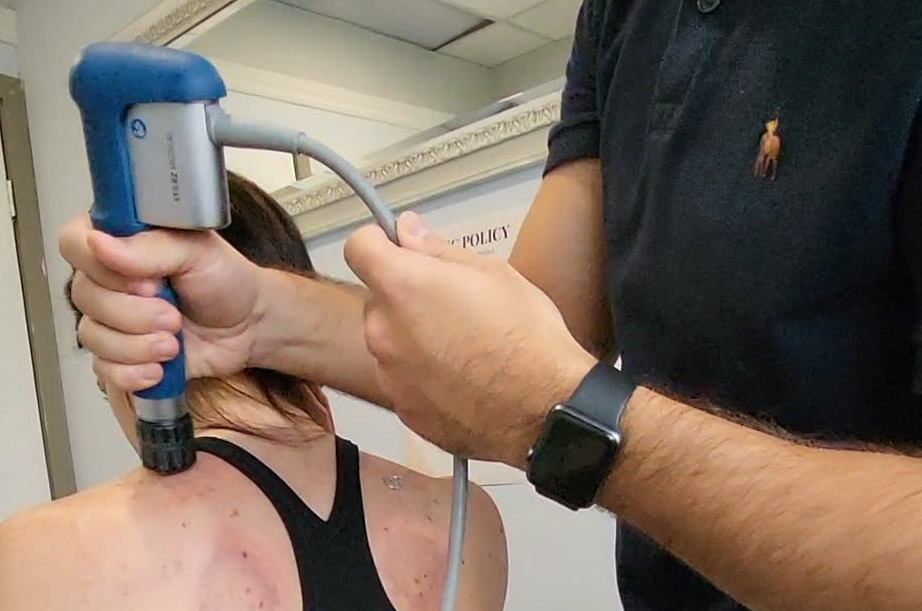
When appropriate, Doctor Steve uses Shockwave Therapy to address tender, tight muscles around the upper shoulders and the back of the neck. Shockwave delivers mechanical pulses to selected soft tissues, with the treatment area and intensity chosen according to your examination findings and tolerance.
This part of the visit targets muscular pain and stiffness that accompany your dizziness. Your head remains supported, and treatment is adjusted if positioning aggravates your symptoms. Shockwave does not reposition inner-ear crystals or replace the Epley manoeuvre for BPPV.
Step 3: Targeted Soft-Tissue Treatment with ART or Graston
Next, our chiropractors address specific areas of muscle tenderness using hands-on soft-tissue techniques. Depending on your symptoms, this includes Active Release Techniques, sustained trigger-point pressure or instrument-assisted treatment such as Graston.
Because moving the head can provoke positional vertigo, we adapt this stage to your tolerance. When the movement involved in ART is uncomfortable, we use techniques that allow your head to remain supported and relatively still. The aim is to address the accompanying neck and shoulder discomfort without unnecessary symptom-provoking movement.

Step 4A: Treatment Based on Your Assessment
BPPV: Epley Manoeuvre in Oakville
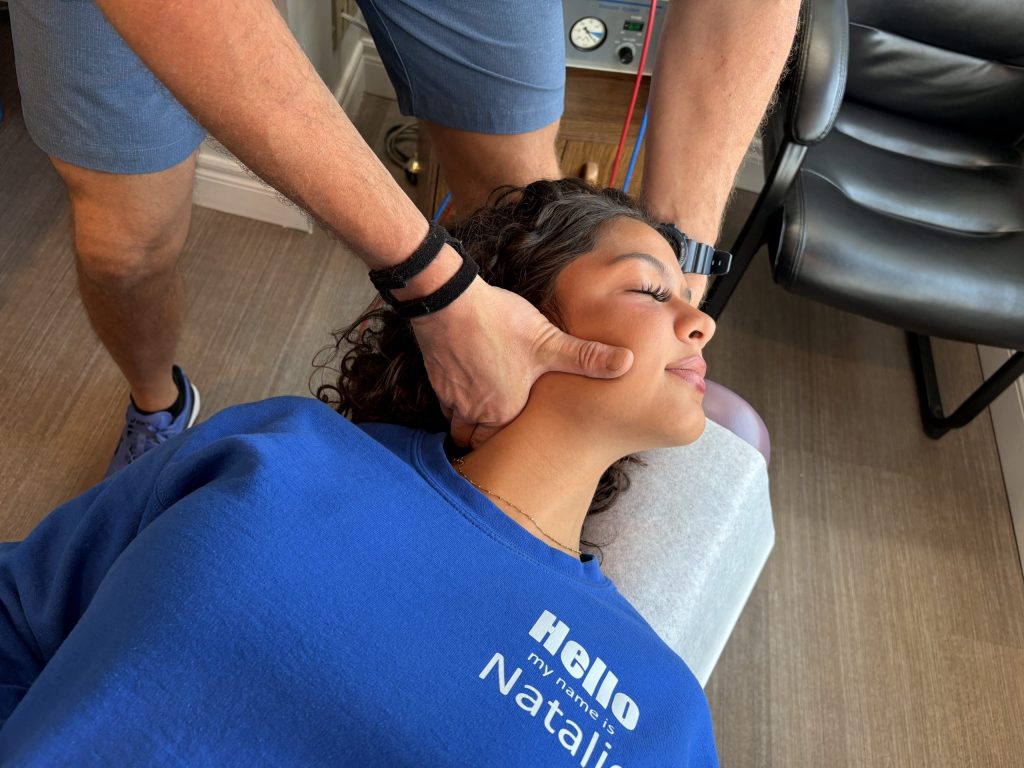
For suspected BPPV, positional testing helps identify the affected side and canal before treatment. When the findings confirm posterior-canal BPPV, Doctor Steve performs the Epley manoeuvre—a controlled sequence of positions designed to move displaced inner-ear crystals out of the affected canal.
A team member assists during the manoeuvre, supporting position changes and helping you return to sitting. At our clinic, a session sometimes includes two to four passes, depending on your response, repeat findings and tolerance. Fewer passes are used when sufficient; the number is individual rather than a fixed requirement.
Patients with BPPV sometimes also have neck pain or restricted movement. These neck symptoms are assessed separately, and appropriate neck care can be included alongside the repositioning treatment.
Step 4B: Cervicogenic Vertigo Treatment
Suspected Cervicogenic Dizziness: Individualized Neck Care
When dizziness occurs with neck pain and restricted movement, our chiropractors assess the neck while considering other possible causes of dizziness. Neck stiffness alone does not confirm cervicogenic dizziness.
Where examination findings support treatment, care includes soft-tissue work, gentle joint mobilization and exercises for comfortable movement and control. A neck adjustment is an option for selected patients after appropriate screening and discussion of the benefits, risks and alternatives. Treatment is tailored to the neck findings rather than applied automatically because someone feels dizzy
Dizziness Accompanied by Jaw Pain or Clenching
If you also experience jaw pain, clicking, clenching or difficulty opening your mouth, we assess those symptoms alongside your neck concerns. Having jaw symptoms and dizziness together does not establish that the jaw is causing the dizziness. For details about our approach to jaw problems, visit our TMJ and jaw pain treatment in Oakville page.
Epley Manoeuvre Oakville

The Epley manoeuvre treats posterior-canal BPPV by moving displaced calcium carbonate crystals, called otoconia, out of the affected semicircular canal and back into the utricle, where they belong. This addresses the mechanical cause of positional spinning rather than simply masking the symptoms.
A Cochrane review of 11 randomized controlled trials involving 745 patients found that the Epley manoeuvre effectively treats posterior-canal BPPV. Compared with sham treatment or control care, patients were significantly more likely to experience complete vertigo resolution and a negative positional test. Results vary, and some patients require repeat treatment. Identifying the affected side and canal helps determine which repositioning manoeuvre is appropriate.
If your vertigo or dizziness began after a workplace injury, learn about starting a WSIB claim and accessing approved treatment in Oakville.
At our Oakville clinic, Doctor Steve uses positional testing to identify the affected side and select the appropriate repositioning manoeuvre.
A newer addition is the 2023 systematic review covering 27 randomized trials, which found benefit from Epley treatment in primary-care and specialist settings, while noting limitations in evidence certainty. It is suitable support for a measured effectiveness statement.
What is BPPV Vertigo?
Vertigo is the sensation that you are spinning, or that the world is spinning around you. Dizziness refers to lightheadedness, faintness and unsteadiness. BPPV stands for Benign Paroxysmal Positional Vertigo.
Our Oakville Vertigo treatment team say that most vertigo patients coming into our clinic have BPPV. As the name suggests, this condition is not caused by any scary central nervous system problems – it is benign in nature.
The position of the head and body can trigger these vertigo attacks and BPPV is the most common cause of vertigo. Our Oakville Chiropractors use a combination of complex positions, manual adjustments, at home advice and IFC therapy to help treat BPPV.
Dr. Jenn and Dr. Steve see amazing results in less then 5 visits with most patients. If your vertigo started after a head trauma please see our treatment for concussions including acupuncture.
Symptoms of BPPV – Vertigo
Vertigo symptoms can feel alarming and disruptive, especially when the room seems to spin, tilt, or shift with simple head movements. Many patients in Oakville, Burlington, Milton, and Mississauga describe vertigo as a sudden sensation of motion even when they are standing still.
Common symptoms include dizziness, spinning, loss of balance, unsteadiness while walking, nausea, vomiting, blurred vision, motion sensitivity, and difficulty focusing. Some people also notice symptoms when rolling over in bed, looking up, bending forward, or turning quickly.
Because vertigo can be related to inner ear dysfunction, positional changes, vestibular disorders, or other neurological causes, a thorough clinical assessment is important. At Nottinghill Family Wellness Centre, we carefully examine vertigo symptoms, balance changes, and movement triggers to help determine the most likely source of dizziness and whether further medical evaluation is needed.
- Vertigo
- Dizziness
- Light-headedness
- Nausea/vomiting
- Episodic
- Sudden onset,
- Short duration (lasting a few seconds to a few minutes)
- Attacks triggered by change in position
Patients across Oakville and the surrounding area often seek care when vertigo begins interfering with daily life.

What Can Cause BPPV Vertigo?
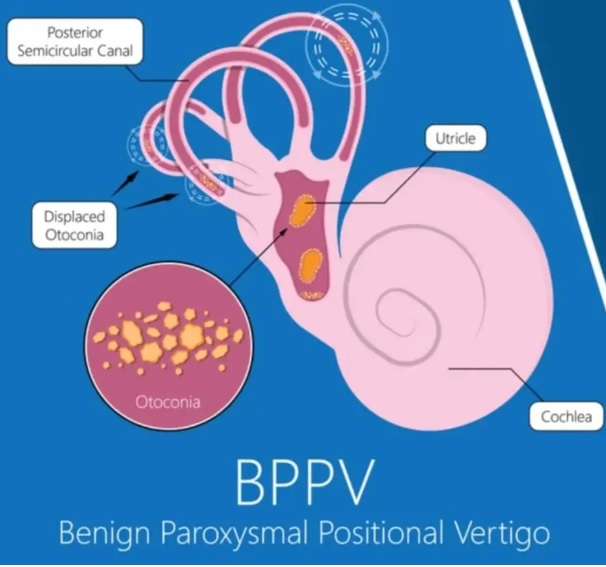
BPPV is one of the most common causes of vertigo. It occurs when tiny calcium crystals in the inner ear, called otoliths or otoconia, become displaced and move into one of the semicircular canals that help control balance.
When you roll over in bed, bend forward, look upward or change head position, these loose crystals can move inside the canal and send incorrect balance signals to the brain. The result is the sudden spinning sensation commonly associated with positional vertigo.
BPPV is diagnosed using specific positional testing. When appropriate, canalith repositioning procedures can be used to move the displaced crystals out of the affected canal.
At Nottinghill Family Wellness Centre, our Oakville vertigo assessment helps determine whether dizziness is consistent with BPPV or whether another cause should be considered. We see patients from Oakville, Burlington, Milton and Mississauga for vertigo, dizziness and balance problems.
What Causes the Calcium to Shift in BPPV Vertigo?
Several things can contribute to the crystals becoming displaced and triggering BPPV vertigo.
Head injuries are one common trigger. Concussions, sports injuries and car accidents can disturb the inner ear and cause the otoliths to move out of position.
BPPV can also appear when rolling over in bed or changing head position while lying down. Recent inner-ear infections or vestibular neuritis can increase the risk as well.
Stress, fatigue and poor sleep do not usually cause BPPV themselves, but they can make dizziness feel more noticeable or harder to tolerate.

How is BPPV Vertigo Diagnosed in Oakville?
Our Oakville chiropractors are well trained to diagnose vertigo and BPPV. A thorough history taking will help rule out other conditions that can cause dizziness and may feel similar to BPPV.
The health history exam will consist of questions about headaches, nausea, ringing in the ears, pain, hearing loss, frequency and lengths of attacks, triggers and medications. Our chiropractors will be able to tease out the most likely cause of your vertigo symptoms.
BPPV can be tested, in clinic, by one simple test called the Dix-Hallpike Test. This test involves quickly manoeuvreing the head into a position that would trigger a vertigo attack.
It involves the patient quickly laying down while the chiropractor guides the head/cervical spine into an extended and slightly rotated position. The chiropractor will watch the patient’s eyes for any sign of twitching movement of the eyes.
The hallmark of this condition is that is takes 5-10 seconds for the eye twitching to kick in, and it can last anywhere from 5 seconds to one minute after the test! This test can cause nausea, and in cases where symptoms are severe, even vomiting.
Vertigo and dizziness can sometimes be linked to problems involving the cervical spine, jaw, or surrounding muscles. Patients experiencing neck pain, headaches, TMJ dysfunction, or whiplash injuries may also develop balance disturbances or dizziness due to altered signals between the cervical spine, inner ear, and brain.

What Our Patients Are saying
-
Dr. Steve is the coolest guy ever. He was so kind and communicative to me. My first experience ever going to a chiropractor and I was very nervous because physical contact makes me anxious. He talked me through everything, asked permission before every position and checked in on my comfort... read more

 Katie Chris
February 6, 2025Dr Steve and his staff are amazing. Love his high energy and enthusiasm. Have seen several Dr’s for my shoulder injury and Dr Steve is the only one that has fully explained what’s going on that made sense. Only had a few treatments but already noticing an improvement. Front desk... read more
Steve & Angela Pinder
October 7, 2024Amazing people and treatment here! My back was killing me and within 3 weeks they got me fixed to 100%!
Blaze Slavkovski
July 7, 2024 -
Dr. Jenn is amazing! She truly cares about her patients and is willing to try different things in order to see progress. I’ve been struggling with hip pain for years due to my scoliosis, no physio or chiro has ever been able to make a difference other than her, she... read more
Alexia Davies
June 7, 2024Less than 6-7 min. by chiropractor. Waste of money.
Jadis
March 31, 2026Dr. Jenn was great to work with. I’d recommend her
Lida Liu
November 7, 2024 -
Dr Steve did it again! Last year he fixed my shoulder and this year he fixed my hip flexor!
Sharlene Johnston
May 14, 2026Love Dr. Steve's sense of humour, enthusiasm and determination to make you feel better he always adds a positive part in our day when we come here thank you! We love the staff at the front desk and the helpers of Dr Steve they are so kind and hardworking. Thank... read more
gunes ozok
December 7, 2024We had an excellent experience from our very first phone call to book an appointment through to my dad’s last visit. My dad was experiencing severe episodes of vertigo, and the office was incredibly accommodating. The receiptions was awesome and booked him in on an urgent basis and, because his nausea... read more
Hiba K
August 18, 2026


What If My Dizziness Isn’t Caused by BPPV?
Not all dizziness is caused by BPPV. At our Oakville clinic, the goal is to determine whether your symptoms fit a mechanical or positional vertigo pattern and to refer you for medical assessment when they do not.
Low blood pressure and low blood sugar can cause dizziness. Inner-ear conditions such as Ménière’s disease can also cause vertigo, often together with ear fullness, tinnitus or fluctuating hearing loss. Labyrinthitis can produce vertigo as well, usually with hearing symptoms.
More serious neurological or vascular conditions can also cause dizziness or vertigo. Symptoms such as sudden weakness or numbness, difficulty speaking, severe headache, fainting, major difficulty walking or new visual changes require urgent medical assessment.
If your symptoms do not fit BPPV or another condition appropriate for treatment at our clinic, we will recommend medical follow-up rather than continuing treatment that does not fit the problem.

Cervicogenic Vertigo Treatment Oakville

Cervicogenic vertigo and dizziness is another relatively common cause of dizziness and vertigo-like symptoms. Our Oakville Chiropractors say that a quarter of Vertigo cases at our clinic are coming from the patients cervical spine. These patients get vertigo when rolling over in bed or when looking up or lying down.
Cervicogenic vertigo cases are more common in individuals who have suffered a trauma to the head and/or neck (car accident, concussion, sports injury etc). They can also be something as simple as sleeping position, too much ipad or coughing from a cold or flu.
Cervicogenic Vertigo is associated with pain in the cervical column and pain related to upper spine movements, headaches may also be present. Unlike BPPV, cervicogenic dizziness may be brought on by any movement of the cervical spine and less influenced by overall body position.
Our vertigo treatment team sees this in patients when they are rolling over to get out of bed or checking their blind spots in the car. Many patients have a combination of BPPV and Cervicogenic Vertigo.
Treatment For Cervicogenic Dizziness and Vertigo in Oakville
Our chiropractors will help to rule out other causes of dizziness and address the issues of the cervical spine. Spinal manipulation/mobilization will help address stiff, restricted joints and help to restore proper movement between vertebral segments and help relief symptoms from cervicogenic vertigo. A healthy spine should move! Any restrictions in the joints can cause pain, limit mobility and potentially cause dizziness and vertigo.
Soft tissue release will be used to address tight muscles and stretches will be prescribed to help promote a speedy recovery. Exercises will also be suggested to strengthen the deep musculature of the upper cervical spine and help prevent re-occurrence of the condition. If you think you might be suffering from BPPV or Cervicogenic Vertigo book an appointment today with our Oakville Vertigo Team.

Vertigo Treatment FAQs
I Get Dizzy When I Roll Over in Bed. Could It Be BPPV?
Yes. Brief episodes of spinning triggered by rolling over in bed, lying back, looking upward or changing head position are classic symptoms of benign paroxysmal positional vertigo (BPPV). The spinning usually lasts for seconds rather than continuously.
Doctor Steve assesses the pattern of dizziness and uses positional testing when BPPV is suspected. Not every case of dizziness with movement is BPPV, so identifying the cause before performing a repositioning manoeuvre is important.
Who Performs the Epley Manoeuvre in Oakville?
Our Oakville chiropractors assess and treat BPPV using positional testing and canalith repositioning techniques such as the Epley manoeuvre when appropriate. The Epley manoeuvre moves the head through a specific sequence of positions designed to guide displaced inner-ear crystals out of the affected semicircular canal.
The first step is determining whether the dizziness is actually BPPV and which ear and canal are involved.
How Much Does a Vertigo or BPPV Appointment Cost in Oakville?
Chiropractic appointments at Nottinghill Family Wellness Centre are $75. The appointment includes the assessment required to determine whether the symptoms are consistent with BPPV, cervicogenic dizziness or another cause of vertigo.
When BPPV is identified, positional treatment such as the Epley manoeuvre can be performed when appropriate. We also offer direct insurance billing when permitted by the patient’s extended health plan.
How Do You Test for BPPV?
One of the primary tests for posterior-canal BPPV is the Dix-Hallpike test. The patient’s head and body are moved into a specific position while the clinician watches the eyes for a characteristic movement called nystagmus and asks about the sensation of spinning.
If the history sounds like BPPV but the Dix-Hallpike test does not produce the expected findings, other positional testing can be used to determine whether another semicircular canal is involved. This is consistent with BPPV clinical guidelines. BPPV Clinical Practice Guidelines
Can I Do the Epley Manoeuvre Myself at Home?
Doctor Steve generally prefers that patients have the cause and side of their vertigo assessed first rather than guessing with an Epley manoeuvre from a video. The correct repositioning manoeuvre depends on which ear and semicircular canal are involved, and not every case of positional dizziness is BPPV.
Once BPPV has been properly identified, some patients can be shown an appropriate home manoeuvre if symptoms recur. Clinical guidelines recognize both clinician-performed and selected self-administered repositioning approaches. AAO-HNS
How Long Does BPPV Last After the Epley Manoeuvre?
The intense spinning caused by BPPV can improve quickly after successful repositioning, but some patients continue to feel mildly dizzy, sensitive to movement or slightly unsteady afterward. These residual symptoms can gradually settle over several days and sometimes a few weeks.
If significant spinning continues, symptoms return, or the pattern of dizziness changes, the patient should be reassessed rather than assuming the same ear or canal is still involved. BPPV Practice Guidelines
Can BPPV Come Back?
Yes. BPPV can recur even after successful treatment. If the spinning returns when rolling over in bed, looking upward or changing head position, another assessment can determine whether the crystals have moved again and whether the same or a different canal is involved.
Because recurrent dizziness is not always caused by the same problem, Doctor Steve prefers to confirm the presentation rather than automatically repeating the same manoeuvre.
Can Neck Problems Cause Dizziness?
Neck pain and stiffness can sometimes occur along with dizziness, particularly following whiplash, concussion or another neck injury. This is commonly described as cervicogenic dizziness.
Doctor Steve assesses the cervical spine as well as the pattern of dizziness when symptoms occur with neck movement or neck pain. Inner-ear, neurological and other causes of dizziness still need to be considered rather than assuming that every case is coming from the neck.
Can a Car Accident or Concussion Cause BPPV or Vertigo?
Yes. Head trauma can trigger BPPV by displacing the calcium crystals involved in the inner-ear balance system. Car accidents and concussions can also cause other forms of dizziness and balance disturbance, so the cause should be assessed rather than assuming every post-accident dizzy spell is BPPV.
Patients experiencing dizziness after a head or neck injury should mention when the symptoms began, what movements trigger them and whether there are accompanying headaches, neck pain, vision changes or balance problems.
What Is Vestibular Rehabilitation?
Vestibular rehabilitation is a broader approach used for dizziness, imbalance and some vestibular disorders. Depending on the condition, it can include gaze-stabilization exercises, balance training, habituation exercises and specific repositioning manoeuvre.
For straightforward posterior-canal BPPV, a canalith repositioning procedure such as the Epley manoeuvre is the primary treatment. Persistent imbalance or dizziness that is not explained by BPPV may require additional vestibular assessment or rehabilitation. AAO-HNS
What If My Dizziness Is Not BPPV?
Not all dizziness and vertigo are caused by displaced inner-ear crystals. Other possibilities include vestibular neuritis, Ménière’s disease, migraine-associated dizziness, blood-pressure changes, medication effects, cervical problems and neurological conditions.
If Doctor Steve’s examination does not fit the typical pattern of BPPV or another condition treated at our clinic, further medical assessment or referral will be recommended.
When Should Vertigo or Dizziness Be Treated as an Emergency?
New dizziness accompanied by symptoms such as one-sided weakness or numbness, difficulty speaking, double vision, a sudden severe headache, fainting, new severe difficulty walking or other sudden neurological changes requires urgent medical assessment rather than routine vertigo treatment.
Content Reviewed By: Dr. Steve Knighton, B.Sc., D.C. on September 28, 2026
Chiropractic License Number: 5580