Content Reviewed By: Dr. Steve Knighton, B.Sc., D.C. on September 21, 2026
Chiropractic License Number: 5580
IT Band Syndrome Treatment Oakville
Are you suffering from pain on the side of your upper leg or the outside of your knee? This could be ITB syndrome or Iliotibial Band Syndrome. Our Oakville Physiotherapy and Chiropractic clinic has been treating IT band syndrome for over 18 years now. We have found that runners and people who play high impact sports experience this pain and discomfort. Lately with increased sedentary patients, our chiropractic clinic in Oakville is seeing more ITB issues in patients who have little to no physical activity.
If your ITBand pain symptoms are related to a workplace injury, learn how to start a WSIB claim and access approved treatment in Oakville.
ITB Syndrome Exercises and Stretches
IT Band Anatomy & Treatment Video:
What is the cause of IT Band Syndrome?
ITB Syndrome is caused by friction at the base of the IT Band. When the IT Band rubs over a bony surface on the lower leg, it can cause inflammation, irritation and pain. Activities that require repetitive flexion and extension of the knee (like long distance running) put extra stress on this tissue and are often the cause of developing IT Band pain. The pain may feel sharp, radiate up the outside of the thigh or down into the calf, and may be particularly bothersome coming down the stairs.
TFL Muscle and Treatment
The iliotibial band itself is not a muscle. It is a thick band of connective tissue that is controlled by nearby muscles, primarily the tensor fasciae latae (TFL) and gluteus maximus. When the TFL becomes tight or overactive, it increases tension through the IT band, which can lead to irritation at the knee or hip
When the glute muscles are not stabilizing the hip properly, the TFL often compensates, increasing tension through the IT band.

What is ITB Syndrome?

This syndrome can affect anybody, although it is most common in athletes and individuals who partake in repetitive physical activity using their knees. This syndrome is often a result of small errors that can easily be corrected such as: not stretching or warming up, pushing yourself further than your body can handle, not resting in between workouts, poor form, wearing improper shoes and more. All of these mistakes can be fixed with just a little extra patience and self care. ITBS can also be caused by anatomical issues such as difference in the length of your legs, abnormality in the tilt of your pelvis, or bowed legs (genu varum).
Symptoms of IT Band Syndrome
There are various symptoms of ITB Syndrome with a diverse range of severity. Some of the symptoms include, but are not limited to:
- A sharp burning pain above the outer part of the knee
- Rising pain levels in the knee with increased activity
- Swelling over the outside of the knee, pain when bending the knee
- A needle like pricking sensation
- Feeling a snapping or popping in your knee
Symptoms of TFL Injury
The tensor fasciae latae (TFL) is a small muscle at the front/side of the hip that helps control tension through the IT band. TFL-related pain is usually felt higher up at the outer hip or front of the pelvis and may feel like tightness when standing, walking, or lifting the leg. In contrast, IT band syndrome more commonly presents as sharp or burning pain along the outside of the thigh, especially near the knee during running or repetitive movement.
Occasionally, the pain will move from the outer part of the knee, up your thigh, and all the way to your hip. If you are experiencing any of these symptoms come see one of our patient focused Chiropractors, who will assess and treat your ITB Syndrome.
If your pain is located more on the lateral aspect of your upper leg or hip. You could be suffering from Trochanteric Bursitis and a hip injury rather than ab IT band issue!

5 Steps For Treatment for IT Band Syndrome Oakville
Here at our Oakville Chiropractic and Physiotherapy clinic we treat ITB syndrome in many ways.
1. Interferential Current Therapy (IFC)
Interferential Current (IFC) Therapy is an advanced electrical stimulation treatment designed to reduce pain, improve circulation, and support faster healing. At our clinic, we use a specialized IFC unit with suction cup electrodes that gently attach over the injured area.
During treatment, low-frequency currents stimulate the muscles to contract and relax rhythmically. You’ll feel a steady buzzing sensation, and occasionally the muscle may “jump” slightly — this is normal and shows the muscles are activating properly. Most patients find the treatment comfortable and relaxing.
The key benefit of IFC is improved blood flow. The stimulation helps move inflammatory fluid out of the area while delivering oxygen and nutrients to injured tissue. It’s especially effective for acute injuries, muscle spasms, joint inflammation, and chronic pain.
We often use IFC at the start of a session to calm irritated tissue and prepare the body for hands-on therapy, shockwave treatment, or corrective exercises — helping patients respond better and recover faster.

2. Shockwave for IT Band Pain Oakville
Shockwave Therapy is a pneumatic, high-energy treatment that helps break down scar tissue and reduce chronic muscle tightness. The device delivers rapid pulses into the injured area, stimulating healing and improving blood flow.
This portion of treatment can feel intense, but it only lasts about 2–3 minutes — and most patients say it’s well worth it. The sensation reaches deeper than traditional massage, targeting stubborn, painful tissue that hasn’t responded to other therapies. Many patients notice improved looseness and mobility shortly after treatment.
At our evidence based chiropractic clinic, shockwave therapy is commonly used for a wide range of conditions, including IT Band Syndrome. ESWT is considered a gold-standard treatment for chronic tendon and soft tissue injuries and is often introduced early in care following a proper diagnosis to help speed recovery and deliver faster results.

3. Instrument Assisted Soft Tissue Release
Instrument-Assisted Soft Tissue Release — commonly referred to in our clinic as “scraping” — is a highly effective treatment technique used to address chronic tightness, scar tissue buildup, and inflammation along the iliotibial (IT) band.
Using specialized stainless steel instruments, our chiropractors glide precise tools over the affected tissue to detect and break down adhesions, fibrosis, and restricted fascial layers. These restrictions are often responsible for the persistent pulling sensation, lateral knee pain, and tightness associated with IT Band Syndrome.
By mechanically stimulating the tissue, IASTR promotes increased blood flow, accelerates the body’s natural healing response, and restores proper tissue mobility. The goal is not just temporary relief — it’s to improve range of motion, reduce mechanical tension on the knee, and allow the IT band to glide properly again.
This treatment can feel intense, especially in areas of chronic tightness. However, similar to Shockwave Therapy, patients often report immediate improvements in flexibility and reduced discomfort after treatment. The temporary sensitivity is typically brief and well worth the results.
At our Oakville clinic, Instrument-Assisted Soft Tissue Release is frequently combined with Shockwave Therapy, Active Release Techniques (ART), and corrective exercise to deliver comprehensive, evidence-based care for IT Band pain.

4. Spinal Manipulation for ITB pain Oakville
Spinal manipulation — commonly known as an adjustment — is a precise technique used to restore joint motion and reduce mechanical stress contributing to IT Band Syndrome.
When joints in the lower back, pelvis, hip, knee, or foot become restricted, biomechanics change and excess tension can build along the iliotibial band. Over time, this increases friction and strain on the outside of the thigh and knee.
During an adjustment, a controlled force is applied to the restricted joint. You may hear a “pop,” which simply reflects pressure changes within the joint. More importantly, restoring motion helps:
-
Reduce joint stress
-
Decrease muscle guarding
-
Improve hip and pelvic mechanics
-
Lower tension transmitted into the IT band
Many cases of IT Band pain stem from poor hip or pelvic movement rather than the tissue itself. By correcting joint restrictions, we improve how the entire kinetic chain functions — from the low back to the knee.
When combined with Shockwave Therapy, soft tissue treatment, and strengthening exercises, adjustments help deliver longer-lasting, biomechanically sound recovery — not just temporary relief.

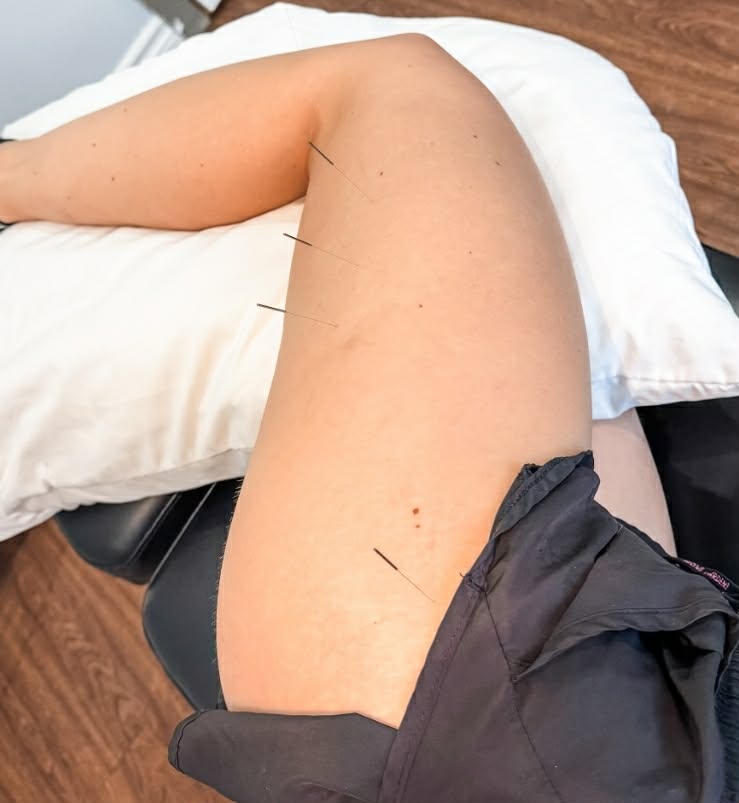
5. Acupuncture For IT Band Oakville
Acupuncture is a highly effective treatment option used by Dr. Jenn to reduce muscle tension and inflammation associated with IT Band Syndrome.
This technique involves the insertion of very fine, sterile needles into specific points along the tight or irritated muscles of the lateral thigh and hip. The needles are typically left in place for approximately 10–15 minutes.
Acupuncture works by stimulating the nervous system, promoting improved blood flow, reducing muscle tightness, and encouraging the body’s natural healing response. Increased circulation helps bring oxygen and nutrients to the irritated tissue while assisting in clearing inflammatory byproducts.
The best part? Most patients barely feel the needles being inserted — and once they’re in place, many forget they’re even there. Treatments are often described as relaxing.
When combined with soft tissue therapy, adjustments, Shockwave Therapy, and corrective exercises, acupuncture can significantly accelerate recovery and help reduce persistent IT Band tightness.
If outer thigh or lateral knee pain has been lingering, acupuncture may be an excellent addition to your treatment plan.
What Our Patients Are saying
-
I’ve always had a great experience at Nottinghill Family Wellness Centre. The staff is friendly, professional, and welcoming. Dr. Steve Knighton listens to and understands my concerns. He has a great sense of humour, which adds a relaxed and personable touch to my treatment experiences. I am always well cared... read more

Gina Purvey
August 18, 2026Dr. Jenn is terrific and has helped me so much over the years. She is very progressive and uses many different methods (technology, acupuncture, tools) to go beyond traditional chiropractic and resolve issues (acute and chronic). I also like how her office direct bills my insurance for me. Highly recommend!
Dr. Alison MacDougall
November 7, 2024Dr.Steve and his team are very professional, focused. I came with severe pain in my knee, and he quickly got to the point, and in three sessions, I have recovered considerably- from not being able to walk and pain to a level of 10/10 in some positions, to being able... read more
Prashant Bhatt
November 7, 2024 -
Very helpful team. Physiotherapist Vinaya has now helping me on 2 different inquiries and RMT Jessica helps remove the aches, pains and stress
Mark Silva
December 17, 2024The staff is unbelievable, they are all so nice and quick with treatments and never behind on schedule! Dr. Steve is so easy to talk to and makes the physio fun. He knows how to help the injury and fixes it in just a few treatments! Definitely recommend!!
haley box
June 2, 2026Great clinic. Pain free after few visits.
Mario M
February 6, 2025 -
The staff and the doctors at this place are amazing. My husband and I both have had really good experience with 2 different doctors here. After years of suffering and going to different practitioners finally Dr. Jenn worked magic on my lower back pain and neck. I've... read more
amal farooq
October 7, 2024Dr Steve and his staff are amazing. Love his high energy and enthusiasm. Have seen several Dr’s for my shoulder injury and Dr Steve is the only one that has fully explained what’s going on that made sense. Only had a few treatments but already noticing an improvement. Front desk... read more
Steve & Angela Pinder
October 7, 2024Dr. Jenn thank you for all the years looking after our family, you are nothing short of a miracle worker. Always refer friends to your practice, sorry we are moving, you will be missed. Audrey, thank you for always accommodating us on short notice and following up, lifesaver. ... read more
Shona Mindzak
December 7, 2024
Custom Orthotics for ITB issues
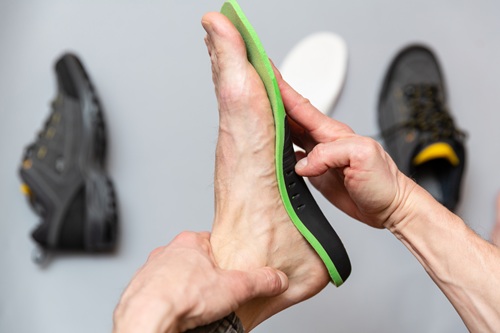
Once your IT Band symptoms have improved by about 80%, Dr. Steve and his team may recommend an orthotic gait scan and assessment to evaluate how your foot mechanics and walking pattern contribute to your ITB syndrome.
We typically do not perform gait analysis at the very beginning of care. Why? Because after 4–8 visits, most patients experience significant changes in hip alignment, muscle balance, and lower-limb biomechanics. Assessing too early can give us a misleading picture.
Many patients with more severe IT Band issues demonstrate over-pronation, which places added stress on the knee and outer thigh. In these cases, a properly designed custom orthotic can help guide the arch, stabilize the heel and ankle, and improve overall lower-body alignment — reducing strain on the IT Band and helping prevent recurrence.
Dr. Steve recommends Asics GT 2000’s to 90% of his patients. Find them on sale, get a pair for home and a pair for work. Can’t wear running shoes at work, check out our custom foot orthotics options at our Oakville clinic.
TFL Treatment Oakville
The tensor fasciae latae (TFL) is a small muscle located at the front and side of the hip that connects directly into the iliotibial (IT) band. Its main role is to help stabilize the hip and control movement during walking, running, and standing.
When the TFL becomes tight or overactive, it increases tension through the IT band, which can contribute to pain along the outer thigh or knee. This often happens when the glute muscles are weak or not functioning properly, forcing the TFL to compensate. Repetitive activities like running, prolonged sitting, or poor movement mechanics can further overload the TFL. Addressing TFL tightness and improving hip strength is key to reducing IT band strain and preventing recurring lateral leg pain.
Are you looking for Oakville Physiotherapy for your ITB syndrome? Check out Vinaya our Physiotherapist and book today!
IT Band Stretches and Exercises:
If the outside of your knee or hip keeps hurting during running or cycling, stretching alone does not explain why it keeps returning. Explore our sports chiropractic assessment and rehab planning for a closer look at your symptoms, movement and training demands.


Video of Foam Rolling and other IT Band Stretches
Meet Our Team






IT Band (ITB) Pain FAQs
- What is IT band syndrome?
- What are the symptoms of IT band pain?
- What are the causes if IT band pain?
- How is IT Band treated?
- How long does it take my IT band to get better?
- Does shockwave therapy help with IT Band pain?
- Can I still run if I have IT band pain?
- Are my shoe choices affecting my IT band causing pain?
- Can a chiropractor treat IT pain syndrome?
- What should I avoid doing with IT band pain?
IT band syndrome is when your IT get irritated, tight and swollen and starts to rub against your hip, the muscles in your tight and your knee. This is why some people hear a clicking or snapping noise!
Some symptoms you may experience with IT band syndrome is pain, swelling in the outer leg, tenderness to touch and a popping noise.
Some causes to your IT band pain is constant knee motion like running, over-training, improper shoes and chronic conditions like bursitis.
At our Chiropractic clinic we treat the IT band with IFC, shockwave and Instrument Assisted Soft Tissue Therapy.
Healing for your IT band is very individualized. It can take anywhere from a few weeks to a few months. This is why booking with us and getting treatment is crucial for faster healing.
Yes. shockwave therapy is a great treatment service for IT band syndrome. This form of treatment helps break of that tight fascia and muscle releasing the band.
No, it is not recommended to run if you are experiencing IT band pain. It is best to take a break and rest it because you can further injure yourself if you continue.
100% your shoe choices may be affecting your IT band pain. Improper shoes can lead to poor alignment from your ankle to your hip causing your IT to become tight.
Yes, our Oakville Chiropractors can treat your IT band syndrome. With our multitude of services and treatment plan we can get you back on your feet.
You should avoid repetitive running, cycling and going up and down the stairs. So anything with a constant knee bending motion should be avoided.
Content Reviewed By: Dr. Steve Knighton, B.Sc., D.C. on September 21, 2026
Chiropractic License Number: 5580