Content Reviewed By: Dr. Steve Knighton, B.Sc., D.C. on August 11, 2026
Chiropractic License Number: 5580
Physiotherapy in Oakville: Evidence-Based Care to Help You Move Better and Feel Stronger
Table of Contents
- What Is Physiotherapy?
- What Physiotherapy Can Help With
- Who This Service Is For
- Conditions & Areas We Commonly Treat
- How We Assess You
- What to Expect
- Our Treatment Approach
- Techniques & Tools We Use
- Featured Modalities
- Evidence & Integrity Snapshot
- Case Study
- Insurance, Direct Billing, and Pricing
- Download The Guide
- FAQs
- Book Physiotherapy in Oakville

Physiotherapy for Pain Relief, Mobility, and Recovery in Oakville
Physiotherapy is a healthcare service that helps reduce pain, restore movement, and rebuild strength through assessment, hands-on treatment, and targeted exercise. It can help with concerns like lower back pain, neck pain and headaches, sciatica-type symptoms, shoulder and rotator cuff pain, knee pain, sports injuries, post-surgical rehab, and stubborn tendon pain.
Physiotherapy care is provided by Vinaya Chitgopkar, our registered physiotherapist with more than 26 years of experience
At Nottinghill Family Wellness Centre in Oakville, your care is goal-based and practical—combining hands-on therapy, an individualized home exercise plan, and supportive in-clinic modalities (like IFC and shockwave) when appropriate. Seek urgent medical care if you have worsening weakness, new loss of bowel/bladder control, numbness in the groin/saddle area, fever with severe back pain, unexplained weight loss, or sudden one-sided leg swelling/redness.
What Is Physiotherapy?
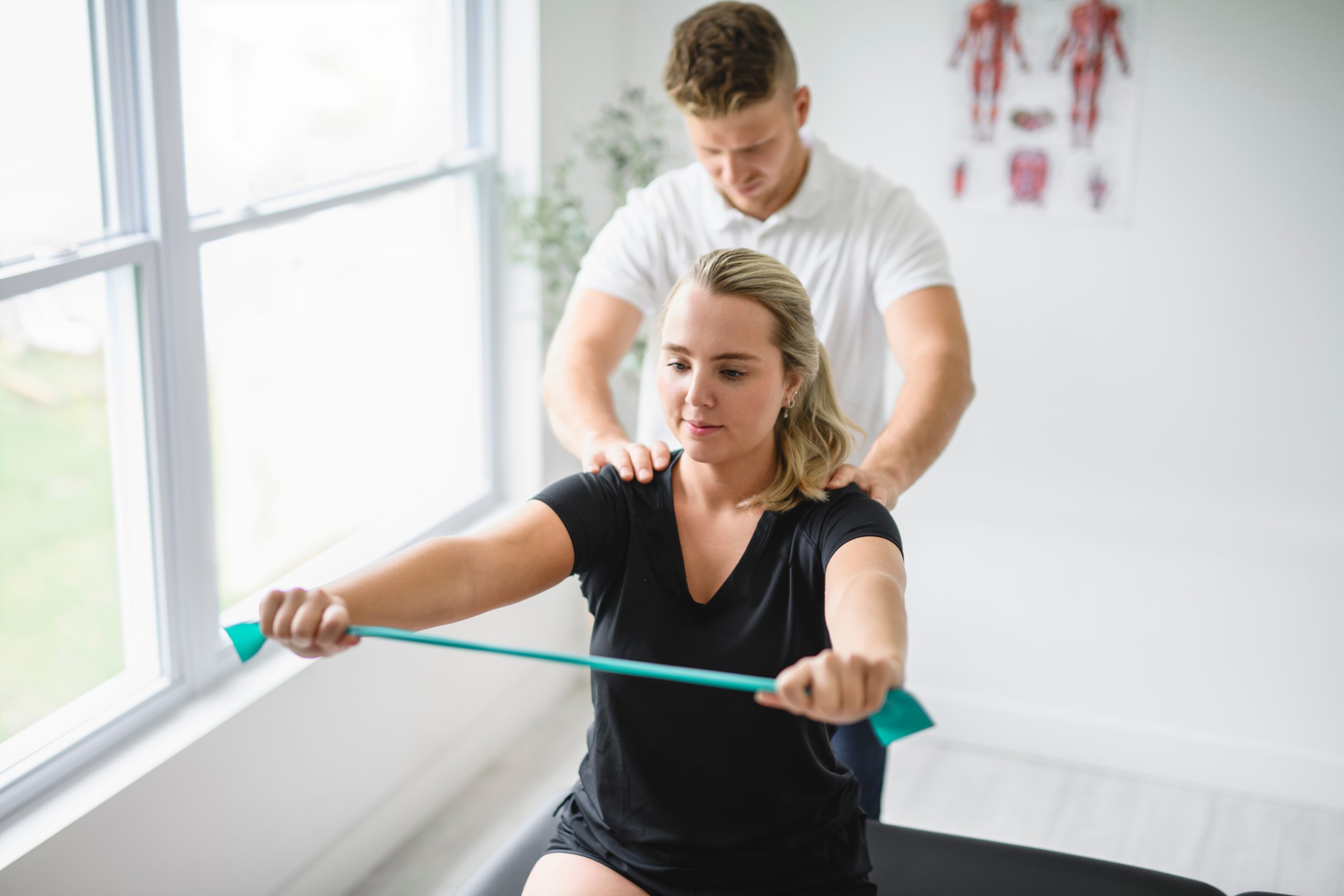
Physiotherapy (often called “physio”) focuses on helping your body move and function better—especially when pain, stiffness, weakness, or injury is getting in the way. A physiotherapist looks at the whole picture: your symptoms, your movement patterns, what aggravates things, what helps, and what you need to get back to (work, sport, sleep, daily life).
Most physiotherapy plans include a mix of:
- Education you can actually use (what’s likely happening and what to do next)
- Hands-on treatment when it’s helpful for pain, mobility, and tissue tolerance
- Therapeutic exercise to rebuild strength and resilience
- Targeted modalities to support comfort and recovery when appropriate
A couple misconceptions worth clearing up:
- Physiotherapy isn’t “just massage.” Hands-on work can help, but lasting change usually comes from a structured plan that restores motion and capacity.
- Physio isn’t only for athletes. It’s just as relevant for desk-related pain, lifting injuries, recurring flare-ups, and post-operative recovery.

What Physiotherapy Can Help With
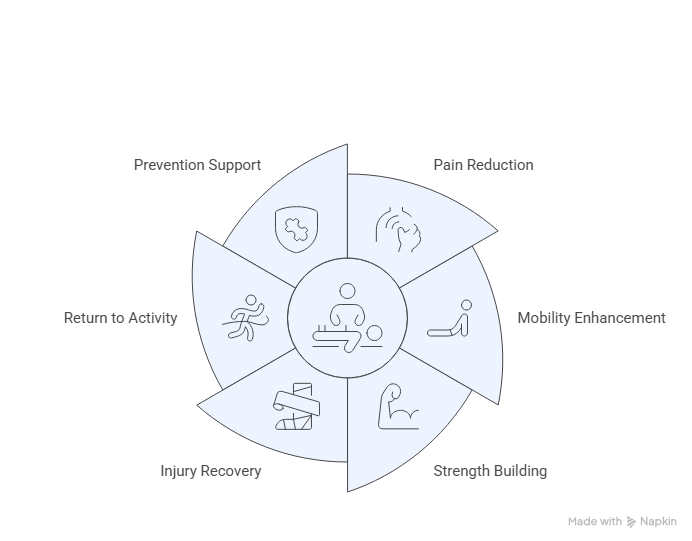
Physiotherapy is built around outcomes—what you want to do more comfortably and confidently. Common goals include:
- Pain reduction + flare management (calming irritation and improving tolerance to movement)
- Mobility + flexibility (reducing stiffness and restoring range of motion)
- Strength + capacity building (building resilience for daily life and training)
- Injury recovery / rehab (sprains, strains, tendon pain, and overuse injuries)
- Return to sport or work (graded progressions tied to your real demands)
- Prevention + performance support (better mechanics, better load management, fewer setbacks)
Who This Service Is For
You may be a great fit for physiotherapy if you:
- • Have lower back pain that limits sitting, standing, bending, or lifting
- • Feel nerve-like symptoms (shooting pain, tingling, numbness) into an arm or leg
- • Deal with neck pain, tension headaches, or limited neck mobility
- • Have shoulder pain with reaching, lifting, or sleeping on one side
- • Have hip or knee pain with stairs, running, squats, or longer walks
- • Have tendon pain (Achilles, plantar fascia, elbow tendons) that isn’t settling
- • Are rehabbing after surgery (knee/hip replacement, rotator cuff repair, ACL-related rehab)
- • Have a sports or running injury and want a clear return-to-activity plan
- • Sit for long hours and feel consistently “tight,” weak, or sore in predictable patterns
- • Want a plan that’s structured, measurable, and realistic—not random treatments
Not sure what’s going on? Start with an assessment. Once we see how you move and what reproduces symptoms, the plan gets much clearer.

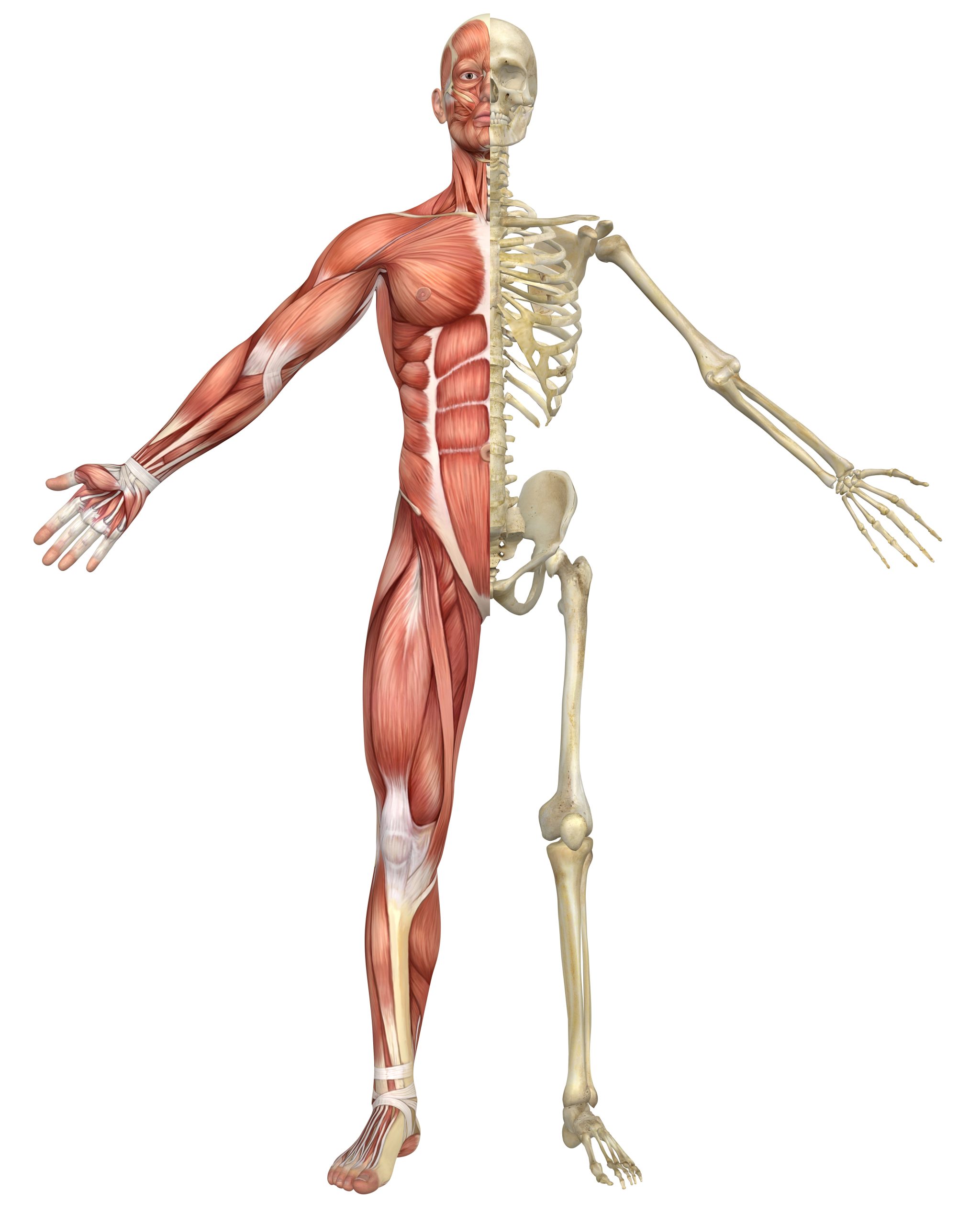
Conditions & Areas We Commonly Treat
Physiotherapy at Nottinghill Family Wellness Centre is commonly used for concerns involving:
Neck & upper back: Posture-related pain, stiffness, recurring tension, headaches linked to neck tension
Lower back, hips & pelvis: Mechanical lower back pain, sciatica-type symptoms, hip tightness and mobility limits
Shoulders & arms: Rotator cuff irritation, impingement-type symptoms, tendon pain, reaching/lifting discomfort, tendinosis and calcific tendonitis
Knees & legs: Meniscus tear, ligament irritation, kneecap pain, arthritis-related stiffness, running-related overload, jumpers knee
Foot & ankle: Achilles tendon pain, plantar fascia irritation, arch/heel pain, ankle sprains and instability
Common use-cases: Sports injuries, running injuries, workplace strain, post-operative rehab, and persistent or recurring pain patterns
How We Assess You
A strong outcome starts with a strong assessment. Your first step is understanding what’s contributing to your symptoms—and what’s limiting your function.
Your assessment typically includes:
- • History + goal setting: what changed, what’s aggravating it, what you need back in your life
- • Movement and functional testing: how you bend, lift, reach, walk, squat, rotate, or stabilize (based on your concern)
- • Relevant screening: orthopedic and neurological checks when symptoms suggest nerve involvement or more complex presentation
- • Baseline measures: range of motion, strength, functional tolerance, and simple measures to track progress over time
If anything suggests a medical concern or a presentation outside physiotherapy’s scope, we refer appropriately and help you navigate next steps.

What to Expect
We keep things straightforward so you know what’s happening and why.
What to wear / bring
Wear comfortable clothing you can move in. Bring any relevant imaging reports if you have them (not required), plus a short list of your top goals and biggest triggers.
Your first visit
- • We review your history and clarify your goals
- • We assess movement, strength, and function
- • We explain the “why” in plain language
- • We start care right away when appropriate (hands-on treatment and/or modalities)
- • You leave with a simple home plan to begin building momentum
Follow-up visits
Follow-ups focus on progressing your plan: refining movement, building strength and capacity, and using hands-on care or modalities as needed based on your response.
How often will I come in?
Early on, visits are often closer together to calm symptoms and establish progress. As things improve, appointments typically space out while you build independence and tolerance.
Home plan expectations
Your home plan should be realistic and repeatable. Consistency matters more than intensity—and we adjust it as you improve.

Our Treatment Approach
Physiotherapy works best when it’s structured and progressive—because pain and recovery aren’t one-size-fits-all. We use a phased framework that meets you where you are and moves you forward with measurable steps.
Phase 1: Calm irritation / reduce sensitivity
If symptoms are sharp, reactive, or easily aggravated, the first goal is to settle things down. We focus on reducing irritation, improving comfort, and restoring confidence in movement. This may include hands-on treatment, gentle mobility work, and supportive modalities like IFC and heat when appropriate.
Phase 2: Restore motion + control
Next, we restore range of motion and improve movement control. This phase often targets the “drivers” behind recurring flare-ups—especially in the back, neck, and shoulder—so movement becomes smoother and less threatening.
Phase 3: Build strength + capacity
Once symptoms are steadier, we build the strength and tissue tolerance you need for real life: lifting, stairs, long walks, work demands, and sport. Exercises progress from “safe and simple” to “strong and capable,” at a pace that matches your situation.
Phase 4: Return to function + reduce recurrence risk
Finally, we shift from rehab to durability—helping you return to your activities with a plan that supports long-term results. You leave with a maintenance strategy and a flare-management plan you can use on your own.

Techniques & Tools We Use
People often ask what physiotherapy actually includes. Here’s what you can expect from our toolkit—used strategically based on your needs:
- • Hands-on therapy / mobilization: to improve mobility and reduce stiffness
- • Soft tissue techniques: to address muscle guarding, trigger points, and tissue sensitivity
- • Therapeutic exercise programming: individualized exercises and progressions (often starting on the first visit)
- • Instrument-assisted soft tissue therapy (IASTT): a targeted technique sometimes used for stubborn soft-tissue restrictions
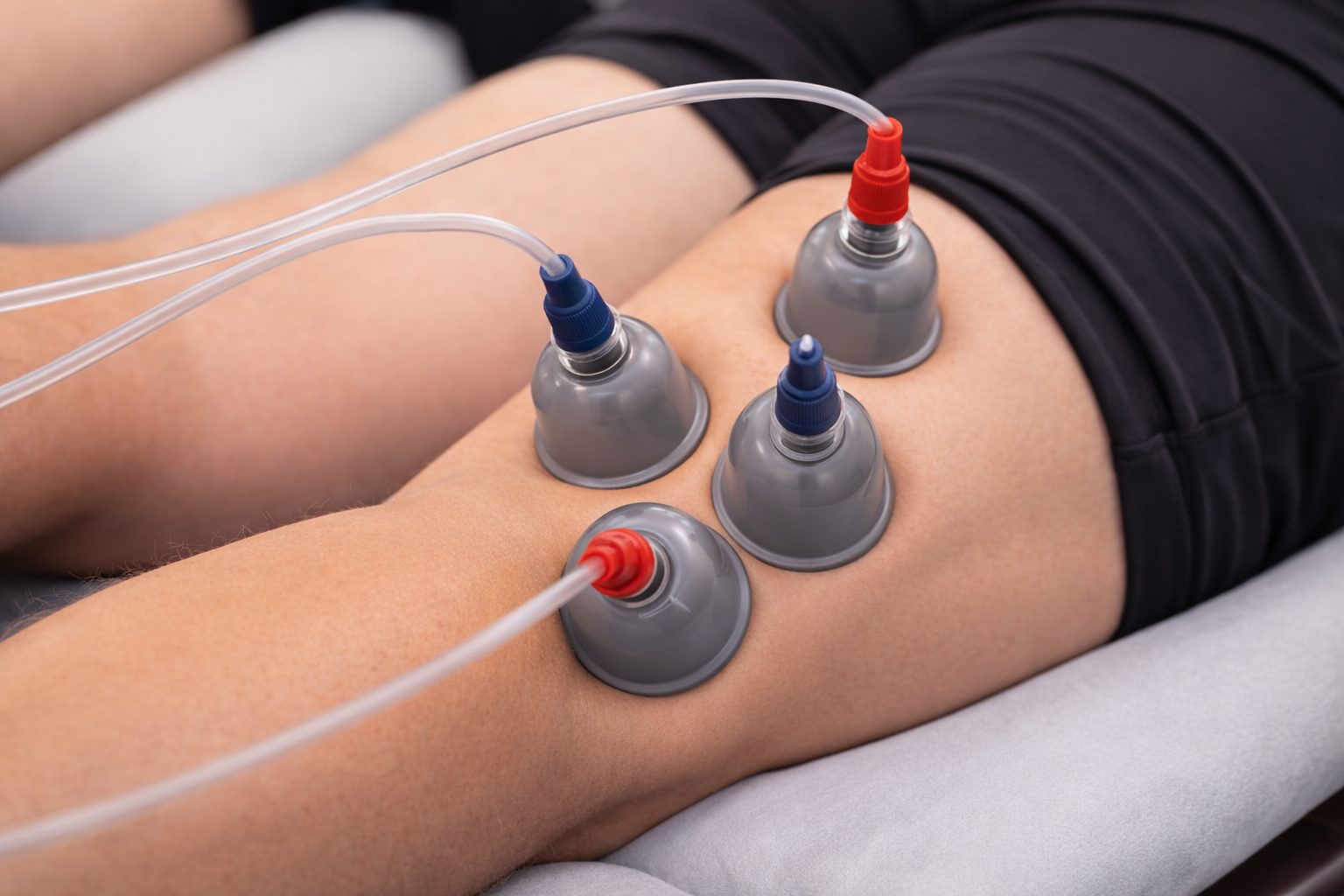
- • IFC (interferential current therapy): used to support pain control and comfort when appropriate, applied using comfortable suction-cup electrodes rather than adhesive pads.
- • Shockwave therapy: used selectively for certain persistent tendon and soft-tissue pain patterns
- • Education that makes life easier: ergonomics, pacing, recovery, and practical “what to do next” guidance
Featured Modalities
Interferential Current Therapy (IFC)
IFC is a form of electrical stimulation that can help reduce pain and improve comfort—especially when symptoms are limiting your ability to move or exercise. Sensation is typically a mild tingling or pulsing, and intensity is adjusted to your tolerance. IFC is most useful when it helps you move better and tolerate your rehab plan; it’s not a standalone fix. If IFC isn’t appropriate for you, we simply don’t use it. Our IFC is applied via modern suction applicator and not unreliable sticky pads.
Shockwave Therapy
Shockwave therapy is a non-invasive modality that delivers mechanical pulses to targeted tissues. It’s often considered for certain stubborn tendon and soft-tissue pain patterns, especially when symptoms have been persistent and loading tolerance needs to improve. It can feel like tapping and may be temporarily sore afterward. When used, it’s paired with a progressive rehab plan—because shockwave tends to work best alongside a structured strengthening and loading program. We are Oakville’s most affordable shockwave clinic at only $80 per session.
Instrument-Assisted Soft Tissue Therapy (IASTT)
IASTT uses a specialized tool to provide targeted soft tissue treatment. It can be helpful when an area feels restricted or highly sensitive, and we want to improve short-term mobility and tolerance. You may feel pressure or a scraping-like sensation; mild redness can occur temporarily. As with hands-on care, the goal is to support better movement and reinforce progress with exercise.

Evidence & Integrity Snapshot
We provide evidence-informed physiotherapy—meaning your plan is guided by research, clinical expertise, and your goals. For common musculoskeletal concerns (especially back pain), high-quality guidelines consistently emphasize staying active, education, and exercise-based rehabilitation, with hands-on care and passive treatments used as part of a broader plan—not the entire plan. (NICE)
What we prioritize:
- • Clear explanations and a plan that makes sense
- • Active rehab and progressive exercise with measurable progress
- • Treatment choices that match your needs and your response
- • Reassessment and plan adjustments when things change
What we avoid:
- • Guarantees, hype, or fixed timelines
- • One-size-fits-all protocols
- • Passive-only care that doesn’t build long-term capacity
When we refer out:
If screening suggests a medical red flag or something outside physiotherapy’s scope, we recommend appropriate next steps and referral pathways.

Case Study
Patient profile: Mid-40s office professional, active on weekends, recurring lower back pain with occasional leg symptoms after long sitting and lifting.
Starting limitation: Couldn’t sit longer than 20 minutes without pain; avoided exercise; sleep disrupted several nights per week.
Assessment highlights: Mechanical lower back pattern with limited hip mobility, reduced trunk endurance, and sensitivity to repeated bending. Neurological screening did not indicate urgent concerns.
Plan:
- • Settled symptoms with pacing strategies, mobility, and comfort-supporting care as needed
- • Restored movement control with graded exposure to bending and lifting patterns
- • Built strength (glutes/core/hinge mechanics) with a progressive loading plan
- • Returned to gym activity with a clear progression and flare-management strategy
Milestones: - • Week 2: Improved sitting tolerance; fewer sleep disruptions
- • Week 4: Resumed structured workouts twice weekly with modifications
- • Week 8+: Returned to regular activity with improved confidence and fewer flare-ups
Outcome: Improved function and self-management with a clear maintenance plan to reduce recurrence risk.

Meet Our Team






Download Our Complete Guide to Physiotherapy in Oakville
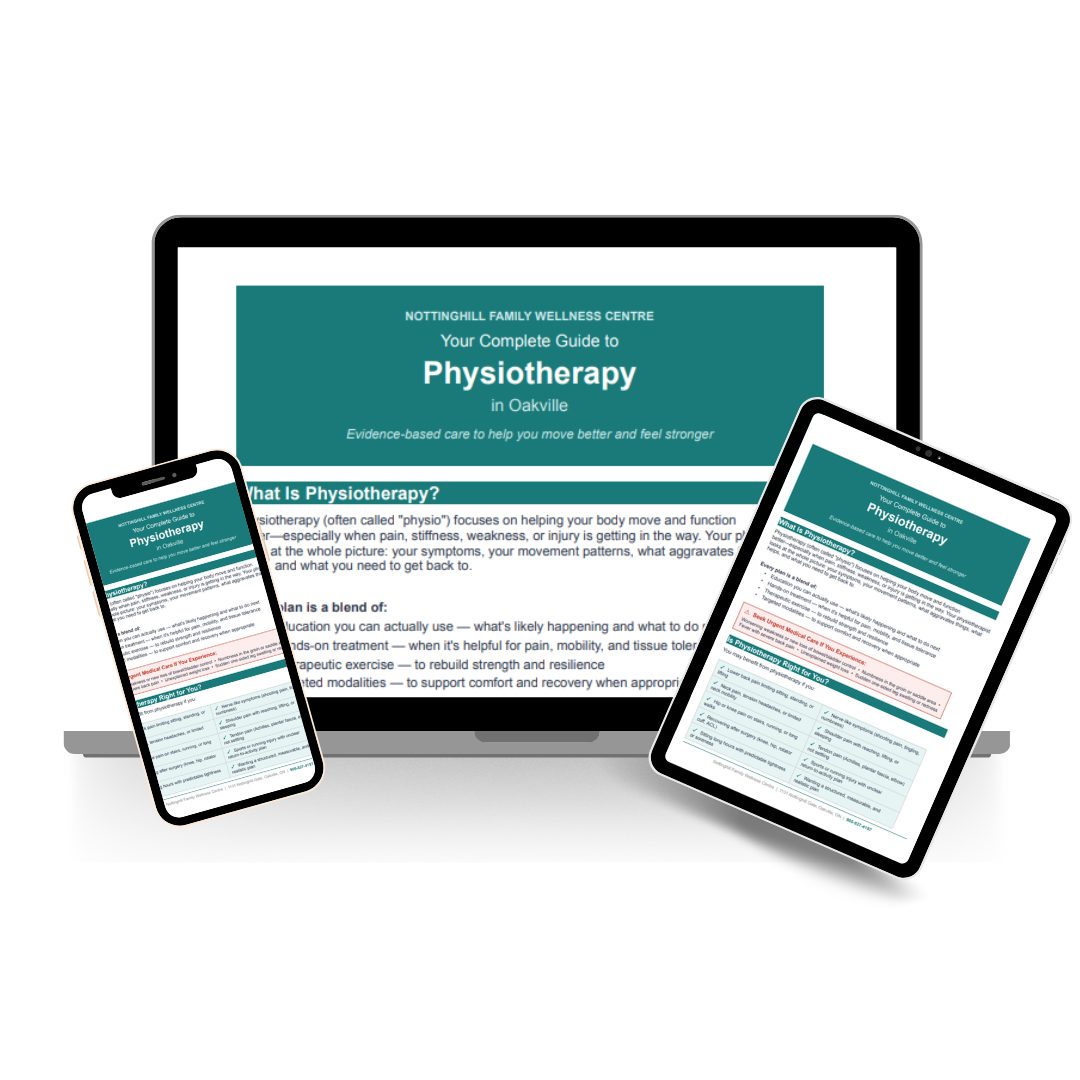
Get our complete Oakville physiotherapy guide for a clear, helpful overview of what physiotherapy is, who it may help, the types of pain and injuries we treat, and what your recovery journey may look like at Nottinghill Family Wellness Centre.
Reviews
-
My husband and I have been attending the Nottinghill Family Wellness Centre for almost a year now, and we are so pleased. Dr. Jenn is consistently professional, caring and helpful to both of us for our physio well-being. She is a brightness to our day every time we visit. The... read more

 Elle S
February 13, 2025Love Dr. Steve's sense of humour, enthusiasm and determination to make you feel better he always adds a positive part in our day when we come here thank you! We love the staff at the front desk and the helpers of Dr Steve they are so kind and hardworking. Thank... read more
gunes ozok
December 7, 2024From the moment you walk in, the staff make you feel welcome, comfortable, and genuinely cared for. The clinic is clean, professional, and well organized. A special thank you to Dr. Steve, who is truly the best from every perspective. His knowledge, professionalism, patience, and genuine care for his patients are... read more
Seher Mufty
May 29, 2026 -
Dr. Steve and his team are real difference makers. In a few short sessions, the issue was resolved. Expert advice, excellent personalized care. On top of that, the friendly team at the front desk are so easy to communicate with. Highly recommend! Thank you Dr. Steve!
Kristine N
July 28, 2026Where does one even begin?? I can’t say enough good things about Dr. Steve and his amazing team! I went in with unbearable SI joint pain—pain so intense that it was affecting my daily life. From the moment I walked into their office, I felt welcomed, cared for, and... read more
Krystal Milwain
March 5, 2025Great clinic. Pain free after few visits.
Mario M
February 6, 2025 -
I can't say enough good things about this clinic! I called looking for physio for my arm, hoping to be squeezed in for a same day appointment. They had no physiotherapist available for same day, but instead of leaving it at that, they asked what the issue was and suggested... read more
Raquel Rich
April 29, 2026Dr. Steve and his assistant Laura did a great job of healing my jaw pain. Laura was always so professional and her Shockwave treatment really helped ease the pain.
Suzanne Di Stefano [Staff]
June 7, 2024Steve is an outstanding chiropractor. After seeing multiple practitioners for my injury without getting lasting results, Steve was able to identify the problem and resolve it. What I appreciated most was that he was realistic about the timeframe for recovery. He didn't make unrealistic promises and explained what to expect every... read more
Jessica Cassidy
August 6, 2026


![Suzanne Di Stefano [Staff] Avatar](https://lh3.googleusercontent.com/a-/ALV-UjVVBaTrZmdNMyTEvH2oSjRTe9OJv9g3RWcD3b6nbFw36AAxGNuG=s120-c-rp-mo-br100)

Insurance, Direct Billing, and Pricing
We aim to keep billing straightforward and reduce friction around getting care.
- • Direct billing: Direct insurance billing may be available for physiotherapy when your plan permits it.
- • Receipts: Receipts are provided for reimbursement when needed.
- • Referrals: You can access physiotherapy directly in Ontario, but some extended health plans still request a referral for reimbursement—check your policy to confirm. (Ontario Physiotherapy Association)
- • What’s included per visit: A movement-based plan with treatment that may include hands-on care, individualized exercise programming, and supportive modalities when appropriate.
- • Pricing: Initial Physiotherapy Assessment: $130 —- Physiotherapy Follow-Up: $80

Book Physiotherapy in Oakville
You don’t have to push through pain or wait until it becomes unmanageable. Start with a thorough assessment, a clear plan, and practical next steps—so you can move better, feel stronger, and stay confident in your day-to-day life.
FAQs
Have more questions? Read our complete Physiotherapy FAQs.
- Do I need a referral?
- How many sessions will I need?
- How long are appointments?
- What should I wear?
- Will it hurt?
- What if I’m not improving?
- Can physiotherapy help chronic or recurring pain?
- What’s the difference between physiotherapy and massage therapy?
- Can I combine physiotherapy with other services?
No—physiotherapists are direct-access providers in Ontario. Some insurers may still request a referral for reimbursement, so check your plan. (Ontario Physiotherapy Association)
That depends on your goals, how long symptoms have been present, and how you respond. After your assessment, we’ll outline a plan and adjust based on progress.
Your first visit includes a full assessment and typically treatment when appropriate. Follow-ups focus on progressing your plan and addressing what’s limiting you most.
Comfortable clothing you can move in. Shorts help for hip/knee/ankle concerns; a tank top can help for shoulder assessments.
Physio should not feel alarming. Some techniques may be temporarily uncomfortable, but we stay within tolerable limits and adjust based on your feedback.
We re-check the assessment findings, adjust the plan, and—when needed—recommend further medical input or referral.
Often, yes. Many persistent pain patterns respond best to education and a progressive exercise plan that rebuilds tolerance over time. (PubMed)
Massage therapy is primarily hands-on and passive. Physiotherapy is typically more goal-based and active—combining assessment, movement rehab, and progressive exercise, with hands-on care as needed.
In many cases, yes. When appropriate, coordinated care alongside services like massage therapy, acupuncture, orthotics, or shockwave can support a well-rounded recovery plan.