Understanding the Muscles: TFL and Gluteus Minimus
The TFL
The TFL is a relatively small but functionally important muscle located on the upper/outer aspect of the hip/thigh. The main 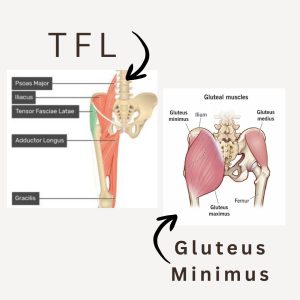 actions of this muscle is hip flexion, internal rotation as well as assisting in stabilization of the pelvis during walking.
TFL and gluteus minimus problems are common in the hip and lower-back patients we assess at Nottinghill Family Wellness Centre in Oakville.
The Gluteus Minimus
This muscle lies deep to the ‘medium’ sized gluteus medius. It sits in the outer pocket of the pelvis and attaches into the femur (the thigh bone). The primary functions of the gluteus medius are hip abduction and stabilization of the pelvis in single-leg support.
These two muscles are functionally intertwined. They both stabilize and help to move the hip in similar ways. They share a nerve supple and connections into the ITBand. For these reasons – they can often compensate for each other. If one is weak of tight, the other tends to overwork. Clinically, pain from these muscles can present similarly and are therefore often treated together.
How Do The TFL and Glute Min Get Injured?
The most common mechanism of injury for the TFL and gluteus medius are overuse and repetitive strain. They work continuously in daily life to stabilize the pelvis during walking, running and standing on one leg. Repetitive hip flexion (cycling, running, stair climbing) can cause overuse of the TFL. Prolonged walking or running on a sloped surface (certain roads or banked tracks) can stress both the TFL and glute min. Excessive sitting can shorted the TFL and weaken the glute min which sets up a problematic muscle imbalance between two muscles who need to work together.
Poor biomechanics and gait dysfunction may also contribute to these muscles being injured. Altered hip or leg mechanics increases stress on both muscles. For example, flat feet leads to extra internal rotation of the hip which leads to the TFL being overused. A leg length discrepancy, or habitual single leg standing can lead to asymmetrical loading of these muscles and lead to pain-causing dysfunction.
These muscles can also be injured via direct trauma or acute injury. The sudden twisting of the leg (eg – trying to catch yourself from a fall) can strain the TFL. Forceful contraction of the leg when the hip is extended (eg – sprinting, or sudden directional changed) can injure the gluteus minimus.
Chronically poor posture is another mechanism for injury of these muscles. Standing with the hip jutted out to one side will strain the gluteus medius. Prolonged sitting keeps the hips flexed, the TFL shortened and the glutes underused. Both these postures can negatively impact these two important muscles.
All of these mechanisms can lead to microscopic tearing, inflammation, trigger point formation and fascial tightness.
Pain Presentations of TFL and Glute Min
If these muscles are problematic it is common to experience pain deep in the side of the hip. Other common symptoms include:
- pain when laying on the affected side
- lateral thigh pain travelling down the side of the leg (as far as the outer knee or even outer calf)
- typically no signs of weakness or numbness
- may experience pelvis drop on the opposite side
- may experience pain when climbing stairs or after prolonged sitting
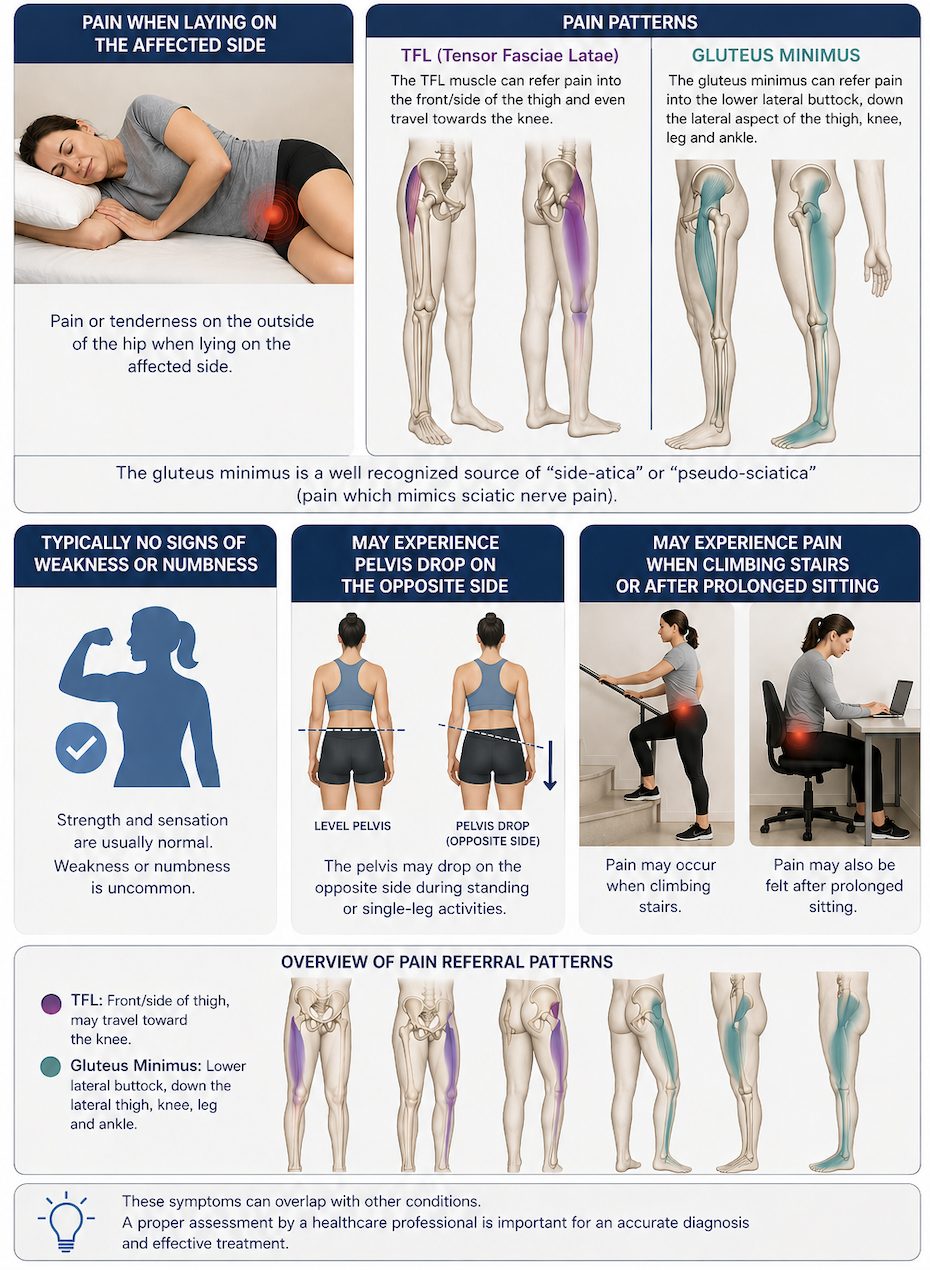
The TFL muscle can refer pain into the front/side of the thigh and even travel towards the knee.
The gluteus minimus can refer pain into the lower lateral buttock, down the lateral aspect of the thigh, knee, leg an ankle. This muscle is a well recognized source of ‘side-atica’ or ‘pseudo-sciatica’ (pain which mimics sciatic nerve pain).
How To Treat ‘Side-atica’
- Muscle Release Techniques for TFL and Glute Min

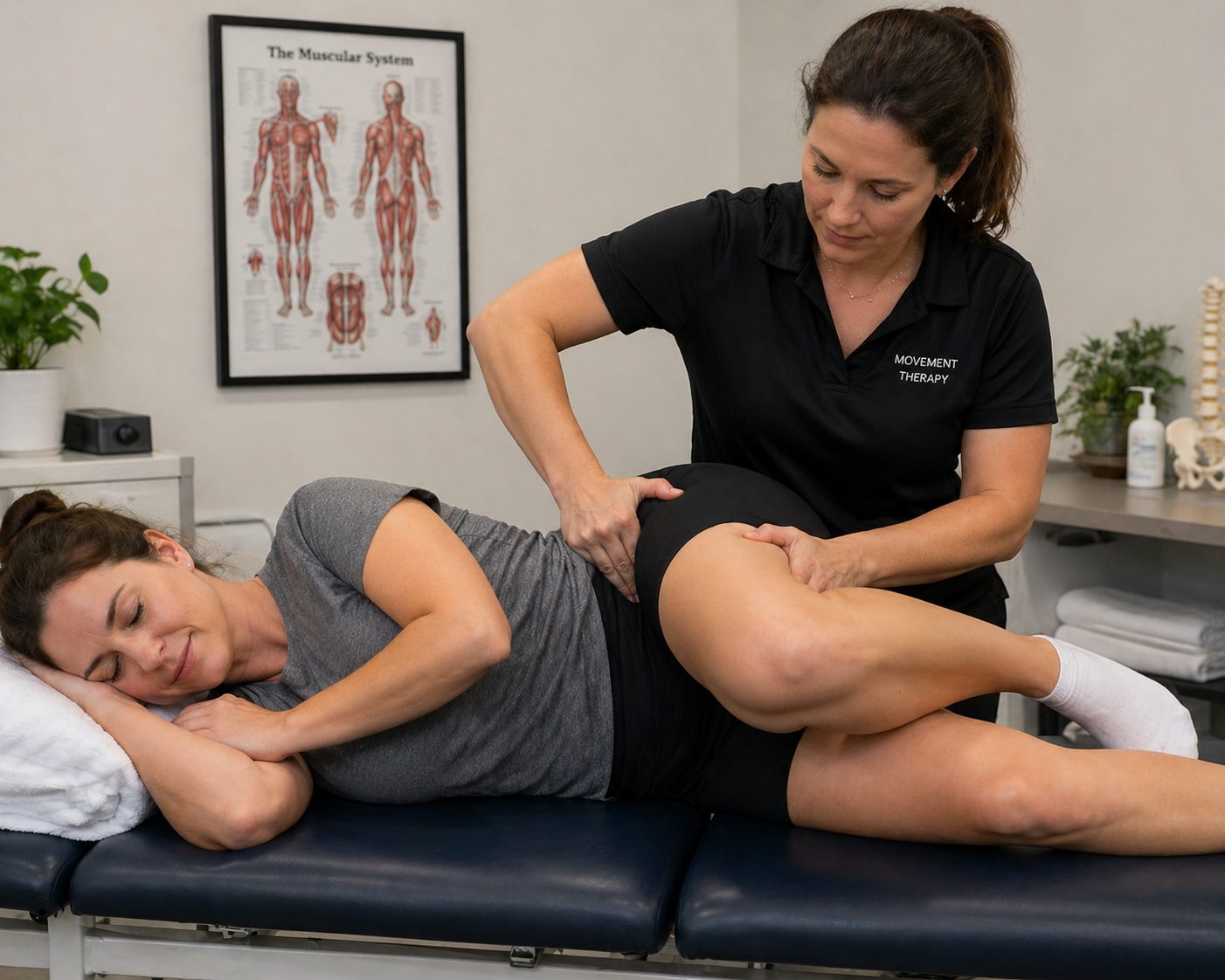
There are multiple techniques that can be used to help relieve tight musculature. Many muscle release techniques involve the practitioner pinning the muscle with their hand and then moving the patient through a stretching pattern to help release the muscle. Other techniques, like cupping/myofascial decompression and IASTM (instrument assisted soft tissue therapy) are also helpful at reducing muscle tightness, reducing fascial adhesions and promoting more fluid, pain-free ranges of motion. - Acupuncture for TFL and Glute Min
Acupuncture targets nerve pathways to help influence the muscles. Acupuncture is effective at reducing inflammation, releasing muscle tension and alleviating pain. Acupuncture for the TFL and gluteus minimus involve inserting needles both locally (into the muscle) and distally (further away from the muscle but along the same nerve pathways) to instigate healing in the target areas. - Shockwave for TFL and Glute Min
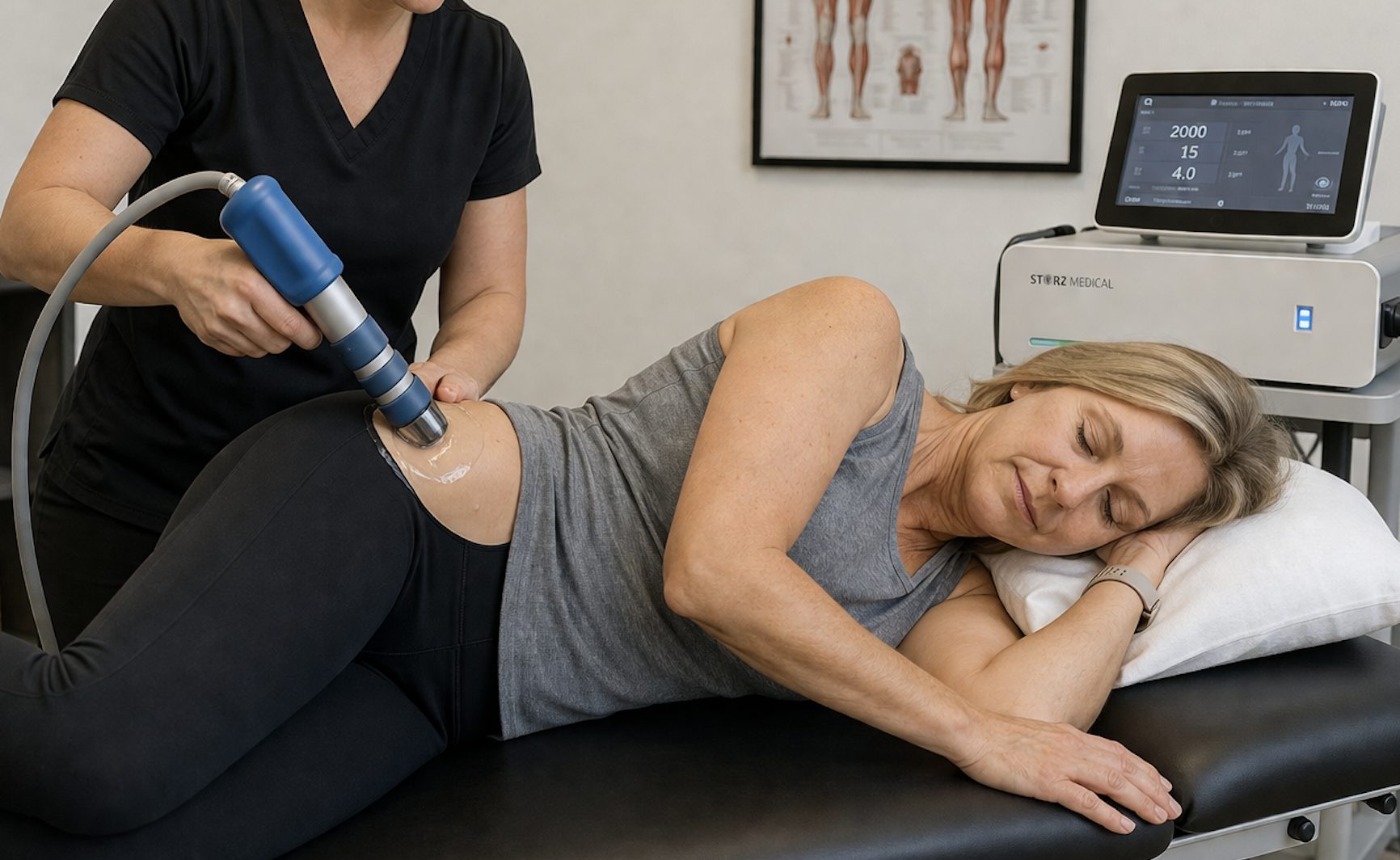
 Shockwave therapy can effectively reduce pain and improve function in the tensor fasciae latae (TFL) and gluteus minimus by stimulating tissue repair and breaking down chronic adhesions. The high-energy acoustic waves of shockwave increase blood flow and promote collagen production in the affected muscles and tendons. This process helps reduce inflammation and muscle tension, restoring normal tissue elasticity and movement. Shockwave therapy also helps desensitizes pain receptors and triggers the body’s natural healing response.
 - Stretching and Strengthening
No treatment is complete without a little bit of homework. In the early stages of treatment stretching is introduced to help reinforce the effects of your hands-on treatment, and create lasting lengthening of tight muscles. As pain improves strength exercises will be incorporated to help stabilize the affected muscles and improve the resiliency of the TFL and gluteus minimus. Strength is what keeps the muscles happy and healthy when treatment is complete!
The TFL and gluteus minimus pain can significantly impact daily movement and overall quality of life, but understanding the source of discomfort is the first step toward lasting relief. With targeted treatments—such as manual therapy, corrective exercise, stretching, and modalities like shockwave therapy and acupuncture—pain can be reduced and muscle function restored. By combining professional guidance with consistent self-care, individuals can regain hip strength, stability, and comfort, allowing them to return to their daily activities and exercise routines with confidence and improved mobility!