Content Reviewed By: Dr. Steve Knighton, B.Sc., D.C. on October 10, 2026
Chiropractic License Number: 5580
Custom Orthotics in Oakville: Assessment, Fitting and Support
Get assessed to find out whether custom orthotics are appropriate for your foot mechanics, symptoms and daily activity. Custom orthotics are not sold off a shelf or shipped to your door. At Nottinghill Family Wellness Centre in Oakville, every recommendation starts with a hands-on foot and gait assessment, so the result is matched to your feet, your footwear and how you move.
Serving patients across Oakville, Burlington, Hamilton and Milton from our clinic in the Glen Abbey community.
Table of Contents
- Clinically reviewed for accuracy and patient safety
- Quick answer: what are custom orthotics and how do you get them?
- Who custom orthotics may be appropriate for
- What custom orthotics are and how they work
- Signs, symptoms and everyday situations that lead patients to ask
- When to book an assessment, and when to seek medical care
- How we assess your needs
- Custom orthotic options and what shapes a recommendation
- Types of custom orthotics we offer
- Fitting, ordering and follow-up: the process step by step
- What to expect after you receive your orthotics
- Insurance, receipts and documentation
- Evidence snapshot in plain language
- A de-identified example of how a recommendation is made
- Watch: Custom Orthotics Oakville 3D pin system explained
- Not ready to book? Get our free Custom Orthotics Guide
- A local clinic that starts with the assessment, not the sale
- References and medical review
- Frequently asked questions

Clinically reviewed for accuracy & patient safety
Reviewed by: Dr. Steve Knighton, B.Sc., D.C.
Role: Chiropractor
Ontario Chiropractic License Number: 5580
Last reviewed: July 13th, 2026
Dr. Steve Knighton full bio
CCO Public Register
Medical disclaimer: This page is for general education only. It does not diagnose a condition, replace a personal assessment, or guarantee any outcome. Foot, heel, knee and back symptoms can have many different causes, so any decision about custom orthotics should follow an in-person assessment with a qualified provider. If you have an urgent or worsening problem, seek medical care.
Custom orthotics are medical-grade shoe inserts made to support how your feet load, move and absorb pressure during walking and standing. They may be appropriate when foot mechanics, recurring symptoms, work demands or sport activity suggest your feet could use added support. They are one part of a care plan, not a stand-alone cure. At Nottinghill Family Wellness Centre in Oakville, you are assessed first, so any recommendation reflects your symptoms, gait, footwear and functional needs rather than a guess. Insurance coverage varies by plan, and we can provide documentation to support a claim. Book an orthotics assessment to find out whether custom orthotics are right for you.
Who custom orthotics may be appropriate for
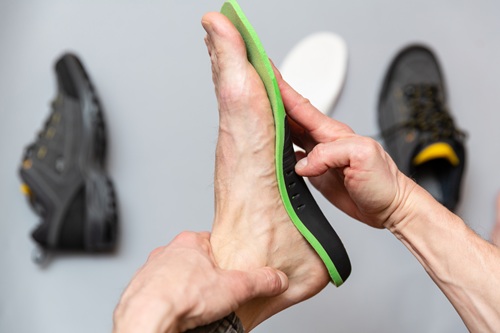
You may benefit from an orthotics assessment if you recognize yourself in any of these situations. This is a guide to help you decide whether to book, not a diagnosis.
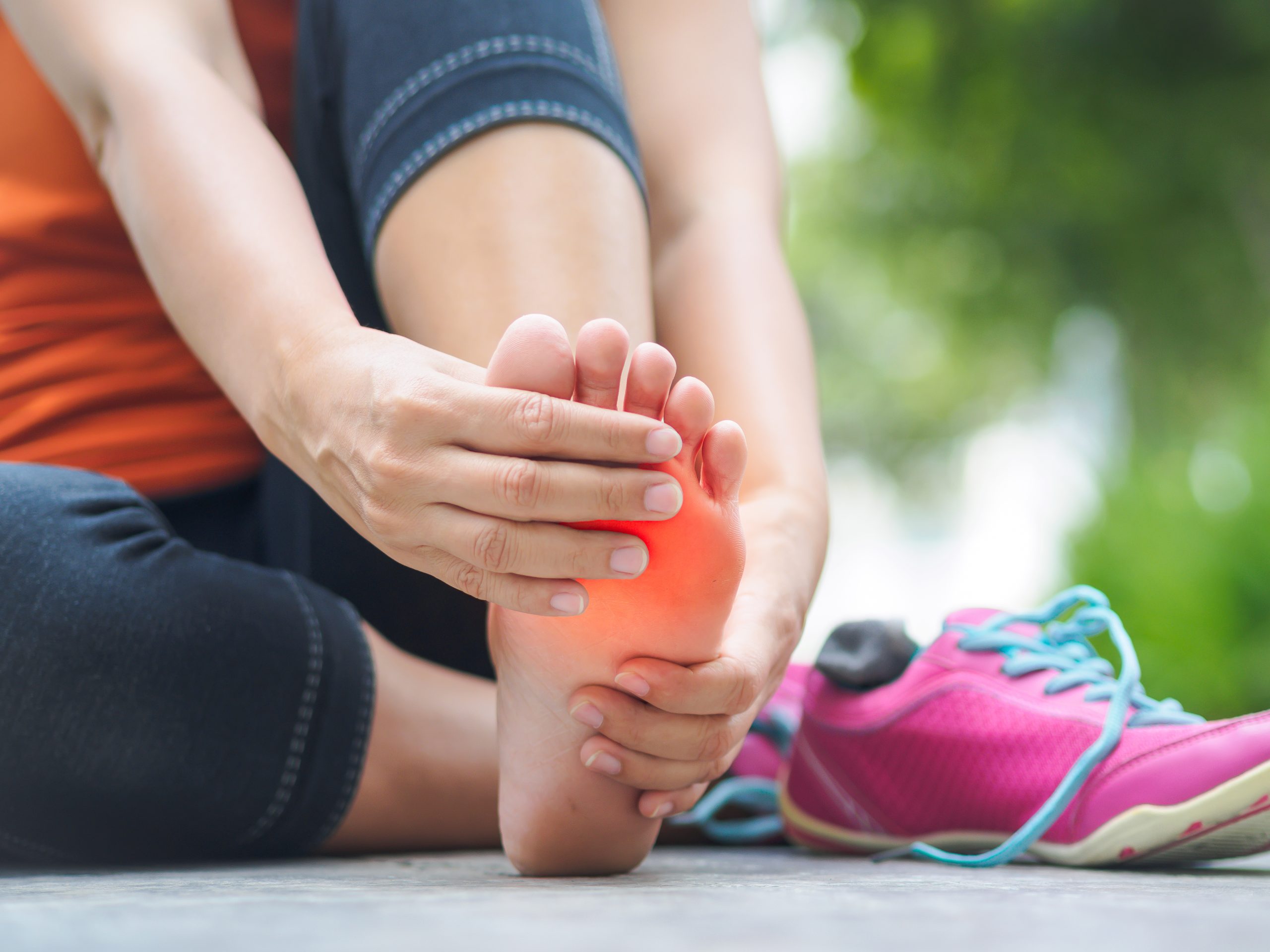
- Recurring heel pain, arch strain or foot fatigue, especially first steps in the morning or by the end of the day
- Standing or walking for long shifts at work (for example, nurses, teachers, retail, trades, hospitality)
- Knee, hip or lower back discomfort that you suspect may be linked to how you walk
- Shoes that wear down unevenly or feel like they no longer support you
- Flat feet, high arches or a sense that your feet roll inward when you move
- Returning to running or sport and wanting better support through training
- A previous foot injury that still affects your comfort or balance
These patterns are common reasons patients ask about orthotics, but similar symptoms can have very different causes. We use “may be appropriate” on purpose. An assessment confirms whether orthotics are the right tool for you.
If you have been to our Oakville clinic, you have probably heard Dr. Steve demanding that patients wear better shoes, or at least get a pair of supportive orthotics for their not so great shoes. If you are looking for shoe options for back pain, check out Dr. Steve Knighton’s recommended shoes for stenosis and lower back pain.
What custom orthotics are and how they work
Custom orthotics are inserts designed for the specific shape and movement pattern of your feet. They work by supporting the arch, helping to stabilize the heel and distributing pressure more evenly as you walk and stand. Because the feet are the foundation of the body, foot mechanics can influence the ankles, knees, hips and lower back along what is often called the kinetic chain.
Here is what they can and cannot do.
What they may do: help control excessive inward roll (overpronation), redistribute pressure across the foot, improve comfort inside supportive footwear, and reduce strain on structures such as the plantar fascia when mechanics are part of the problem.
What they do not do: they are not a cure-all, they will not fix every type of pain, and they are not a substitute for an assessment, appropriate footwear or the rest of a care plan.
A common myth to clear up: “good shoes mean I do not need orthotics.” Supportive shoes matter, but footwear alone may not correct issues like overpronation or uneven loading. Custom orthotics are designed to work together with supportive shoes, not to replace them. They also differ from store-bought insoles, which are made to a generic shape rather than to your feet.

Signs, symptoms and everyday situations that lead patients to ask
Patients often book an assessment after noticing patterns like these in daily life.
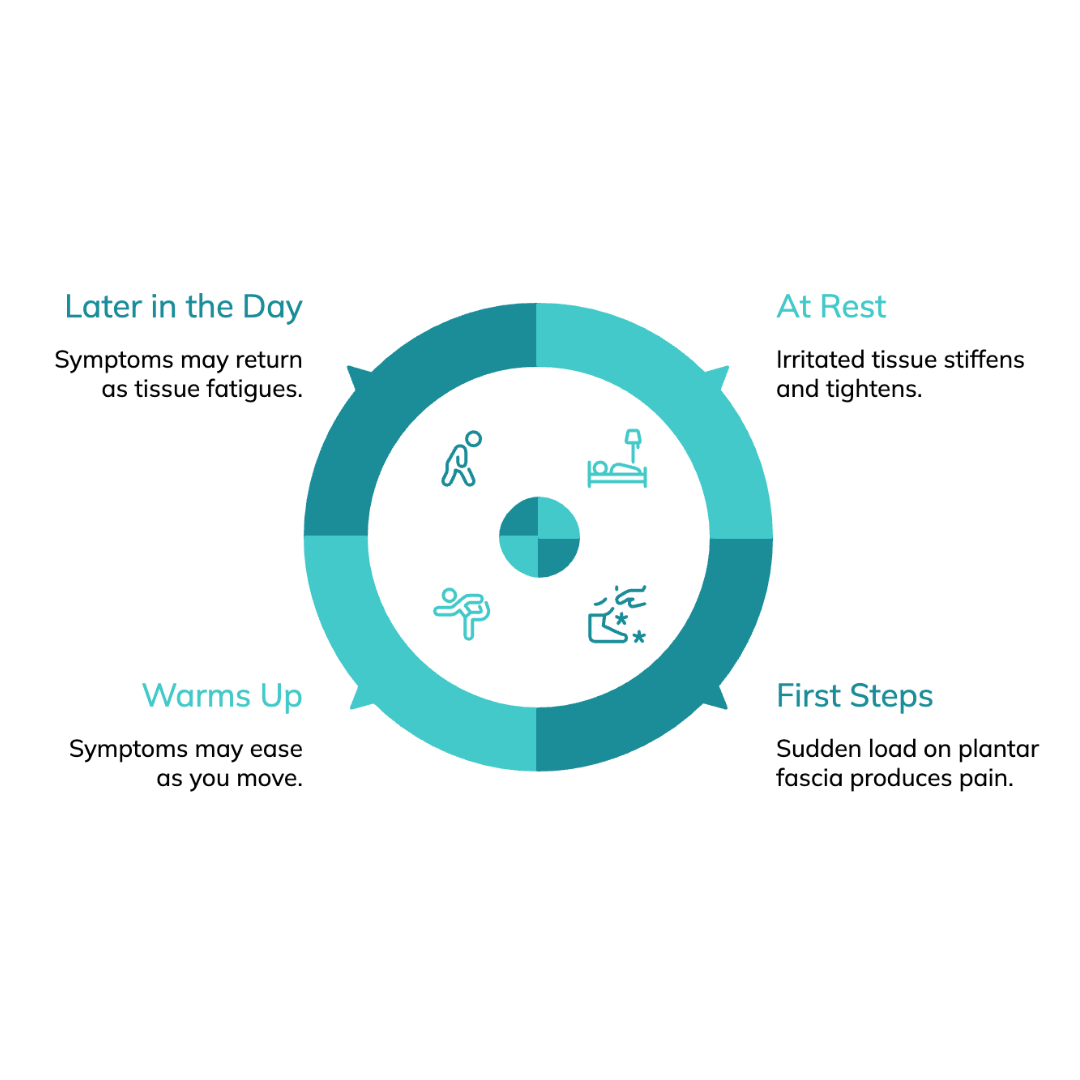
- Heel pain that is sharpest with the first steps of the day or after sitting
- Aching, tired or burning feet by the end of a long standing shift
- Arch pain or a feeling that the arch is collapsing
- Knee discomfort going up or down stairs
- Lower back fatigue after a day on your feet
- New foot discomfort after starting a running program or changing shoes
- Needing extra support while recovering from a foot or ankle injury
Notice the theme: these are practical, day-to-day experiences rather than a checklist diagnosis. The same symptom, for example heel pain, can come from several different causes. That is exactly why we assess before recommending anything.

When to book an assessment, and when to seek medical care
Book a routine orthotics assessment when you have ongoing or recurring foot, arch, heel, knee or lower back discomfort that you suspect is linked to standing, walking or footwear, and it is affecting your comfort or activity.
Seek prompt medical care, rather than booking an orthotics fitting, if you have any of the following:
- Sudden, severe or rapidly worsening pain
- A foot or ankle injury with significant swelling, bruising or inability to bear weight
- An open wound, ulcer, signs of infection (redness, warmth, discharge), or numbness, especially if you have diabetes or a circulation condition
- New loss of sensation, weakness or tingling in the foot or leg
These situations may need assessment or treatment beyond the scope of orthotics. We will always tell you honestly if your situation calls for a different provider, and we can help point you in the right direction.

How we assess your needs
This is where an in-clinic service differs from buying an insert online. An assessment helps confirm whether orthotics are appropriate before anything is ordered. Here is what to expect during your visit.
- Health and symptom history. We review your symptoms, activity level, work demands, footwear habits and any relevant medical background.
- Foot posture and arch evaluation. We look at arch height and how your foot is structured at rest and under load.
- Gait and walking analysis. We observe how you move, including a digital gait scan.
- Foot and ankle mobility and function. We check range of motion and functional movement that may relate to your symptoms.
- Footwear review. Bring the shoes you wear most. Wear patterns tell us a lot.
- Contraindication screening. We check for reasons orthotics may not be appropriate and whether a referral is the better path.
- Recommendation discussion. We explain what we found and whether custom orthotics, supportive footwear, other care, or a combination may help.
What to bring: the footwear you use most often (work shoes, running shoes), and comfortable clothing that lets us observe your lower legs and feet.

Custom orthotic options and what shapes a recommendation
Orthotics are not one-size-fits-all, and the right choice depends on you rather than on a single best product. We explain the category so you understand why the recommendation is personalized.
General categories include:
- More supportive, control-oriented orthotics aimed at managing motion such as overpronation
- More cushioned, accommodative orthotics aimed at comfort and pressure relief
- Activity-specific designs, for example for running, work footwear or dress shoes
Custom versus off-the-shelf: over-the-counter insoles are built to a generic shape and can suit some general comfort needs. Custom orthotics are built to your foot shape and movement pattern after an assessment, which is why they are recommended when mechanics are part of the problem.
Factors that influence what we suggest: your symptoms and findings, arch type and foot mechanics, the footwear you actually wear, your work and activity demands, and how the orthotic fits into your wider plan. Orthotics are often paired with footwear guidance and other supportive care.

Types of Custom Orthotics We Offer
Once your assessment is complete, we match you to a device that fits your feet, your footwear and how you spend your day. We make our custom orthotics through Atlas Orthotics, a Canadian lab in Hamilton, Ontario, which builds devices in three profiles. The right profile and model depend on your findings, not on a single best product.
Traditional heel cup
Structured orthotics with a deeper heel cup and a supportive shell, built for added rearfoot stability and control through your stride. This profile may be appropriate when you need more motion control or are wearing roomier footwear. Common options include:
- Flex Lite: an entry-level device that fits most casual, work and athletic footwear with a removable liner
- All Sport and Sport Flex: for active wearers who want motion control and shock absorption
- Casual Ultra Flex: a versatile option for everyday casual and athletic shoes
- Dress Flex: a slimmer device for dress shoes, and Pump Flex for women’s heeled shoes
- Shock or Industrial: for workplace and safety footwear that needs extra shock absorption
- Active Diabetic: built with added stability and cushioning, often considered for patients whose main activity is walking
- UCBL: a more rigid device for flexible flat feet that need maximum control
- Soft Orthotic: an EVA shell for sensitive feet that need gentle support
- Sandal options: including built-in footbed styles
Low profile
Streamlined orthotics that provide biomechanical support while fitting comfortably into slimmer and everyday shoes. This profile may suit you when your footwear has less depth or you prefer a less bulky device. Common options include:
- Flex Lite and Casual: for slimmer everyday shoes
- All Sport, Sport Flex, Cross Trainer and Court: for athletic and court footwear
- Dress: for low-volume dress shoes
- Industrial: for work footwear that still needs cushioning
- Diabetic: a low-profile option built with cushioning in mind
Not sure which type suits you? That is exactly what the assessment is for. We will explain which profile and model may be appropriate for your feet, your symptoms and the shoes you actually wear, and we will be honest if orthotics are not the right tool.

Fitting, ordering and follow-up: the process step by step
We keep the path simple so you always know the next step.
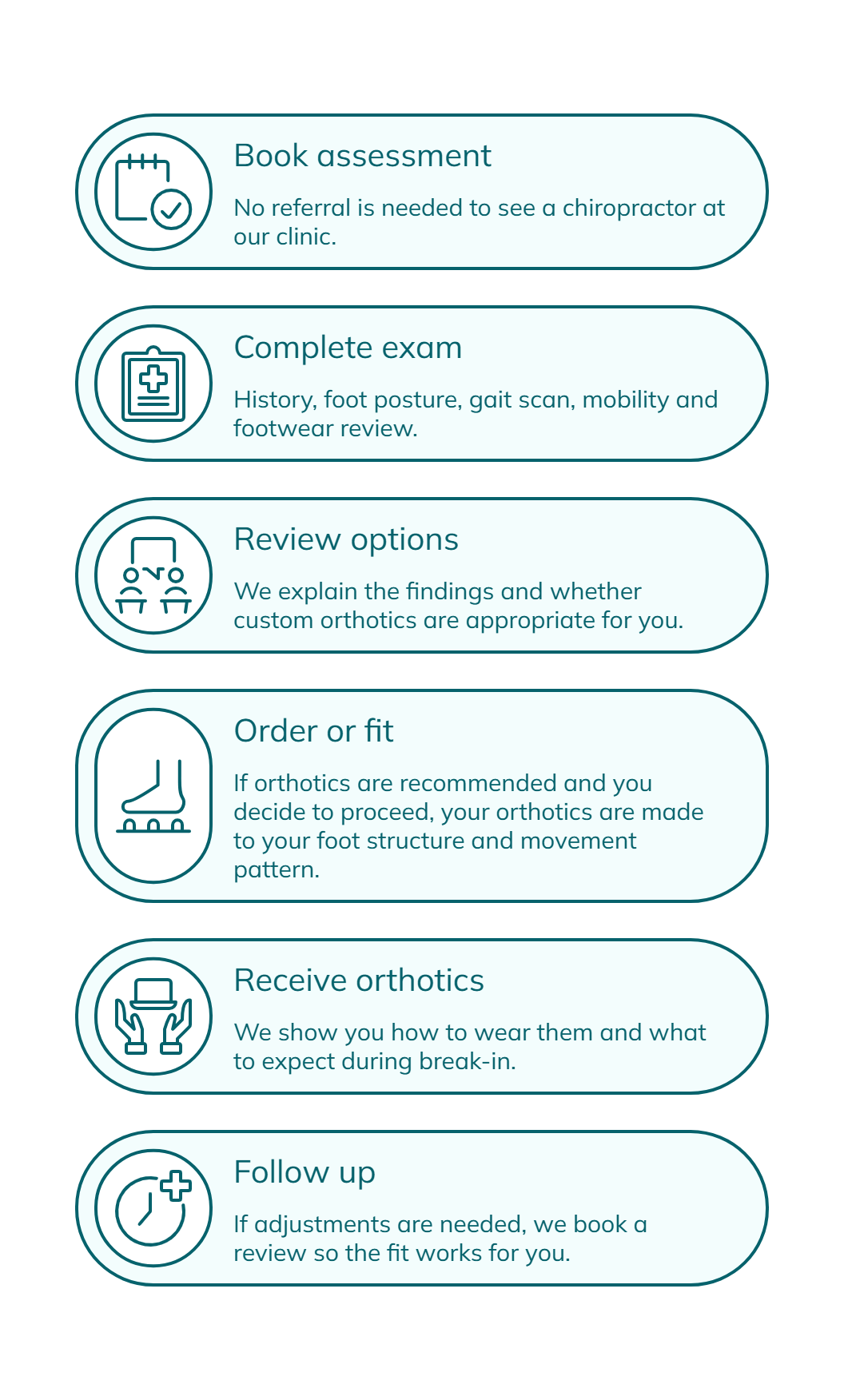
- Book your assessment. No referral is needed to see a chiropractor at our clinic.
- Complete your exam. History, foot posture, gait scan, mobility and footwear review.
- Review your options together. We explain the findings and whether custom orthotics are appropriate for you.
- Order or fit. If orthotics are recommended and you decide to proceed, your orthotics are made to your foot structure and movement pattern.
- Receive your orthotics with guidance. We show you how to wear them and what to expect during break-in.
- Follow up. If adjustments are needed, we book a review so the fit works for you.
What to expect after you receive your orthotics
Setting expectations early helps your orthotics work for you and reduces frustration.
- Break-in period. Most people start by wearing new orthotics for a few hours a day and gradually build up wear time, rather than all day at once.
- An adjustment phase is normal. Your feet may need time to get used to new support, and mild awareness or a different feel is common at first.
- Use them in the right footwear. Orthotics work best inside supportive shoes that have room for them.
- Care and longevity. With everyday use, custom orthotics commonly last a few years, depending on materials, activity and footwear. Periodic reassessment helps confirm they still support you well.
- When to call us. If you have increasing pain, new discomfort, or the orthotics do not feel right during break-in, contact the clinic so we can review the fit.
We do not promise a specific timeline for symptom relief. Everyone responds differently, and orthotics are one part of a broader plan.
Insurance, receipts and documentation
Coverage varies by plan, so this is an “it depends.” Many extended health benefit plans include custom orthotics when they are recommended by a qualified provider, but the amount, the required forms and the submission rules differ between insurers.
Here is how to approach it.
- Check your plan first. Confirm whether custom orthotics are eligible, the dollar amount available, and whether your insurer requires a biomechanical assessment or specific paperwork.
- Ask your insurer what they need. Some plans require particular documentation or a prescription from your medical doctor. Knowing this before you order avoids surprises.
- What we can provide. We can supply receipts and the documentation available through the clinic to support your claim.
We never describe orthotics as “covered” for your specific situation, because only your insurer can confirm your benefits. If you are unsure, call us and we will walk you through what we can and cannot do.
Veterans Affairs and CAF Orthotic Enquiries
If you use VAC or CAF benefits, contact our team before ordering custom orthotics. Product coverage, prescriptions and authorization requirements are separate from your treatment visits. Visit our Veterans Affairs and CAF care page for information on getting started.

Evidence snapshot in plain language
Here is a responsible, plain-language summary of what the research and clinical guidance generally suggest. None of this guarantees a result for any individual.
- For plantar heel pain (plantar fasciitis): clinical reviews and professional guidance suggest foot orthoses may help reduce pain and improve function for some people, usually as part of a broader plan that can include stretching, footwear changes and other care, rather than on their own.
- For foot mechanics and comfort: evidence indicates orthoses can change how load is distributed across the foot and may improve comfort during standing and activity for certain patients.
- For knee, hip and back symptoms: findings are mixed and depend on the individual and the underlying cause, which is why an assessment matters more than a blanket recommendation.
Limitations to keep in mind: study results vary, orthotics are rarely a stand-alone fix, and what helps one person may not help another. We do not cherry-pick a single study to make a big promise. See the References section for the source types behind these statements.

A de-identified example
A patient who stands for long shifts came in with recurring heel pain and tired arches by the end of the day. During the assessment we noted uneven shoe wear, an arch that flattened under load, and reduced lower-leg endurance. Custom orthotics were recommended as one part of the plan, alongside footwear guidance and a few simple strengthening steps. A follow-up was booked to check the fit and make small adjustments. The goal was steady, realistic improvement in comfort during the workday, not an overnight fix.
Watch: Custom Orthotics Oakville 3D pin system explained
Summary: A short, plain-language walkthrough of how we get the diagnostic information to make your custom orthotics in Oakville. who may benefit from custom orthotics, what the foot and gait assessment involves, how orthotics are made for your feet, and what to expect afterward, so you can decide whether booking an assessment makes sense for you.
Not ready to book? Get our free Custom Orthotics Guide
Inside the guide:
- Brands and materials. The orthotic lab we work with, Atlas Orthotics in Hamilton, Ontario, and what orthotics are made of, such as polypropylene shells, EVA foam, cork and carbon fibre, and why each is used.
- The process. How you get them, from your foot and gait assessment to the scan or impression, lab manufacturing, your pickup and fitting, and any follow-up adjustments.
- Who they may help. Real-life use cases such as runners, people on their feet all day, injury recovery and pregnancy, each framed as “may be appropriate.”
- What to expect afterward. A short break-in and care summary.
Educational only. This guide does not diagnose, recommend a specific product for you, or promise coverage.

A local clinic that starts with the assessment, not the sale
Nottinghill Family Wellness Centre is located at 1131 Nottinghill Gate in the Glen Abbey community of Oakville, and we welcome patients from Burlington, Hamilton, Milton and nearby areas. Our chiropractic and physiotherapy team, led by Dr. Steve Knighton, focuses on a clear assessment first, so any custom orthotic recommendation reflects your symptoms, your gait and your daily life.
Your first visit includes a foot and gait assessment with a digital scan, a footwear review, and a straightforward conversation about whether custom orthotics are appropriate for you. If they are not the right tool, we will say so.
Ready to find out whether custom orthotics suit your feet? The easiest next step is to book a foot and gait assessment in Oakville.
References and medical review
Reviewer to confirm and date before publishing. Each reference notes, in plain language, what it supports on this page.
- Heel Pain, Plantar Fasciitis: Clinical Practice Guidelines, Revision 2023. Journal of Orthopaedic and Sports Physical Therapy, 2023;53(12):CPG1 to CPG39. doi:10.2519/jospt.2023.0303. https://www.jospt.org/doi/10.2519/jospt.2023.0303 Supports: foot orthoses, prefabricated or custom, may be used together with other treatments to reduce pain and improve function in plantar fasciitis, and should not be used as an isolated treatment. This is why we assess first and treat orthotics as one part of a plan.
- Whittaker GA, et al. Foot orthoses for plantar heel pain: a systematic review and meta-analysis. British Journal of Sports Medicine, 2018. https://pubmed.ncbi.nlm.nih.gov/28935689/ Supports: across 19 trials, moderate-quality evidence that foot orthoses can help pain and function in the medium term, with smaller or uncertain effects in the very short term.
- Management of plantar heel pain: a best practice guide informed by a systematic review, expert clinical reasoning and patient values. British Journal of Sports Medicine, 2021. https://bjsm.bmj.com/content/55/19/1106 Supports: prefabricated, custom or mouldable orthoses can redistribute load and improve comfort, best used alongside other care rather than alone.
- Efficacy and safety of foot orthoses for improving pain and function in patients with plantar fasciitis: a systematic review and meta-analysis of randomized controlled trials, 2025. https://pubmed.ncbi.nlm.nih.gov/40999841/ Supports: foot orthoses can reduce pain with few or no reported adverse effects, while effects on function are less certain, and results are not one-size-fits-all.
Reviewed by: Dr. Steve Knighton, Doctor of Chiropractic, College of Chiropractors of Ontario (CCO).
Last reviewed: July 13th 2025.
Reviewed for: clinical accuracy, patient safety, scope-of-practice accuracy and service appropriateness.
Next review: July 2027.
FAQs
- Do I need custom orthotics or are store-bought insoles enough?
- Do custom orthotics help with plantar fasciitis?
- Are custom orthotics covered by insurance?
- Do I need a referral to get assessed?
- How are custom orthotics made?
- How long do custom orthotics last?
- How long do they take to get used to?
- Can orthotics help knee, hip or back pain?
- Where do you provide custom orthotics near me?
- What should I bring to my assessment?
- How much do custom orthotics cost, and how long do they take to make?
It depends. Store-bought insoles are made to a generic shape and may help with basic comfort. Custom orthotics are built to your foot shape and movement pattern after an assessment, which is why they are usually recommended when foot mechanics, such as overpronation or uneven loading, are part of the problem. An assessment is the clearest way to know which is right for you.
Often, yes, for the right person. Custom orthotics can support the arch and reduce strain on the plantar fascia, and many people find walking and standing more comfortable with proper support. They tend to work best as one part of a plan that may also include footwear changes and other care. An assessment confirms whether they suit your situation.
It depends on your specific plan. Many extended health plans include custom orthotics when recommended by a qualified provider, but the amount, forms and rules vary by insurer. Confirm your benefits with your provider, ask what documentation they need, and we can supply receipts and available documentation.
No. You can book directly with us. Your first visit includes a detailed foot and gait assessment to determine whether custom orthotics are appropriate for you. If we find your situation needs a different kind of care, we will tell you honestly and help point you toward the right provider.
After your assessment, your orthotics are created based on your foot structure and movement pattern, using a digital gait scan and pressure mapping of your feet. This lets the orthotics be matched specifically to your feet rather than to a generic mold, so they support how you actually walk and stand.
It varies, but with everyday use many custom orthotics last a few years. Longevity depends on the materials, how many hours a day you wear them, and the footwear you place them in. Periodic reassessment helps confirm they still provide proper support, and we can review them with you over time.
A short adjustment period is normal. Most people start with a few hours a day and gradually increase wear time so their feet adapt to the new support. Some early awareness or a different feel is common. If discomfort increases during break-in, contact us so we can review the fit.
Sometimes. Because the feet are the foundation of the body, foot mechanics can affect the knees, hips and lower back. For some people, improving foot support reduces strain higher up the chain. Results vary and depend on the underlying cause, which is why we assess first rather than assume orthotics are the answer.
We provide custom orthotics from our clinic in the Glen Abbey area of Oakville, and we see patients from Burlington, Hamilton, Milton and surrounding communities. Orthotics are recommended only after a foot and gait assessment, so the result fits your feet and your needs.
Bring the shoes you wear most, such as work and running shoes, since wear patterns are informative, and wear comfortable clothing that lets us observe your lower legs and feet. It also helps to note your main symptoms and when they tend to occur.
We make our custom orthotics through Atlas Orthotics, a lab in Hamilton, Ontario. We charge $450 for one pair or $550 for two pairs, and they typically take 5 to 10 business days to be made.
Content Reviewed By: Dr. Steve Knighton, B.Sc., D.C. on October 10, 2026
Chiropractic License Number: 5580