Tailbone Pain Treatment Oakville: Coccydynia & Coccyx Pain
Reviewed by Dr. Alex Greyvenstein, Chiropractor | Last reviewed: October 16, 2026
Tailbone pain can turn something as simple as sitting at a desk, driving, exercising or getting up from a chair into an uncomfortable experience.
At our Oakville chiropractic clinic, Dr. Alex assesses patients with tailbone pain to determine what may be contributing to their symptoms and whether conservative treatment is appropriate.
Pain arising from the tailbone is commonly called coccydynia, or coccyx pain. It may develop after a fall, prolonged sitting, childbirth, repetitive pressure or irritation of the joints and soft tissues surrounding the coccyx.
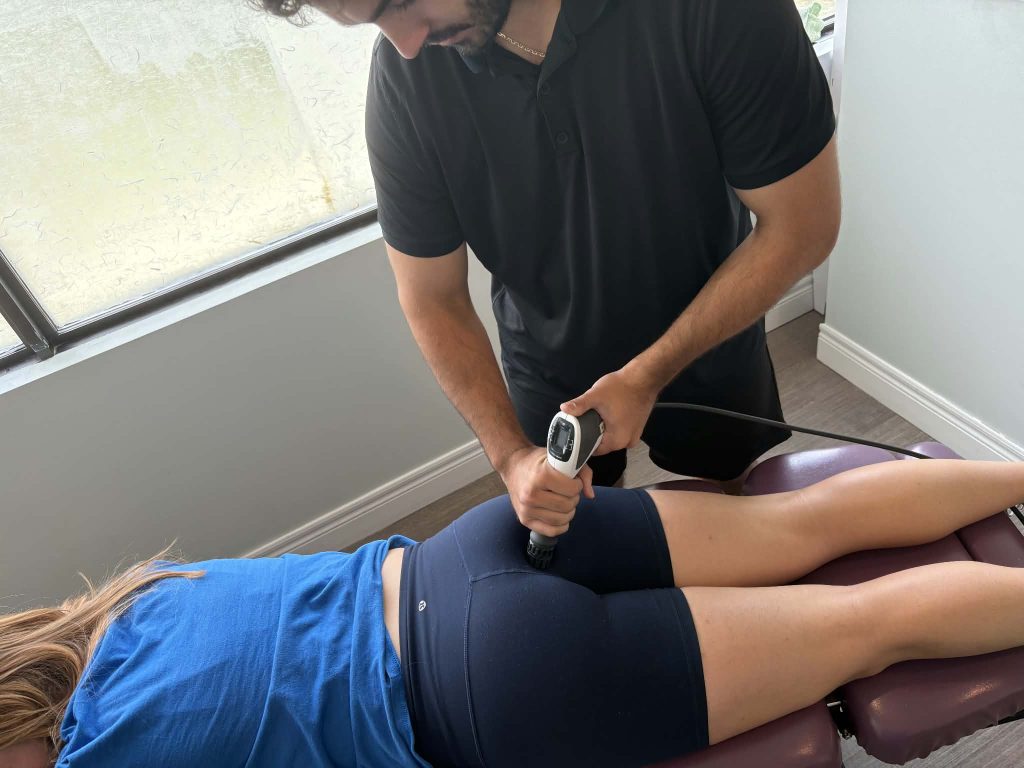
Treatment may include a combination of chiropractic care, coccyx mobilization or adjustment when clinically appropriate, IFC, shockwave therapy, exercises, activity modification and strategies to reduce pressure on the tailbone while it heals.
For persistent tailbone discomfort, physiotherapy can help address related muscle tension, posture and movement problems as part of your recovery plan.
Dr. Alex Explains Tailbone Treatment in Oakville
What Is the Coccyx?
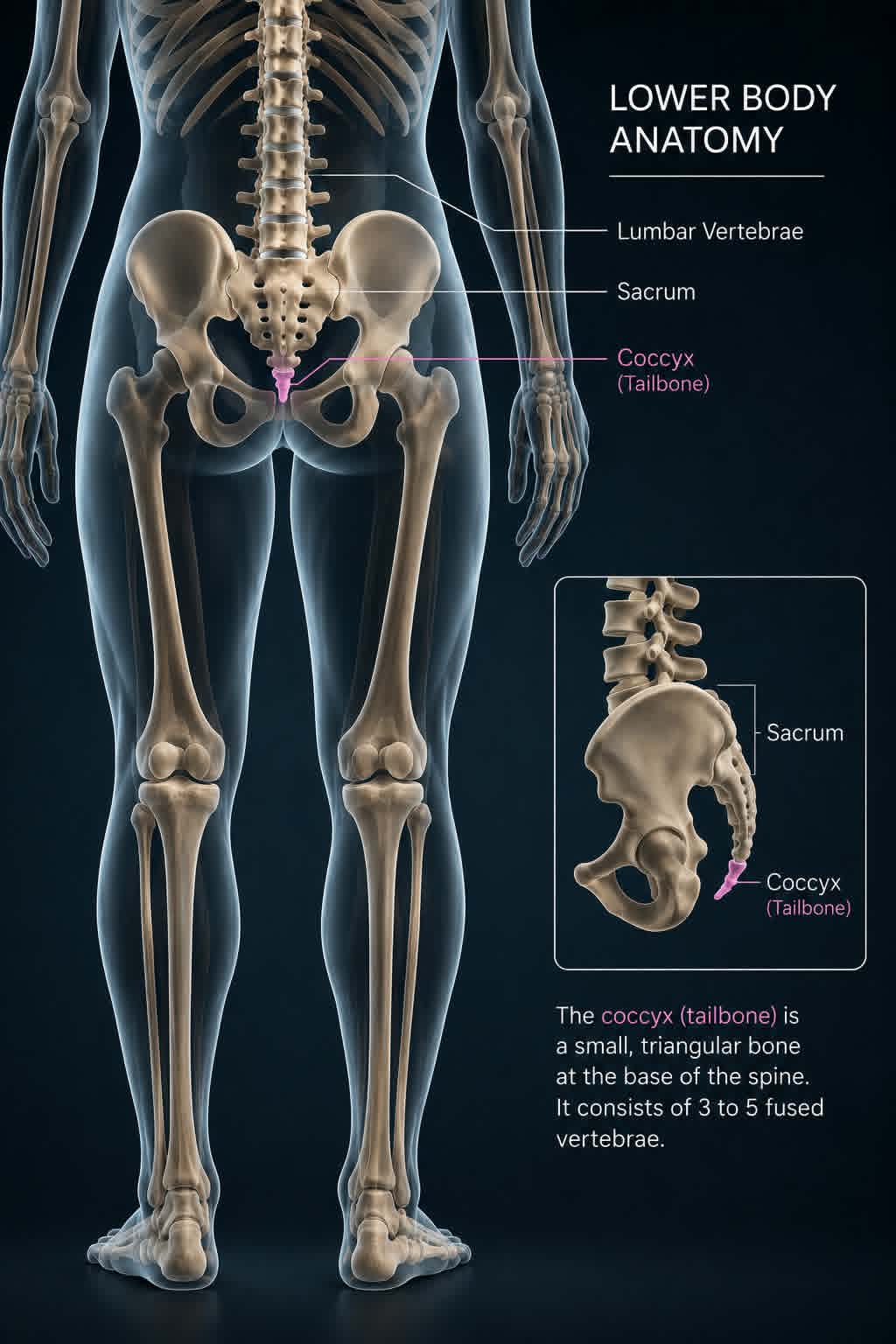
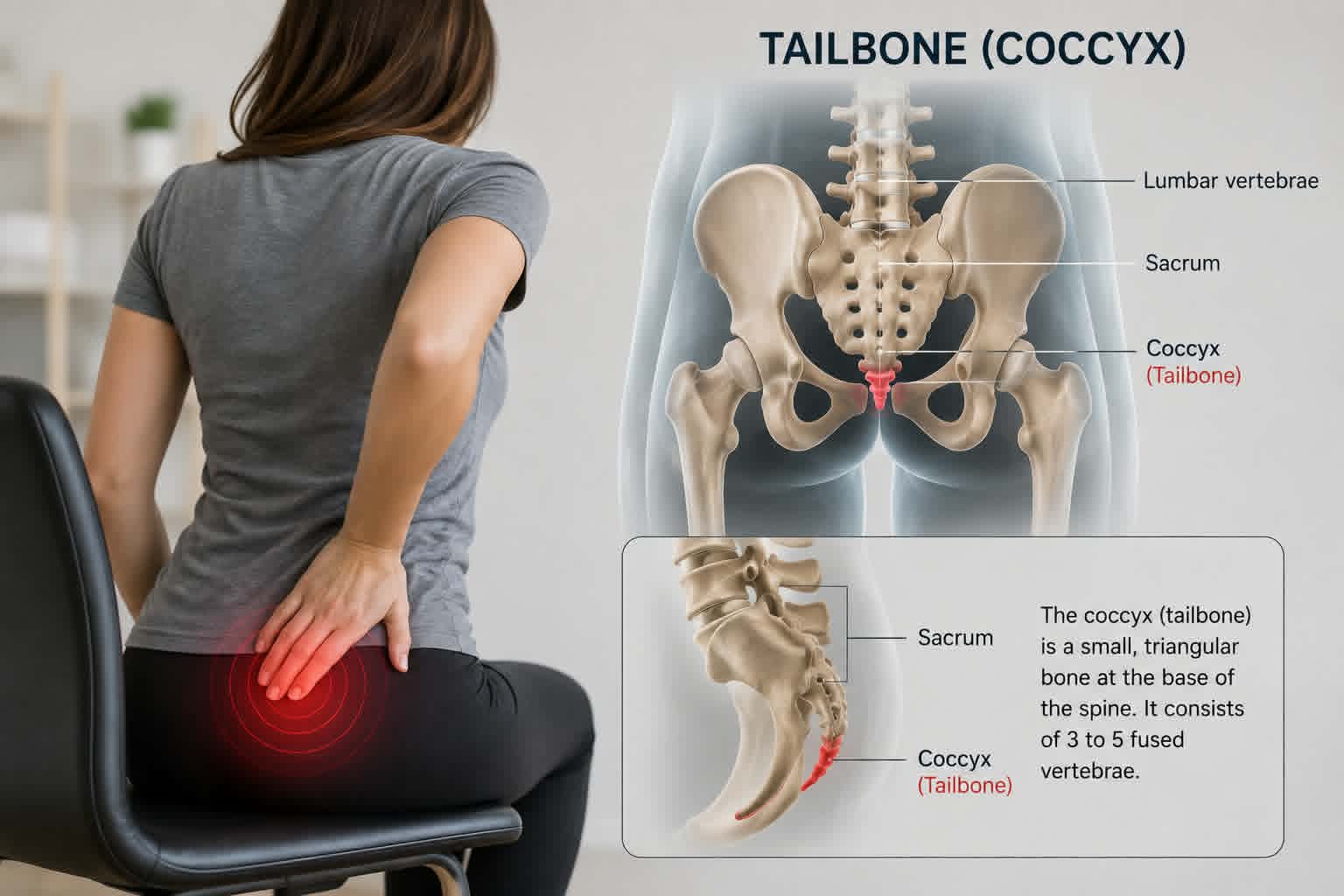
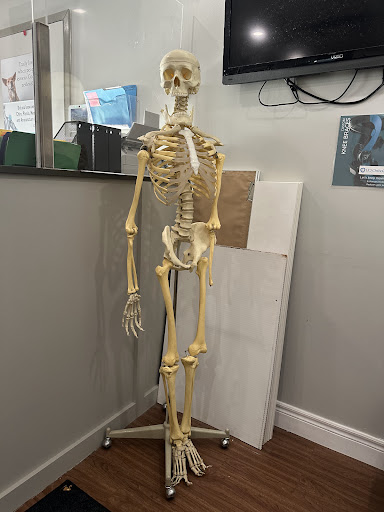
The coccyx is the small section of bone located at the very bottom of the spine, below the sacrum.
It is often referred to as the tailbone.
Although it is small, the coccyx provides attachment points for muscles, ligaments and portions of the pelvic floor. Irritation of the coccyx or the tissues surrounding it can therefore make sitting, changing position and some physical activities painful.
Pain involving this region is known medically as coccydynia or coccygodynia.

What Does Tailbone Pain Feel Like?
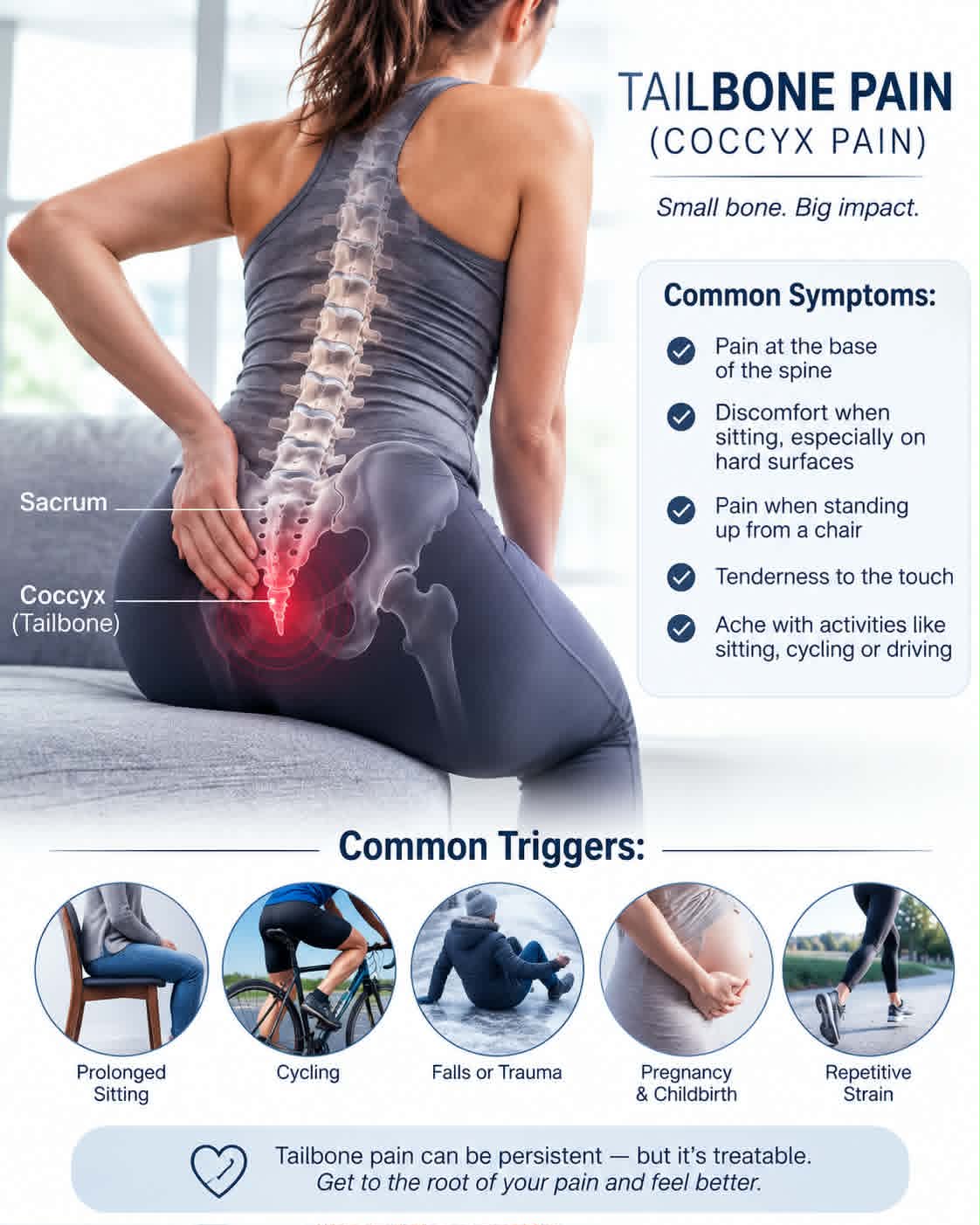
One of the most common symptoms of coccydynia is pain directly over the tailbone when sitting.
Patients may also experience:
- Pain when sitting on a hard chair
- Increased pain after sitting for a long period
- Pain when leaning backwards while seated
- Pain when getting up from a chair
- Tenderness directly over the coccyx
- Pain while driving
- Discomfort during certain exercises
- Pain following a fall onto the buttocks
- Pain around the lower sacrum or buttock region
Some people notice that sitting becomes progressively more uncomfortable throughout the day.
Others are relatively comfortable while standing or walking but develop significant pain shortly after sitting down.
What Causes Coccyx or Tailbone Pain?
There is not one single cause of coccydynia. Falls onto the buttocks, prolonged sitting, repetitive pressure from activities such as cycling, and pregnancy or childbirth are all recognized causes of tailbone pain. The Cleveland Clinic guide to tailbone pain (coccydynia) also identifies trauma, repetitive strain and prolonged sitting as common contributors.
Pregnant with tailbone pain? Dr. Alex and Dr. Jenn are some of Oakville’s best prenatal chiropractors.
One of the most common symptoms of coccydynia is pain directly over the tailbone when sitting.
Some people notice that sitting becomes progressively more uncomfortable throughout the day.
Others are relatively comfortable while standing or walking but develop significant pain shortly after sitting down.
How Is Tailbone Pain Assessed?
Before treating coccyx pain, it is important to determine whether the symptoms are actually originating from the coccyx.
Dr. Alex will take a history of how the pain started and examine the lower back, sacrum, pelvis, hips and coccyx region when appropriate.
The assessment may consider:
- Location of the pain
- Previous falls or injuries
- Sitting tolerance
- Lumbar spine movement
- Hip mobility
- Sacroiliac joint function
- Coccyx tenderness
- Muscle and soft-tissue involvement
- Neurological symptoms
- Previous imaging or medical investigations
Most patients with uncomplicated tailbone pain do not automatically require advanced imaging.
Imaging or medical investigation may be appropriate following significant trauma or when symptoms, examination findings or other health concerns suggest that further investigation is necessary.
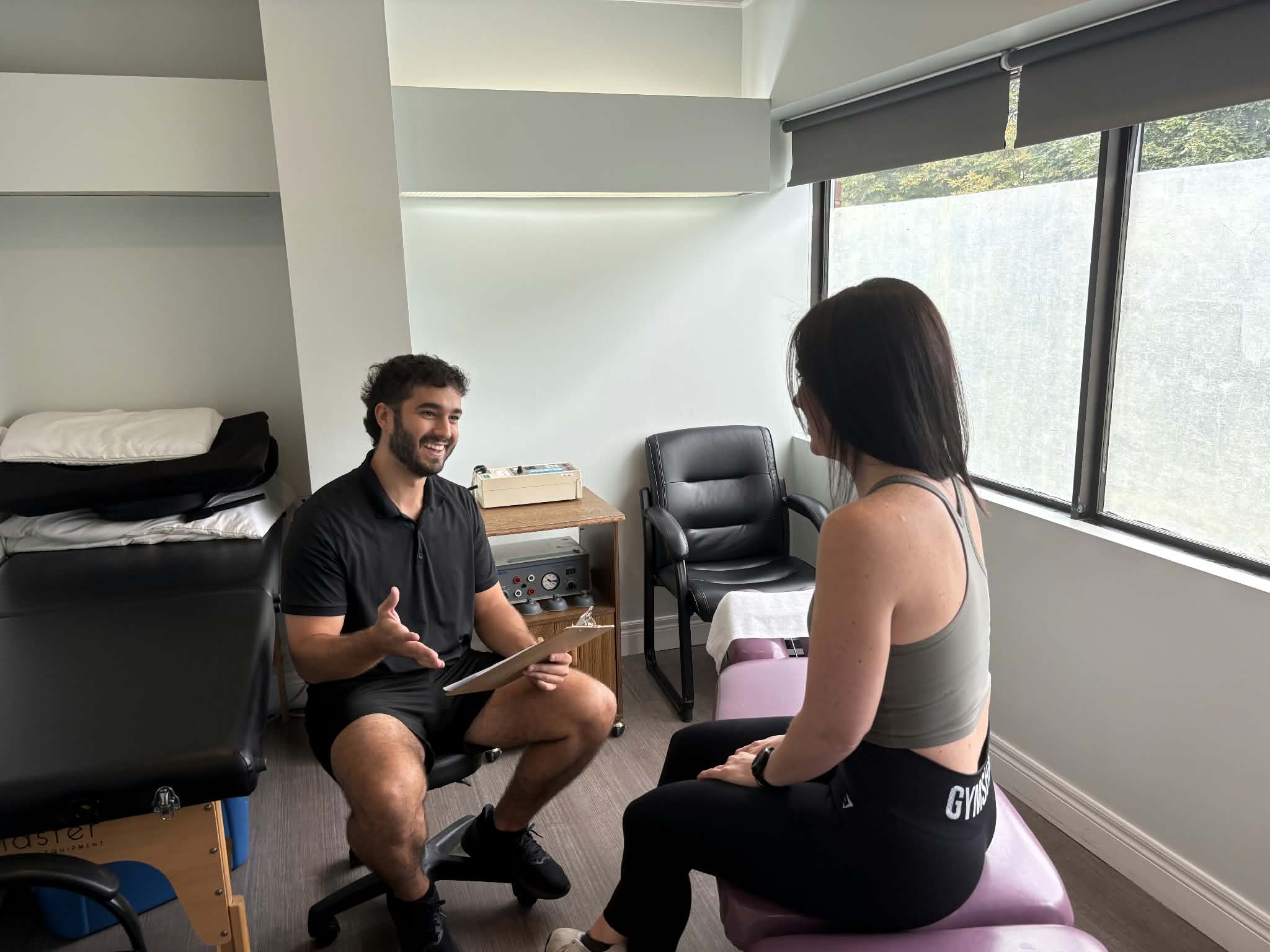
Chiropractic Treatment for Tailbone Pain in Oakville
Treatment depends on what Dr. Alex finds during the examination.
There is no single treatment that is appropriate for every case of coccydynia.
A conservative chiropractic treatment program may combine several approaches.
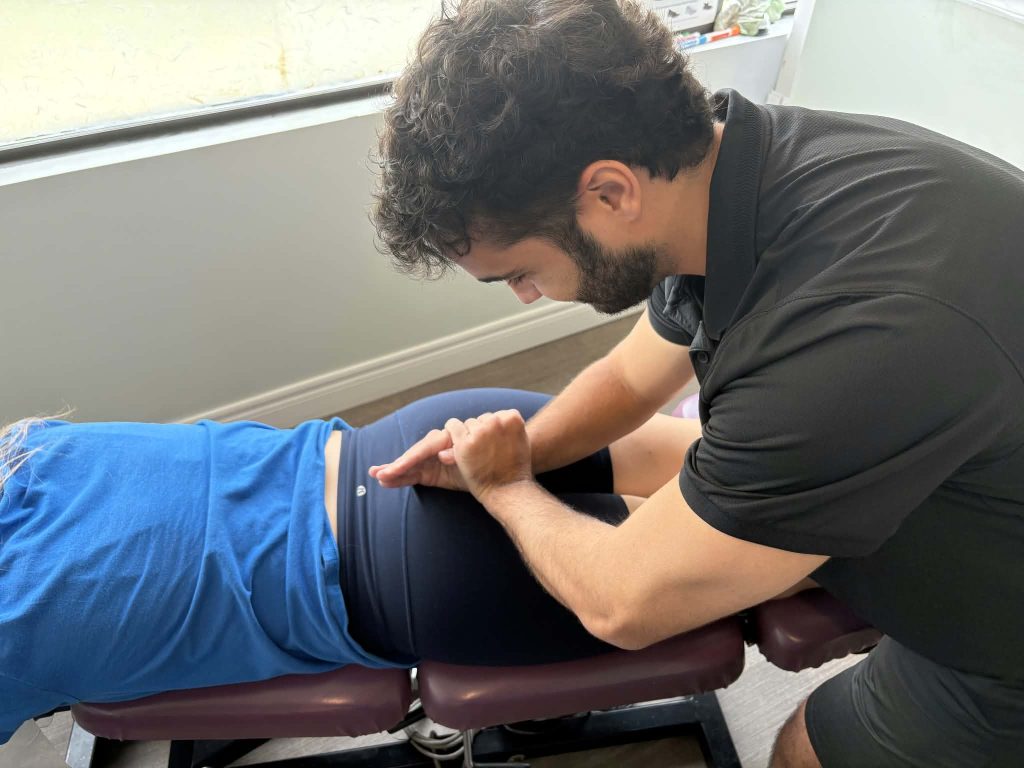
1. Chiropractic and Manual Therapy For Tailbone Pain
Treatment may initially focus on improving movement through the lumbar spine, pelvis and sacroiliac joints and reducing excessive tension in surrounding muscles.
Manual therapy may include mobilization, chiropractic adjustment and soft-tissue treatment depending on the patient’s examination findings and comfort.
Recent research evaluating conservative treatment for coccydynia has found that manual therapy and manipulation can improve pain and function in some patients, although the available research remains limited.
2. Internal Coccyx Adjustment or Mobilization
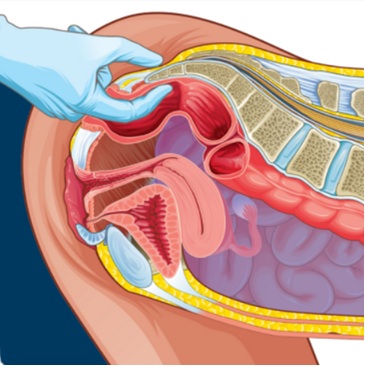
In certain patients, the coccyx itself may be contributing significantly to persistent symptoms.
An internal coccyx manipulation or adjustment is one treatment option that may be considered in selected cases.
This is not necessary for every patient with tailbone pain.
Because this procedure involves treatment of a sensitive anatomical region, Dr. Alex will explain the procedure, potential benefits, alternatives and what to expect before it is considered.
It is performed only when clinically appropriate, when the chiropractor is appropriately trained and competent to perform the procedure, and after the patient’s specific informed consent has been obtained.
Patients are always free to decline this treatment and pursue other conservative options
3. Shockwave Therapy for Coccyx Pain
Shockwave therapy may be used around the painful soft tissues surrounding the coccyx in selected patients.
Extracorporeal shockwave therapy delivers mechanical acoustic impulses into the treatment area.
Research into coccydynia is still developing, but systematic reviews on shockwave therapy have reported promising improvements in pain and function following shockwave therapy for some patients.
At our Oakville clinic, shockwave may be incorporated into a broader treatment program rather than being relied upon as the only treatment.

4. IFC for Tailbone Pain
Interferential current therapy, or IFC, may be used to help temporarily reduce pain and settle irritated tissues around the lower back, sacrum and coccyx.
We commonly combine modalities with hands-on care and progressive rehabilitation rather than treating the painful area with a machine alone.
The exact combination depends on the patient’s examination and tolerance.

5. Exercises for Coccydynia
Exercises are an important part of many tailbone pain treatment programs.
Depending on the patient, Dr. Alex may recommend exercises addressing:
- Hip mobility
- Glute strength
- Core control
- Lower-back mobility
- Pelvic positioning
- Surrounding muscle tension
- Gradual return to normal activity
The goal is not simply to make the tailbone feel better during an appointment.
We want patients to be able to sit, work, drive, exercise and return to normal activities with less discomfort.

What Our Patients Are saying
-
I’ve had such a great experience with Dr. Steve and the entire team at Nottinghill Family Wellness Centre. From the moment you walk in, everyone is welcoming, professional, and genuinely caring. There’s a real sense of camaraderie among the staff, and it creates such a positive, comfortable atmosphere. You can... read more

 Shawna Marie
April 9, 2026I’ve been seeing Dr. Steve for the past few months, and I couldn’t be more impressed with the care and attention I’ve received. From the very first visit, Dr. Steve took the time to thoroughly assess my concerns and explain the treatment plan in detail. I’ve struggled with neck pain... read more
Anjana Bhaskaran
December 10, 2024Thank you, Dr. Steve! My go to chiropractor for the past 5 years. They are very organized and have a great operation running here at NottingHill family wellness center. Thank you to all staff.
 Mirko
Mirko
July 9, 2026 -
Dr. Steve is the coolest guy ever. He was so kind and communicative to me. My first experience ever going to a chiropractor and I was very nervous because physical contact makes me anxious. He talked me through everything, asked permission before every position and checked in on my comfort... read more
Katie Chris
February 6, 2025Great clinic. Pain free after few visits.
Mario M
February 6, 2025Dr Steve and team deserve 50 stars - what an amazing experience! From the moment my son arrived and we met the friendly and organized front office to the bold and welcoming intros with Dr Steve, followed by his assessment of the TOS condition, we were confident we were in... read more
Sonia Scrocco
February 13, 2025 -
I’ve been to Dr Steve more than once over past several years. I had severe sciatica pain stemming from lower back to right hip to all the way down to right tows. He has magical hands. His sessions healed the issue completely and now I am able to play... read more
C C
September 7, 2024The docter and his team have been awesome. I had strong pain severe and I went to alot of other docters who chraged money heavily but did not offer single solution however this place and the team they understood first day and helped me in a great way . Initially... read more
Preet Sangha
February 6, 2025One of the best choices I've made! Dr. Steve and his team are extremely warm and friendly, provide great care, and the service is great! I came here to fix my bunions, and I can already feel an improvement after a few sessions.
Elizabeth So
September 7, 2024




Should You Ice Your Tailbone?
Ice can be useful following a recent tailbone injury or when the area becomes irritated after activity.
A cold pack can generally be placed over the painful area for approximately 10–15 minutes at a time, with a layer of material between the skin and the ice.
Some patients with longer-standing pain prefer heat.
Whichever method feels better can often be used for short-term symptom relief unless a healthcare professional has advised otherwise.
What Is the Best Cushion for Tailbone Pain?
Reducing direct pressure on the coccyx can make sitting considerably more comfortable while the area recovers.
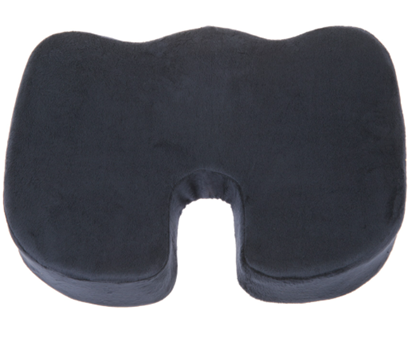 A coccyx cushion with a cut-out at the back is often preferable to simply sitting on a very soft pillow.
The rear opening allows the tailbone to remain relatively unloaded instead of being compressed into the chair.
A wedge-shaped coccyx cushion may also encourage a more comfortable pelvic position.
Very soft couches can sometimes make symptoms worse because the pelvis sinks backwards and places additional pressure over the tailbone.
How Long Does Tailbone Pain Take to Heal?
Recovery varies considerably depending on the cause.
A minor irritation or bruise may settle relatively quickly, while symptoms following a significant fall or longstanding coccydynia may take considerably longer.
The important question is whether symptoms are gradually improving.
Persistent or worsening tailbone pain should be assessed rather than simply assuming that it will eventually disappear.
When Should Tailbone Pain Be Investigated Further?
Dr. Alex says most coccyx pain is musculoskeletal, but not every painful condition around the tailbone should automatically be treated as coccydynia.
Seek appropriate medical assessment if tailbone pain is associated with:
- Significant trauma
- Progressive neurological symptoms
- Unexplained fever
- Unexplained weight loss
- Significant bowel or bladder changes
- A mass or unexplained swelling
- Severe night pain
- Symptoms that continue to worsen
- Other concerning systemic symptoms
An examination can help determine whether conservative musculoskeletal treatment is appropriate or whether further investigation or referral is required.
Can a Chiropractor Help Tailbone Pain?
Potentially.
Treatment of coccydynia depends on its cause.
For some patients, chiropractic and conservative treatment may include manual therapy, treatment of the lumbar spine and pelvis, coccyx mobilization or manipulation, shockwave therapy, IFC and rehabilitation exercises.
Recent clinical research suggests that several conservative approaches can reduce pain and improve function in people with coccydynia, although researchers continue to emphasize the need for larger and higher-quality studies.
Dr. Alex’s approach is to assess the patient first and recommend treatment only when the examination suggests that chiropractic care is appropriate.
FAQs About Tailbone Pain
What is the medical name for tailbone pain?
Tailbone pain is commonly called coccydynia or coccygodynia. It refers to pain originating from the coccyx or surrounding structures at the base of the spine.
Why does my tailbone hurt when I sit?
Sitting places pressure directly through the coccyx. An irritated or injured coccyx can therefore become significantly more painful during prolonged sitting, especially on hard surfaces or when slouching backwards.
Can falling on your tailbone cause coccydynia?
Yes. Falls directly onto the buttocks are a common cause of acute coccyx pain.
Can chiropractors adjust the coccyx?
Chiropractors may use external or, in selected circumstances, internal techniques to mobilize or manipulate the coccyx. Internal coccyx manipulation is a specific procedure requiring appropriate clinical competency and informed patient consent. It is not required for every patient with coccydynia.
Does shockwave therapy help coccydynia?
Research has shown promising results for extracorporeal shockwave therapy in some patients with coccydynia. It is generally considered one component of conservative management rather than a guaranteed treatment.
What type of pillow should I use for tailbone pain?
A coccyx cushion with a cut-out at the back can reduce direct pressure on the tailbone while sitting. A wedge-style coccyx cushion may also be helpful.
Should I exercise with tailbone pain?
Remaining reasonably active is usually preferable to prolonged inactivity, but exercises should not repeatedly aggravate the coccyx. The appropriate exercises depend on the cause and severity of the condition.
Should I see someone if my tailbone pain won’t go away?
Yes. Pain that remains persistent, repeatedly returns, significantly limits sitting or continues to worsen should be properly assessed.
Tailbone Pain Treatment in Oakville
If tailbone pain is making it difficult to sit, work, drive or exercise, an assessment can help determine what is contributing to the problem.
Dr. Alex Greyvenstein provides chiropractic care at Nottinghill Family Wellness Centre in Oakville and may incorporate manual therapy, chiropractic treatment, rehabilitation, IFC and shockwave therapy depending on the individual patient.
Our clinic is located in Glen Abbey, Oakville, and regularly sees patients from throughout Oakville, including Glen Abbey, West Oak Trails, Palermo, Bronte, River Oaks and surrounding communities, as well as patients travelling from nearby Burlington and Mississauga.
Treatment recommendations are based on the individual patient’s history and examination.
Call or text our Oakville chiropractic clinic to book an assessment with Dr. Alex Greyvenstein.