Content Reviewed By: Dr. Steve Knighton, B.Sc., D.C. on September 2, 2026
Chiropractic License Number: 5580
TFCC Tear Treatment Oakville
Pain on the pinky side of your wrist that only shows up during one very specific movement can be incredibly frustrating. You can go through most of your day feeling absolutely nothing, then turn your hand the wrong way, push yourself out of a chair, grab something awkwardly or twist a lid and suddenly get a sharp pain.
One possible cause is an injury to the triangular fibrocartilage complex, better known as the TFCC.
At Nottinghill Family Wellness Centre, our Oakville chiropractic and physiotherapy team assesses TFCC injuries and other causes of pain on the little-finger side of the wrist. Treatment focuses on protecting the irritated tissue, reducing pain, treating surrounding muscle and soft-tissue problems and gradually rebuilding wrist and hand strength and tolerance.
And no, this generally isn’t a joint that Doctor Steve is looking to “crack.”
TFCC injuries are much more about figuring out which tissue is irritated, calming it down and — probably most importantly — stopping you from repeatedly doing the exact movement that keeps pissing it off.
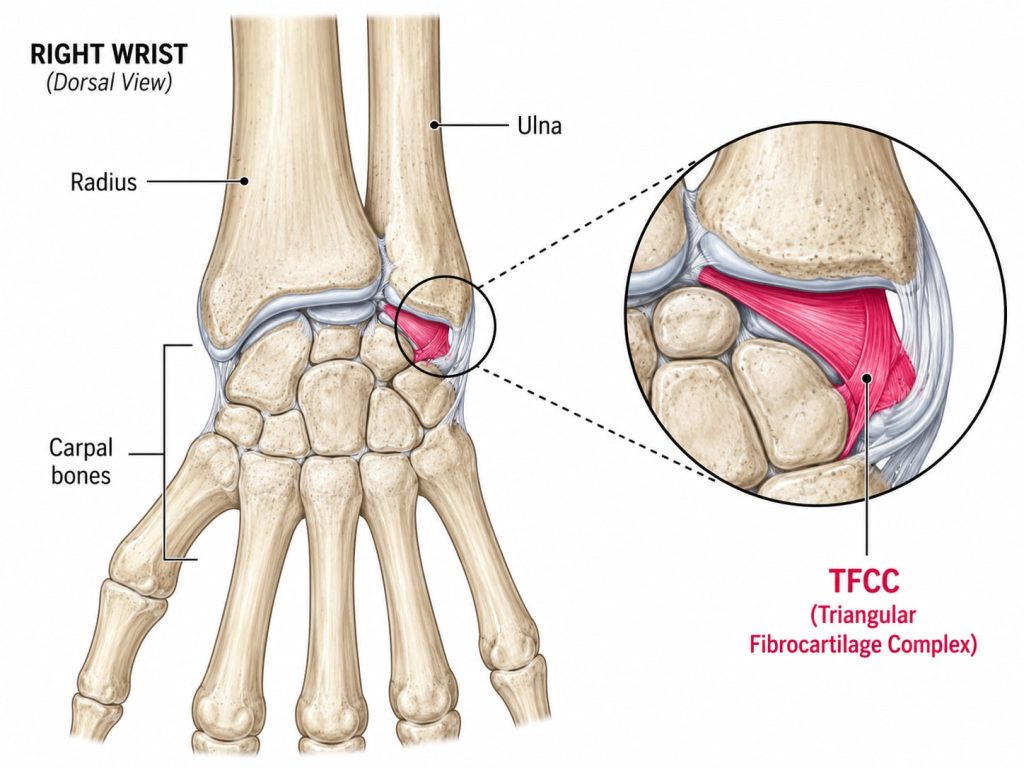
What Is the TFCC?
(Triangular Fibrocartilage Complex)
It is a group of cartilage and ligament structures located on the ulnar side of your hand — basically the side closest to your pinky finger.
The TFCC helps:
- Stabilize the wrist
- Stabilize the connection between the radius and ulna
- Cushion forces travelling through the wrist/hand
- Support gripping
- Control rotation of the forearm
- Handle loading through the hand and wrist
Think of it a little bit like a small shock absorber and stabilizing structure inside the hand.
Because the TFCC is involved when you grip, twist, rotate or put weight through your hand, an irritated TFCC can produce some very specific and surprisingly sharp pain.
The Cleveland Clinic’s TFCC overview also describes TFCC injuries as an important cause of pain and instability on the ulnar side of the wrist.
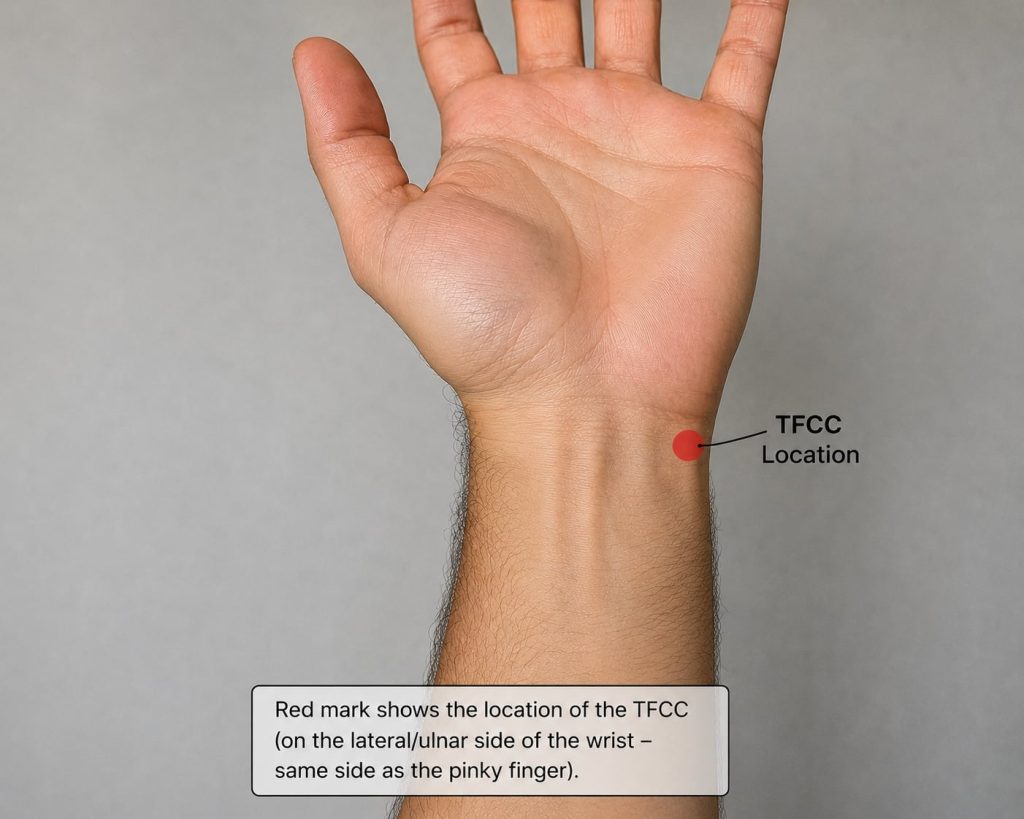
Where Does a TFCC Tear Hurt?
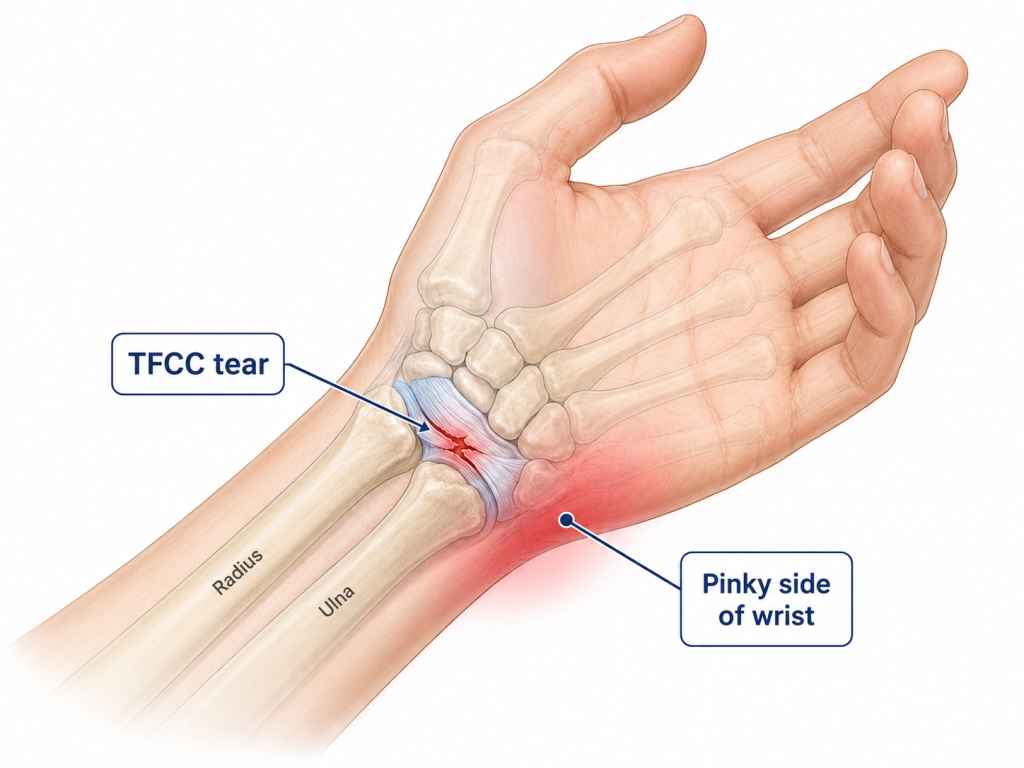
TFCC pain is normally located on the pinky-finger side of the wrist.
Patients will often point directly into the small area between the end of the ulna and the carpal bones.
Common symptoms include:
- Sharp pain on the pinky side of the wrist
- Pain when rotating the hand or forearm
- Pain turning a doorknob or key
- Pain opening a jar
- Pain pushing yourself out of a chair
- Pain putting weight through the hand
- Pain gripping something tightly
- Pain carrying a heavy object
- Wrist clicking or popping
- A feeling that the wrist is weak
- Reduced grip strength
- Tenderness directly over the TFCC
- Pain during certain gym exercises
- Pain during golf, tennis, hockey or racquet sports
- Pain riding a bike or mountain bike
The strange thing about TFCC pain is that it doesn’t necessarily hurt all the time.
You can literally move your wrist around for five minutes trying to reproduce the pain and feel absolutely nothing.
Then you make one slightly different twisting motion and — there it is.
Doctor Steve’s TFCC Injury
Doctor Steve actually gets this problem himself.
Between nearly 20 years of adjusting patients and spending way too much time mountain biking, his right TFCC occasionally flares up on the pinky side.
You may have even seen him walking around the clinic wearing a TFCC brace when it gets irritated.
His wrist can feel completely normal during most activities. Zero pain.
Then one very specific wrist position will catch it perfectly and produce a sharp pain.
That is one of the frustrating things about TFCC irritation. The movement that sets it off can be ridiculously specific.
We have had patients describe hurting their wrist doing something as simple as pulling their phone toward them by the charging cable.
Another patient noticed it simply reaching up and pushing the sun visor down in the car.
Neither activity sounds remotely traumatic.
But put an irritated wrist into the wrong combination of rotation, deviation and load, and apparently your phone charger can suddenly become an extreme sport.
What Causes a TFCC Injury?
There are two broad ways TFCC problems develop.
1. A Sudden TFCC Injury
A TFCC can be injured when significant force travels through the hand or wrist.
Common examples include:
- Falling onto an outstretched hand
- Mountain bike crashes
- Hockey injuries
- Racquet sports
- Gymnastics
- Weightlifting
- Forceful twisting injuries
- A wrist fracture
- Catching yourself during a fall
- Sudden heavy loading through the wrist
A fall onto an extended wrist is one of the classic mechanisms.
2. Repetitive Stress and Wear
Not every TFCC problem begins with one dramatic injury.
Repetitive gripping, twisting and loading can gradually irritate the structures on the ulnar side of the wrist.
This can occur with:
- Manual work
- Repetitive tools
- Weight training
- Racquet sports
- Golf
- Cycling and mountain biking
- Repetitive hand rotation
- Years of physically demanding work
- Repetitive hands-on healthcare work
The TFCC can also develop degenerative changes with age.
Importantly, seeing TFCC degeneration on imaging does not automatically mean it is causing your pain. Like many joints in the body, imaging findings and symptoms do not always match perfectly.

Why Can Such a Tiny Movement Hurt So Much?
This is probably one of the most common questions we get with this injury.
The wrist is extremely complex.
The TFCC sits in an area that is loaded differently depending on:
- Wrist angle
- Forearm rotation
- Grip strength
- Whether the wrist is bent toward the pinky side
- Whether weight is going through the hand
That is why picking up a fairly heavy object might feel fine while turning your wrist strangely to grab something weighing almost nothing can hurt like crazy.
The exact mechanics matter more than simply how heavy the object is.
How We Assess TFCC Pain in Oakville
Not every pain on the pinky side of the wrist is a TFCC tear.
Other possibilities include:
- Extensor carpi ulnaris tendon problems
- Wrist sprains
- Ulnar impaction syndrome
- Distal radioulnar joint problems
- Arthritis
- Fractures
- Other wrist ligament injuries
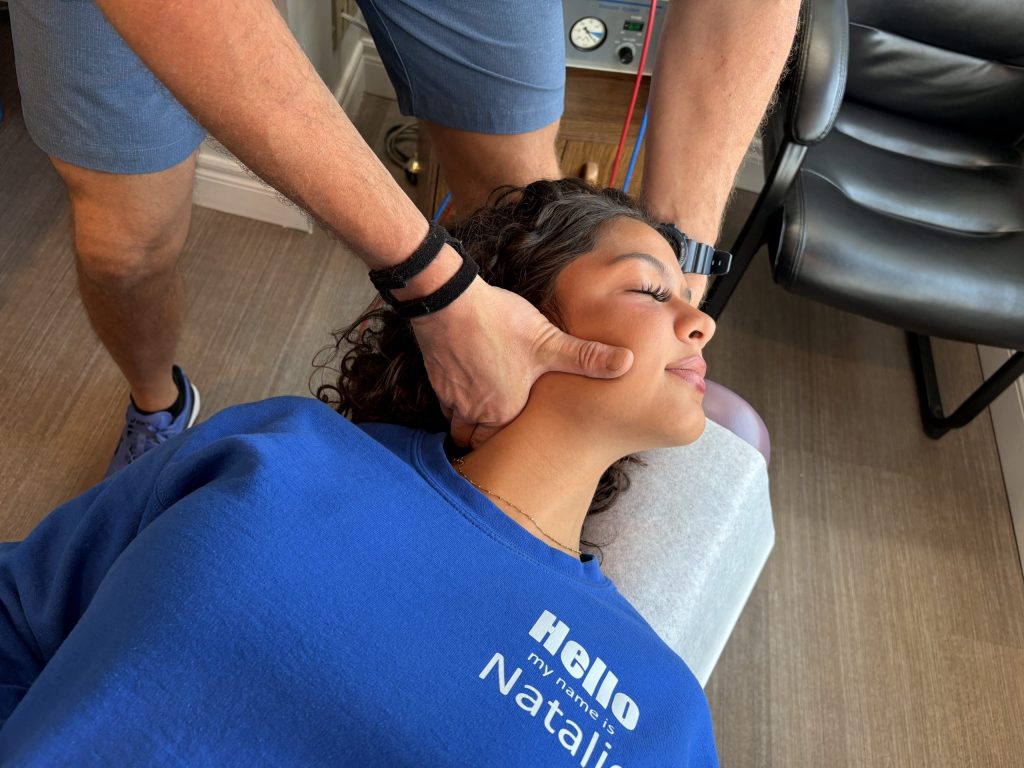
That is why the first step is an examination.
We look at where the wrist is tender, how symptoms started and which movements reproduce the pain.
We can also assess:
- Wrist range of motion
- Forearm rotation
- Grip
- Wrist loading
- Ulnar deviation
- Joint stability
- Surrounding tendons
- Forearm muscle tension
- Specific TFCC provocative tests
If somebody fell hard on the wrist, has significant swelling or bruising, has major loss of motion, obvious instability or we are concerned about a fracture, imaging or medical referral can be appropriate.
X-rays are primarily useful for assessing the bones and looking for associated fractures or structural factors.
When further investigation of the TFCC itself is required, MRI is commonly used to assess the soft tissues of the wrist.
How We Treat TFCC Tears And Pain
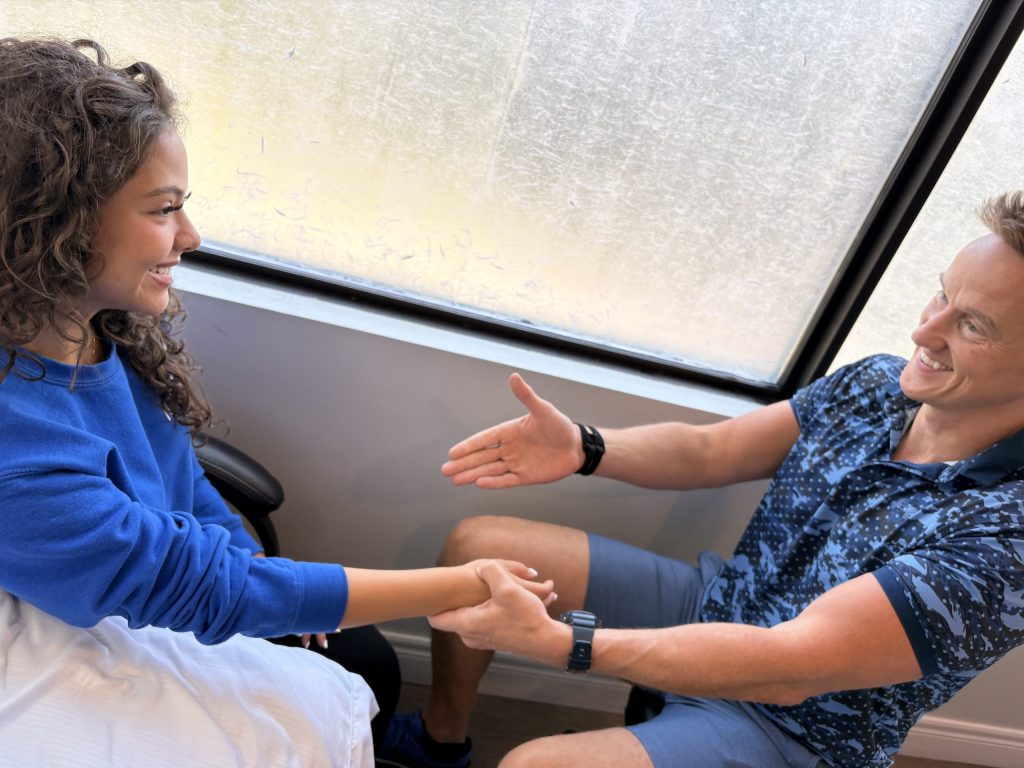
Step 1: Stop Doing the Movement That Keeps Tweaking It
This sounds ridiculously obvious.
It is also probably the most important part.
If every single day you reproduce the same sharp TFCC pain ten times, you are making it extremely difficult for the irritated tissues to settle.
We figure out what is loading the wrist and find ways to temporarily modify it.
That can mean changing:
- Gym exercises
- Push-ups
- Bench press wrist position
- How you get out of a chair
- How you carry groceries
- How you hold your phone
- How you use tools
- Golf or racquet activities
- Bike setup or wrist position
- Work activities
We’re not telling patients to stop using their hand forever.
We’re trying to stop them from repeatedly jamming the exact painful position while the wrist settles down.

Step 2: Wrist Bracing for TFCC Pain
A wrist brace can be extremely useful for TFCC irritation because it limits the exact positions that continually aggravate the wrist.
Doctor Steve uses one himself when his right wrist flares.
The idea isn’t to put your wrist in a brace forever.
It is to temporarily reduce unnecessary rotation and loading so the irritated area gets a chance to calm down.
Some TFCC injuries require more significant immobilization than a basic wrist brace, particularly after a significant traumatic injury or when wrist instability is present.
Those are patients we refer appropriately rather than pretending every TFCC problem is exactly the same.

Step 3: IFC for TFCC Tears and Pain
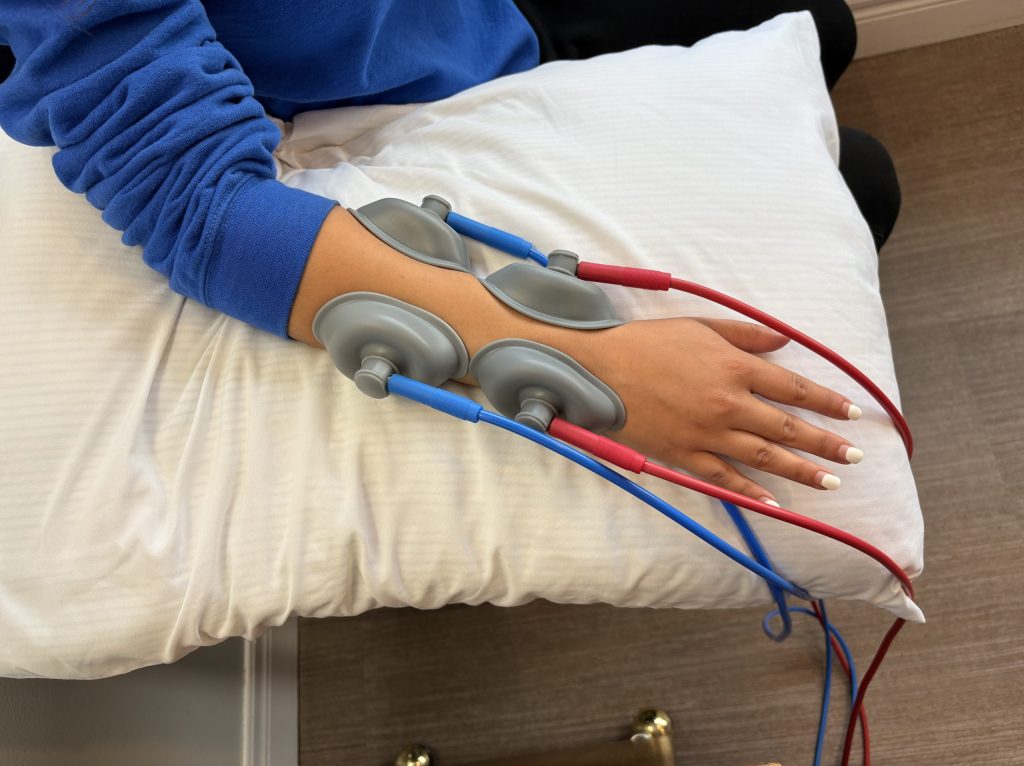
We use Interferential Current Therapy, or IFC, as part of treatment for painful wrist injuries.
Electrodes are positioned around the painful wrist and forearm region to provide comfortable electrical stimulation.
The purpose of IFC in this situation is primarily pain control and helping calm the area down before moving into hands-on treatment.
TFCC treatment is not about blasting an injured wrist with every machine in the clinic.
If the wrist is acutely irritated, treatment starts gently.
Step 4: Instrument-Assisted Soft Tissue Treatment
Muscles and tendons surrounding the painful wrist can become extremely tight and reactive when somebody has been protecting the wrist for days or weeks.
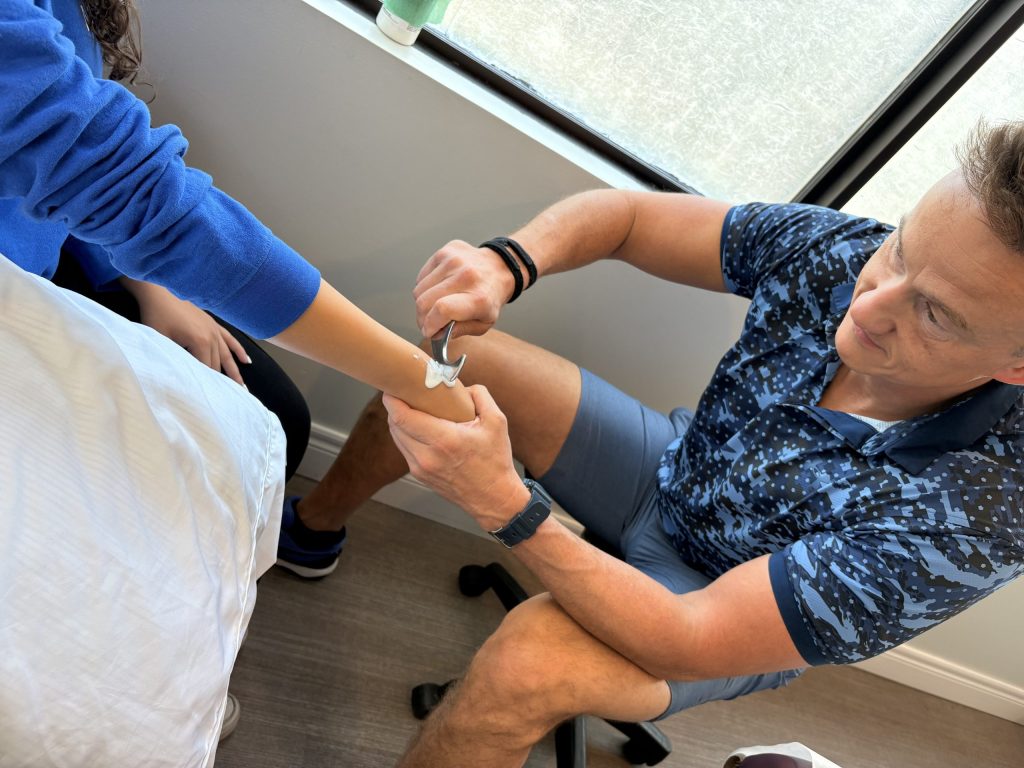
We use Instrument-Assisted Soft Tissue Treatment (IASTT) to work on appropriate areas of the forearm and wrist.
The treatment uses a smooth-edged instrument to work through restricted soft tissue around the forearm.
We are not aggressively scraping directly over a freshly injured TFCC.
The goal is to improve the surrounding tissues that are contributing to abnormal wrist tension and movement.
Step 5: Hands-On Treatment
This is the less glamorous part that doesn’t have a fancy machine attached to it.
Thumbs.
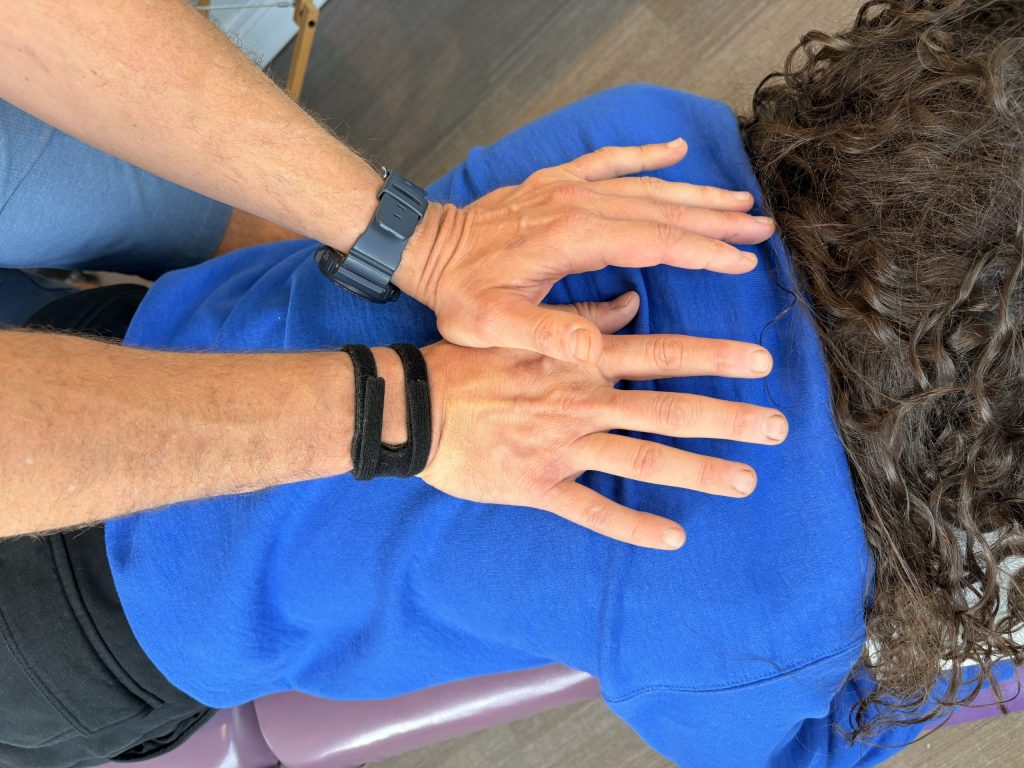
Our chiropractors and physiotherapists use hands-on soft tissue treatment on tight and painful muscles through the forearm and around the wrist.
Treatment can include:
- Trigger point therapy
- Soft tissue release
- Gentle wrist mobilization
- Forearm muscle treatment
- Tendon treatment
- Movement-based release techniques
Again, we generally do not aggressively manipulate or adjust a suspected TFCC injury.
The purpose is to get the surrounding tissues moving properly without continually aggravating the damaged area.

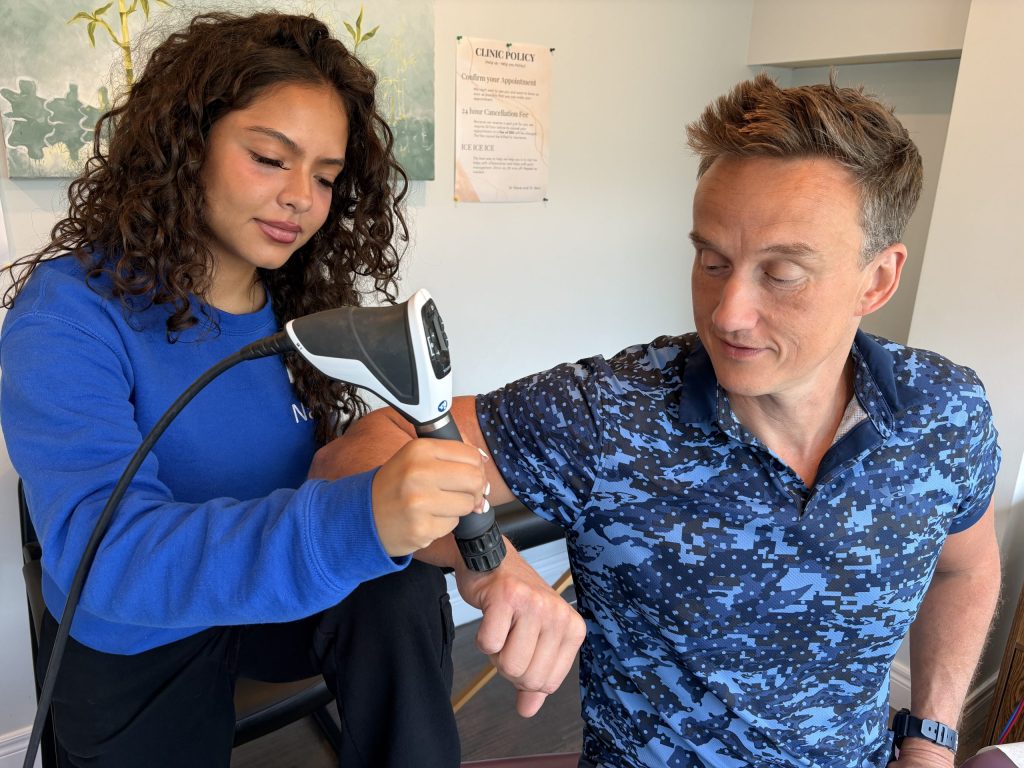
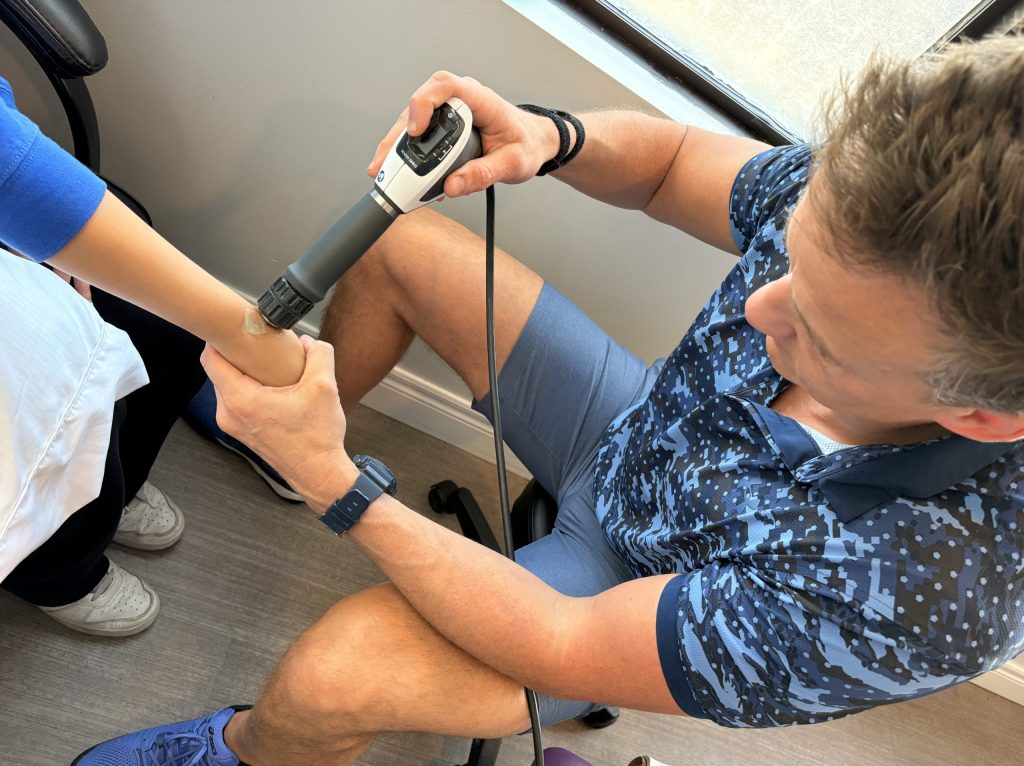
Step 6: Shockwave Therapy for a TFCC Injury or Tear
Shockwave therapy is another treatment we use when chronic tight or painful soft tissues around the wrist and forearm are contributing to the problem.
Let’s be clear about this because the internet gets carried away with shockwave claims.
We are not claiming that radial shockwave magically repairs a torn TFCC.
TFCC-specific research on shockwave is limited.
What we can do is use shockwave on appropriate surrounding muscles and tendon tissues when they have become chronically painful, tight or overloaded.
Treatment intensity around the wrist is kept considerably more controlled than it would be on something thick like a plantar fascia or Achilles tendon.
Step 7: Ice at Home
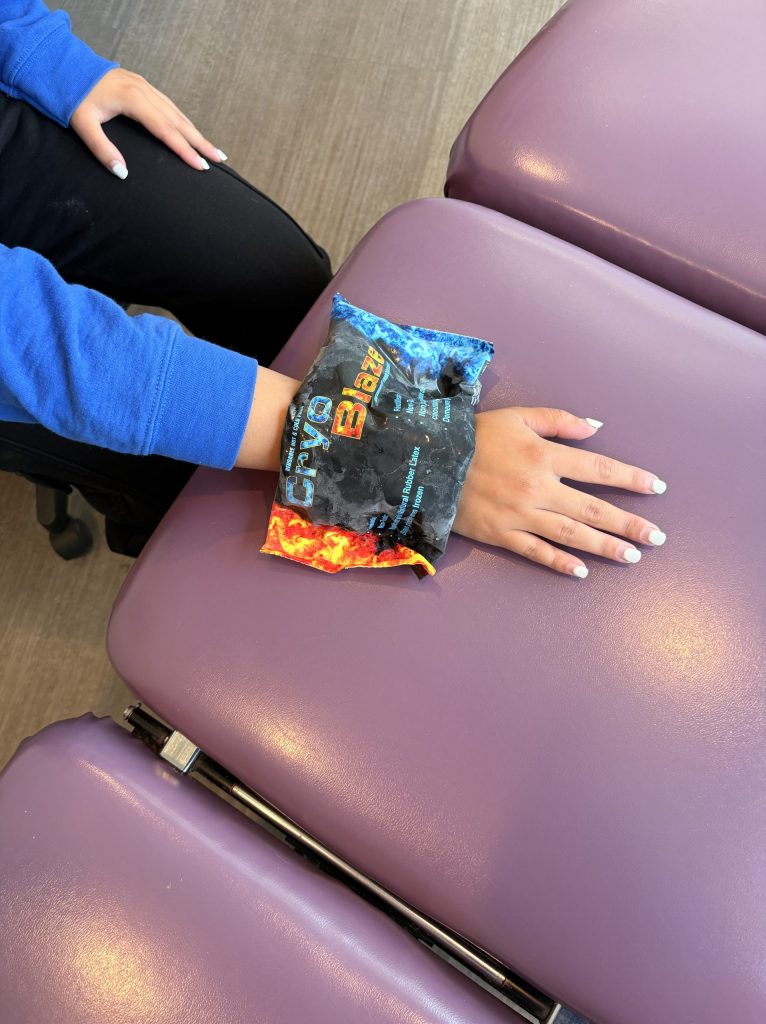
When the wrist is irritated after activity, ice can be useful for symptom control.
A simple ice pack wrapped in a thin towel for approximately 10–15 minutes is normally enough.
You do not need to freeze your hand until you can’t feel it.
More is not always better.
Step 8: TFCC Exercises and Strengthening
The goal isn’t to baby the wrist forever.
Once the sharp irritation has settled, we gradually start restoring:
- Wrist range of motion
- Forearm rotation
- Grip strength
- Wrist flexion and extension strength
- Radial and ulnar deviation strength
- Forearm pronation and supination
- Functional loading
The timing matters.
Hammering wrist strengthening exercises while every movement is still producing sharp pain is generally not our first move.
First settle it down.
Then build it back up.
You can also see our existing wrist and elbow exercises, although TFCC rehabilitation should be progressed according to the individual injury.

What Should You Avoid With a TFCC Injury?
During the irritated stage, we commonly tell patients to temporarily reduce movements that create sharp pain.
That often includes:
- Push-ups
- Planks
- Heavy pressing with the wrist extended
- Heavy curls if they reproduce symptoms
- Aggressive wrist stretching
- Heavy gripping
- Repeated twisting
- Leaning your body weight through the affected hand
- Using the hand to push yourself out of a chair
- Painful sports activities
The important word is painful.
We don’t automatically shut down every activity you enjoy.
We identify which movements are clearly aggravating the wrist and modify those while it heals.
Do TFCC Tears Heal Without Surgery?
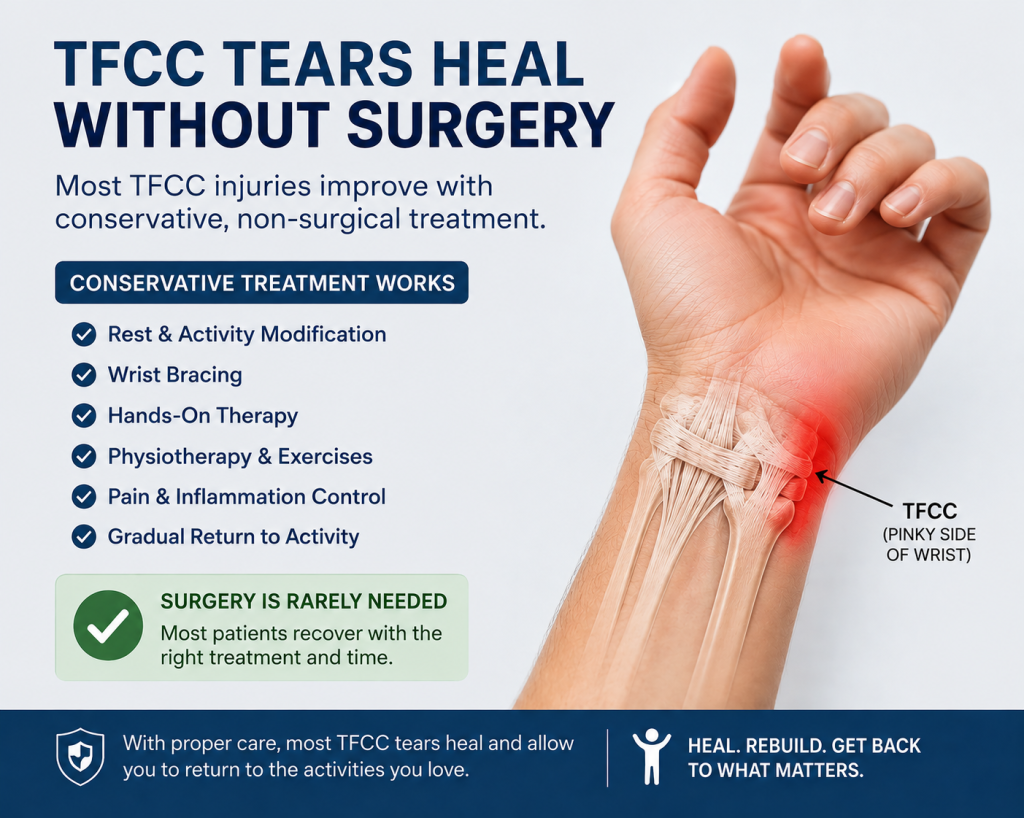
Many TFCC injuries can improve without surgery, particularly when the distal radioulnar joint remains stable.
Conservative treatment commonly includes:
- Activity modification
- Immobilization or bracing
- Pain management
- Physiotherapy or hand therapy
- Gradual rehabilitation
A recent systematic review found that non-operative treatment of TFCC injuries can produce outcomes comparable with surgical treatment in selected patients.
However, some injuries need specialist assessment.
Persistent pain, significant instability, a major traumatic tear or failure to improve with appropriate conservative treatment can warrant referral to a hand or wrist specialist.
When Does a TFCC Tear Need an MRI?
Not everybody with pain on the pinky side of the wrist needs to run out and get an MRI immediately.
Many wrist injuries can initially be assessed clinically.
MRI becomes more useful when:
- The diagnosis remains unclear
- Symptoms are persistent
- A substantial tear is suspected
- The wrist feels unstable
- Conservative treatment is failing
- Surgery is being considered
MRI is currently considered the most useful imaging technique for evaluating TFCC lesions.

When Should TFCC Pain Be Referred?
There are situations where conservative clinic treatment is not the appropriate endpoint.
We refer for additional investigation or specialist assessment when appropriate, particularly if there is:
- Significant wrist instability
- A suspected fracture
- Major swelling after trauma
- Significant loss of motion
- Persistent weakness
- Neurological symptoms
- Severe traumatic injury
- Failure to improve with conservative treatment
- Concern about a major TFCC tear requiring surgical repair
Part of doing a proper wrist assessment is knowing when not to keep treating it.

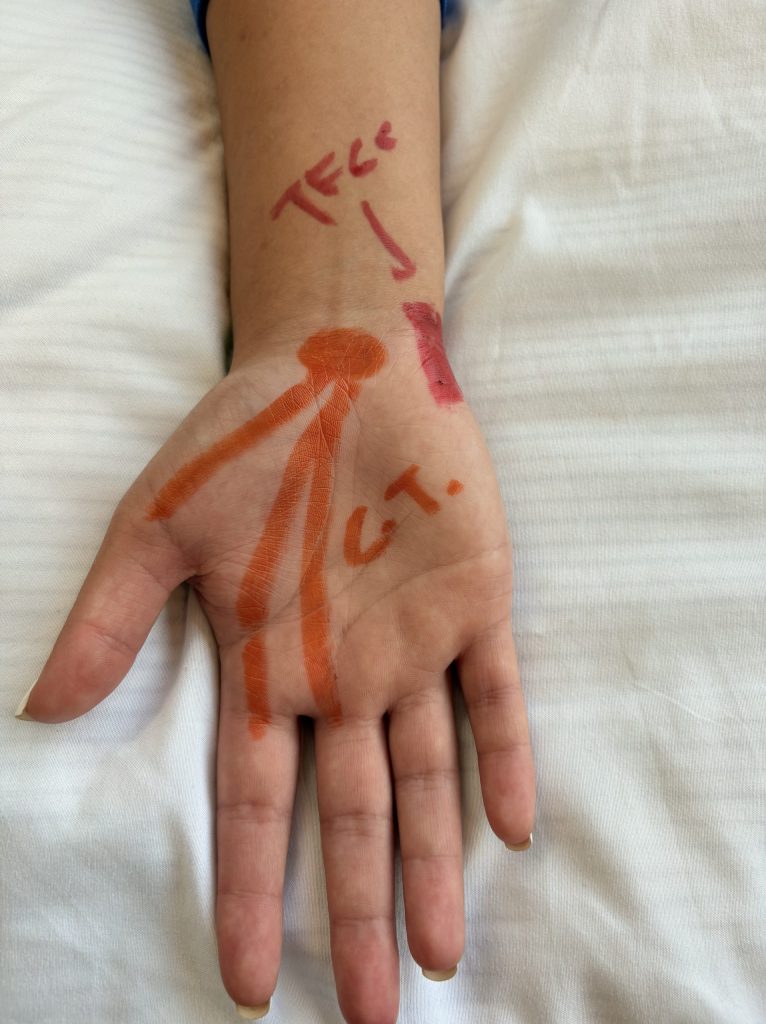
TFCC vs Carpal Tunnel
TFCC injuries and carpal tunnel syndrome both involve the wrist, but they usually feel completely different.
TFCC pain is normally focused on the pinky side of the wrist and is triggered by loading, gripping or rotation.
Carpal tunnel syndrome more commonly causes numbness, tingling or burning involving the thumb, index and middle fingers because the median nerve is being irritated.
If your primary complaint is numbness and tingling rather than mechanical pinky-side wrist pain, TFCC is probably not the first condition we are thinking about.
TFCC vs De Quervain’s Thumb Pain
Location helps here too.
TFCC pain normally occurs on the pinky side of the wrist.
De Quervain’s tenosynovitis causes pain on the thumb side of the wrist.
They can both become painful with gripping, but they involve completely different structures.

TFCC Treatment With Physiotherapy in Oakville
Physiotherapy is an important part of TFCC rehabilitation, particularly once the acute pain begins settling down.
Treatment focuses on restoring wrist movement, improving strength and gradually returning the wrist to normal loading.
For an active patient, simply making the pain disappear isn’t really the finish line.
The wrist eventually needs to tolerate whatever you plan to do with it — whether that’s typing all day, working with tools, lifting weights, playing golf or hanging onto mountain-bike handlebars while doing something Doctor Steve probably shouldn’t be doing anymore.
TFCC Tear FAQs
What does TFCC stand for?
TFCC stands for triangular fibrocartilage complex, a group of cartilage and ligament structures on the pinky side of the wrist that helps provide cushioning and stability.
What does a TFCC tear feel like?
TFCC injuries commonly cause pain on the pinky side of the wrist, particularly with twisting, gripping, forearm rotation or putting weight through the hand. Some patients also notice clicking, weakness or reduced grip strength.
Can TFCC pain come and go?
Absolutely.
One of the classic frustrations with TFCC irritation is that the wrist can feel completely normal during most movements and then suddenly hurt during one very specific combination of rotation and loading.
Can you injure your TFCC without falling?
Yes.
TFCC irritation can develop from repetitive loading and twisting as well as from one major traumatic event.
Some patients cannot identify one specific injury at all.
Does a TFCC tear always need surgery?
No.
Stable TFCC injuries are normally treated conservatively first. Bracing, activity modification and rehabilitation can be successful for many patients.
Surgery is more likely to be considered when there is significant instability or persistent symptoms despite appropriate conservative care.
Will a wrist brace help TFCC pain?
A brace can help by limiting painful wrist movements and reducing repeated stress on the TFCC while symptoms settle.
The type of brace and length of use depends on the severity of the injury.
Should I stretch a TFCC tear?
Aggressively stretching directly into sharp TFCC pain is usually not a great idea.
Early treatment is more focused on protection and reducing aggravating movements. Mobility and strengthening are progressed as symptoms improve.
Can I work out with a TFCC injury?
Often yes, but exercises that reproduce the sharp wrist pain need to be modified temporarily.
Lower-body training and exercises that don’t aggravate the wrist can usually continue.
The goal is modification — not six months on the couch.
Can mountain biking cause TFCC pain?
It can.
Gripping the handlebars, wrist position, vibration, repeated impacts and crashes can all load the ulnar side of the wrist.
Doctor Steve unfortunately has some firsthand experience with this one.
How long does a TFCC injury take to heal?
There is no single recovery time.
A mild irritated wrist can improve relatively quickly, while a significant traumatic tear can take considerably longer.
Severity, wrist stability, how long the problem has been present and whether you continue aggravating it all affect recovery.
Where can I get TFCC treatment in Oakville?
Nottinghill Family Wellness Centre provides assessment and conservative treatment for TFCC injuries and other causes of wrist pain in Oakville.
Our chiropractic and physiotherapy team uses a combination of activity modification, wrist bracing, IFC, hands-on soft tissue treatment, rehabilitation, IASTT and shockwave therapy for surrounding soft tissues when appropriate.
[Book an Appointment]
TFCC Pain Treatment in Oakville
If you have stubborn pain on the pinky side of your wrist — especially pain with gripping, twisting, pushing or putting weight through your hand — come in and let us take a look at it.
TFCC injuries are one of those conditions that can be surprisingly easy to keep irritating because the painful movement can be so specific.
Our goal is to figure out what is actually causing the pain, protect the irritated area, treat the surrounding wrist and forearm tissues and progressively get you back to using your hand normally again.
Medical References
Cleveland Clinic — Triangular Fibrocartilage Complex Tear
2024 Systematic Review — Non-Operatively Treated Traumatic TFCC Tears
2024 Canadian Review — Approach to Chronic Wrist Pain in Adults
All services


Contact our Oakville Chiropractic Clinic to Start Treatment!
