Content Reviewed By: Dr. Steve Knighton, B.Sc., D.C. on October 10, 2026
Chiropractic License Number: 5580
Compression Socks In Oakville: Assessment, Fitting And Support
Tired, heavy or swollen legs by the end of the day? Compression socks may help support circulation and manage swelling in your lower legs. At Nottinghill Family Wellness Centre in Oakville, compression socks are not an online purchase. We assess your needs and measure you for a proper fit first, so the recommendation matches your symptoms, daily demands and the right size.
Table Of Contents
- Quick Answer: Compression Socks In Oakville
- Who May Benefit From Compression Socks?
- What Are Compression Socks And How Do They Work?
- What Signs And Daily Situations Lead People To Ask About Compression Socks?
- When Should You Book, And When Should You Seek Medical Care?
- How Do We Assess Your Needs Before Fitting?
- What Compression Sock Options Are Available?
- How Does The Fitting, Ordering And Follow-Up Process Work?
- What Should You Expect After Receiving Your Compression Socks?
- Are Compression Socks Covered By Insurance In Oakville?
- What Does The Evidence Say About Compression Socks?
- A Typical Example Of How A Fitting Unfolds
- Not Ready To Book? Start With Our Fitting Guide
- Compression Sock Fittings In Oakville And Nearby Communities
- References And Medical Review
- Compression Sock FAQs
Quick Answer: Compression Socks In Oakville
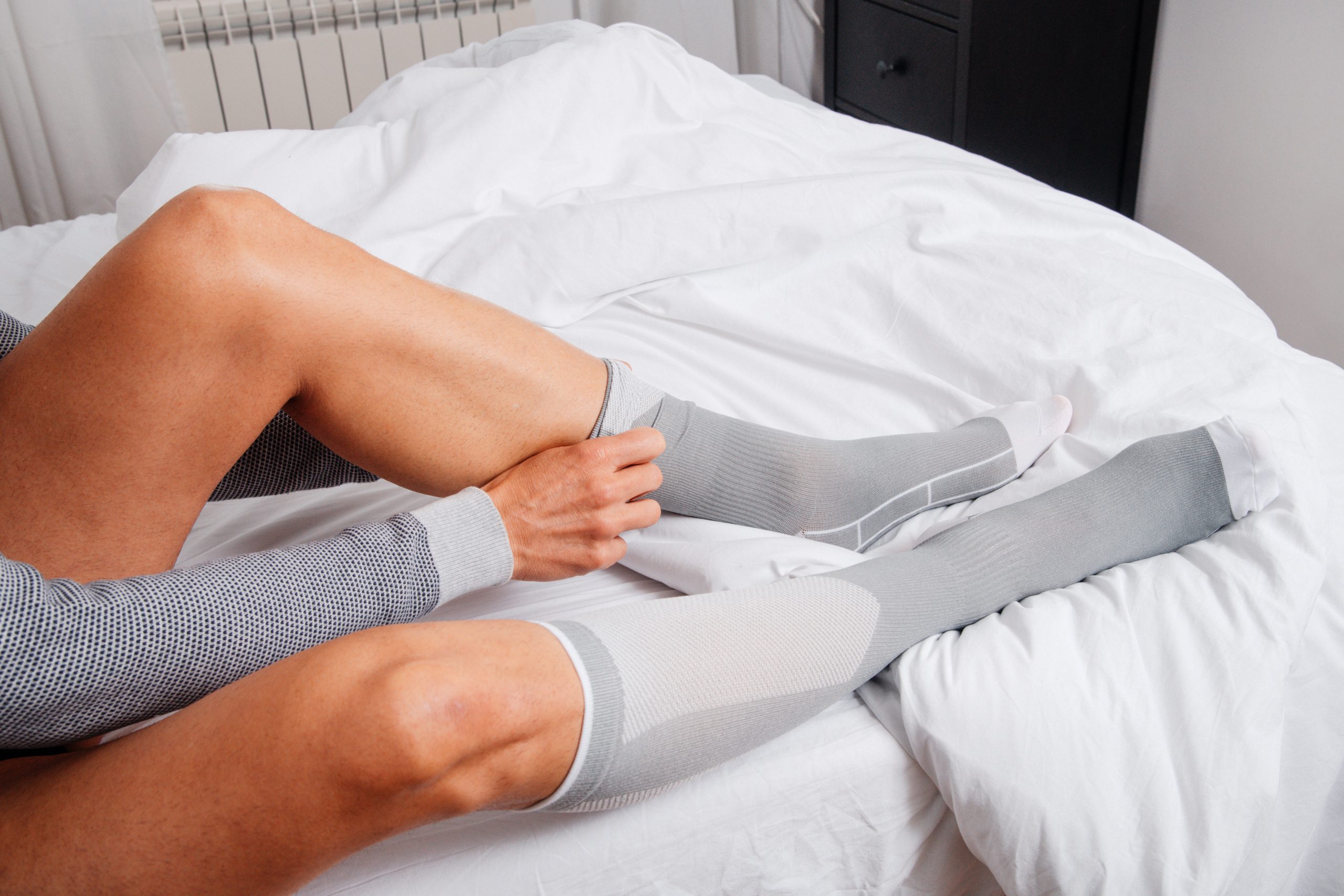
Compression socks are graduated-pressure garments worn on the lower legs. They are made to be firmest at the foot and ankle and looser toward the calf, which is designed to support blood flow back toward the heart and help manage swelling. People often ask about them for heavy or tired legs, swelling at the end of the day, varicose veins, pregnancy, long hours standing or sitting, and travel. Because fit and pressure level matter, we assess your reason for use, review your health history and measure your legs before recommending a style and size. Some symptoms need a doctor’s review first, and we will tell you if that applies to you.

Who May Benefit From Compression Socks?
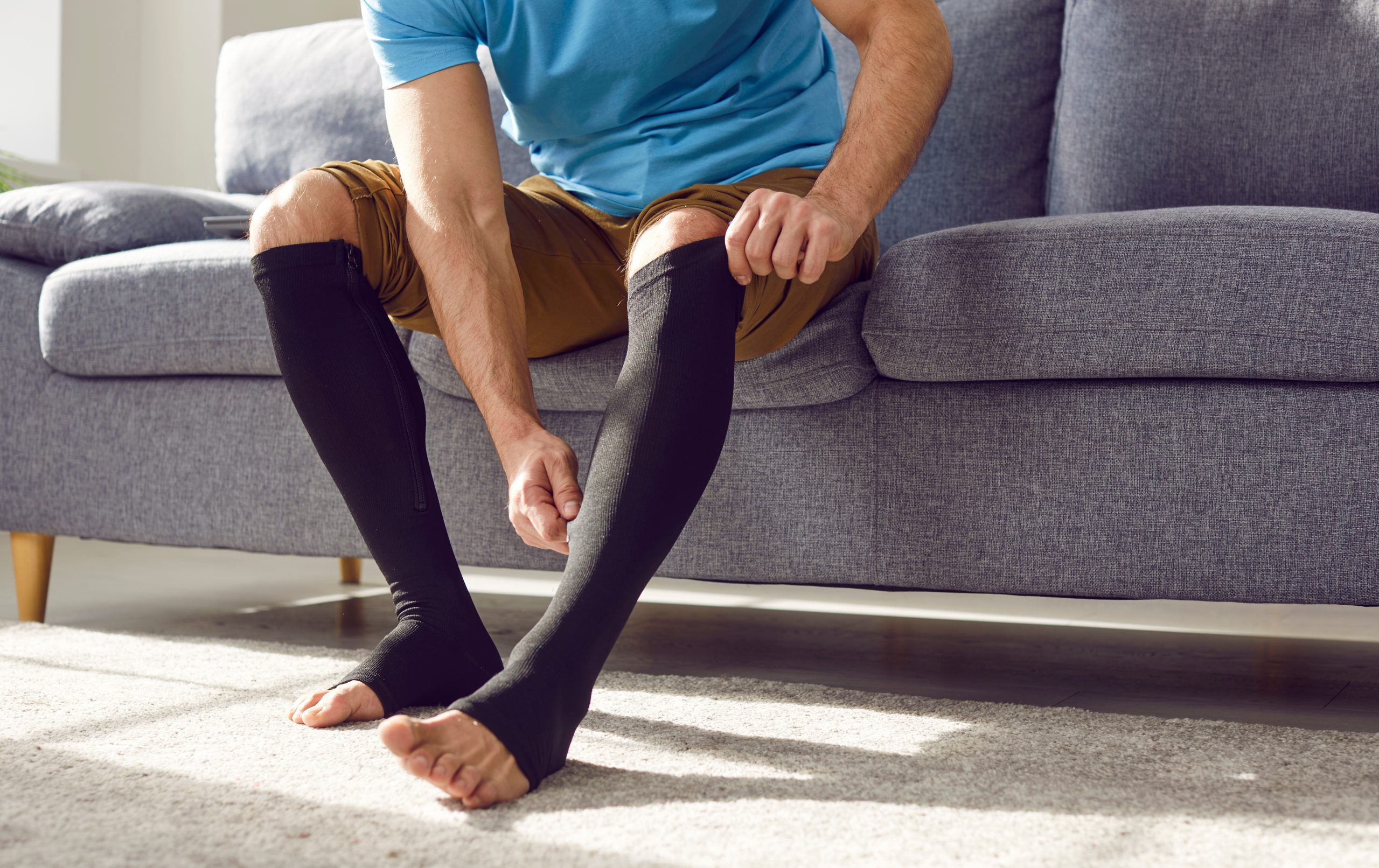
Compression socks may be appropriate for a range of people. An assessment helps confirm whether they suit your situation. You may want to book if you notice:
- Heavy, tired or achy legs after a long day
- Swelling in the feet, ankles or lower legs that builds through the day
- Varicose veins or spider veins, or a family history of them
- Long hours on your feet at work, or long hours seated at a desk
- Pregnancy-related leg swelling or heaviness
- Frequent long-haul travel or long periods of sitting
- Chronic venous insufficiency or swelling being managed alongside your physician
This list is a starting point, not a diagnosis. Similar symptoms can have different causes, so we assess first rather than assume compression socks are the right tool for you.
What Are Compression Socks And How Do They Work?
Compression socks are snug, medical-grade garments that apply gentle, controlled pressure to the lower leg. The key feature is graduated compression. The pressure is highest around the foot and ankle and eases as the sock moves up the calf. This gradient is designed to encourage fluid and blood to move upward, out of the feet and ankles and back toward the heart, rather than pooling lower down.
Veins rely on small one-way valves to keep blood moving against gravity. When you stand or sit for long stretches, those valves work harder, and fluid can collect around the ankles and feet. Graduated compression supports that upward flow and can help limit the swelling that builds up over a day.
What Signs And Daily Situations Lead People To Ask About Compression Socks?
Patients often describe practical, day-to-day patterns rather than a single symptom. Common examples include:
- Legs that feel heavy or fatigued by the end of a work shift
- Socks leaving deep marks, or shoes feeling tight, later in the day
- Ankle or foot swelling after long flights or road trips
- Aching or visible veins after long periods of standing
- Swelling or heaviness during pregnancy
- Wanting support during recovery from certain procedures, on a provider’s advice
Because these patterns can overlap with other issues, we always recommend an assessment so the cause is understood before a product is suggested.
When Should You Book, And When Should You Seek Medical Care?
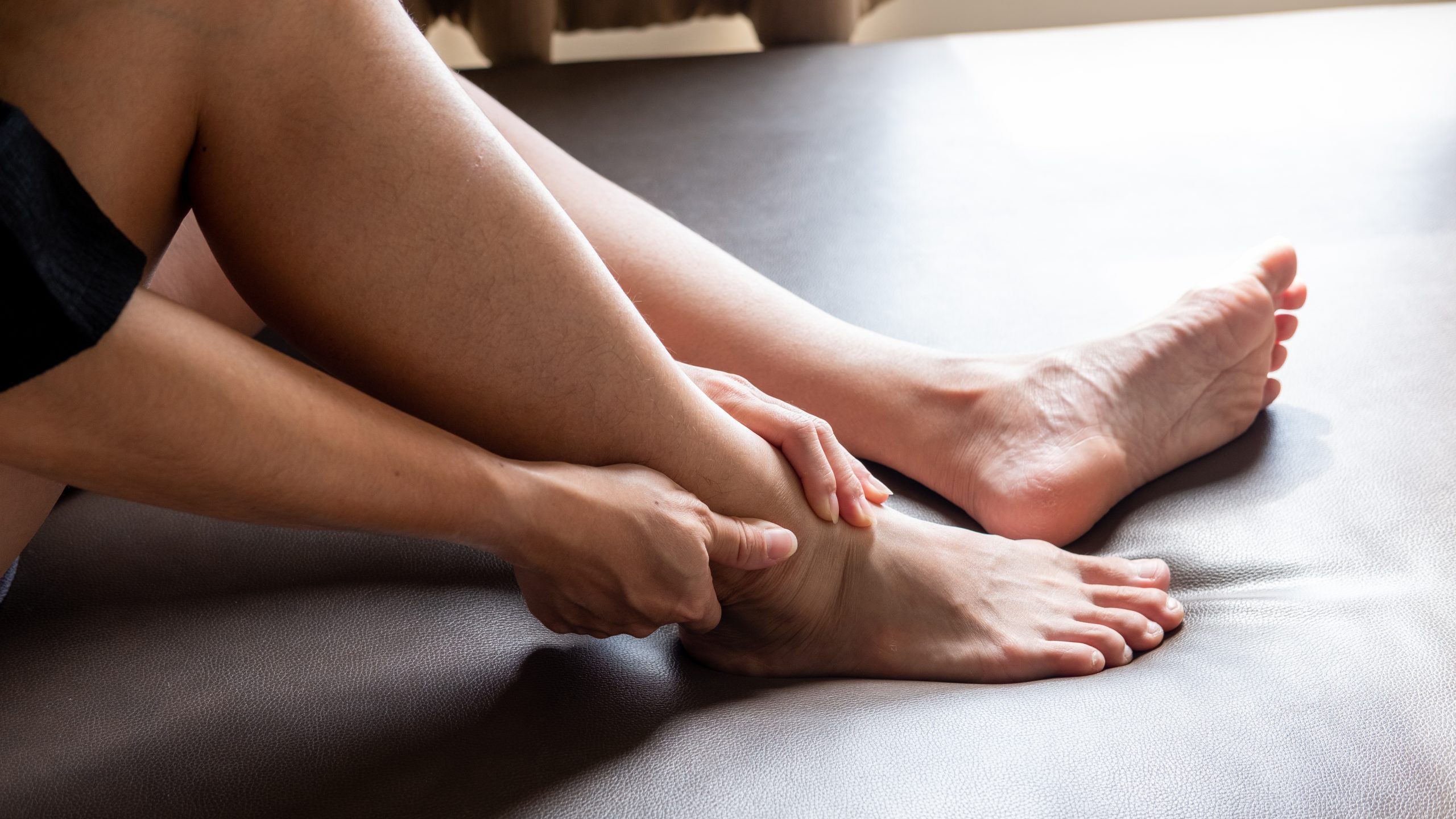
Book a routine assessment when your symptoms are ongoing, build through the day, or relate to standing, sitting, travel or pregnancy, and you would like a properly fitted option.
Seek prompt medical care first if you notice any of these:
Sudden swelling in one leg, especially with redness, warmth or pain
Shortness of breath or chest pain
Severe, unexplained leg pain, new numbness, or skin that is breaking down
Open sores, ulcers or signs of infection on the legs or feet
These can signal conditions that need urgent assessment. Compression socks are not the first step here.
Some conditions, including diabetes, peripheral arterial disease, certain circulation disorders and skin or wound issues, call for extra caution or a physician’s input before wearing compression. If your situation falls outside what we can safely help with, we will say so and point you toward the right care. We are happy to work alongside your family doctor.
How Do We Assess Your Needs Before Fitting?
The assessment is what separates a clinic fitting from guessing online. Here is what a typical visit involves:
- We talk through your reason for use, your symptoms and how they affect your day.
- We review your relevant health history and screen for anything that needs caution or a physician’s input.
- We discuss compression levels and which style suits your needs and lifestyle.
- We take careful leg measurements for a proper fit. This usually includes your foot size, your ankle and lower calf, and your upper calf or below the knee. For thigh-high garments, we also measure higher up the leg.
- We explain how to wear and care for the socks so you get the most from them.
What to bring: a list of any medications and relevant health conditions, the name of your insurance provider if coverage is a question, and any note or recommendation from your doctor if you already have one.
Book a Compression Sock Assessment

What Compression Sock Options Are Available?
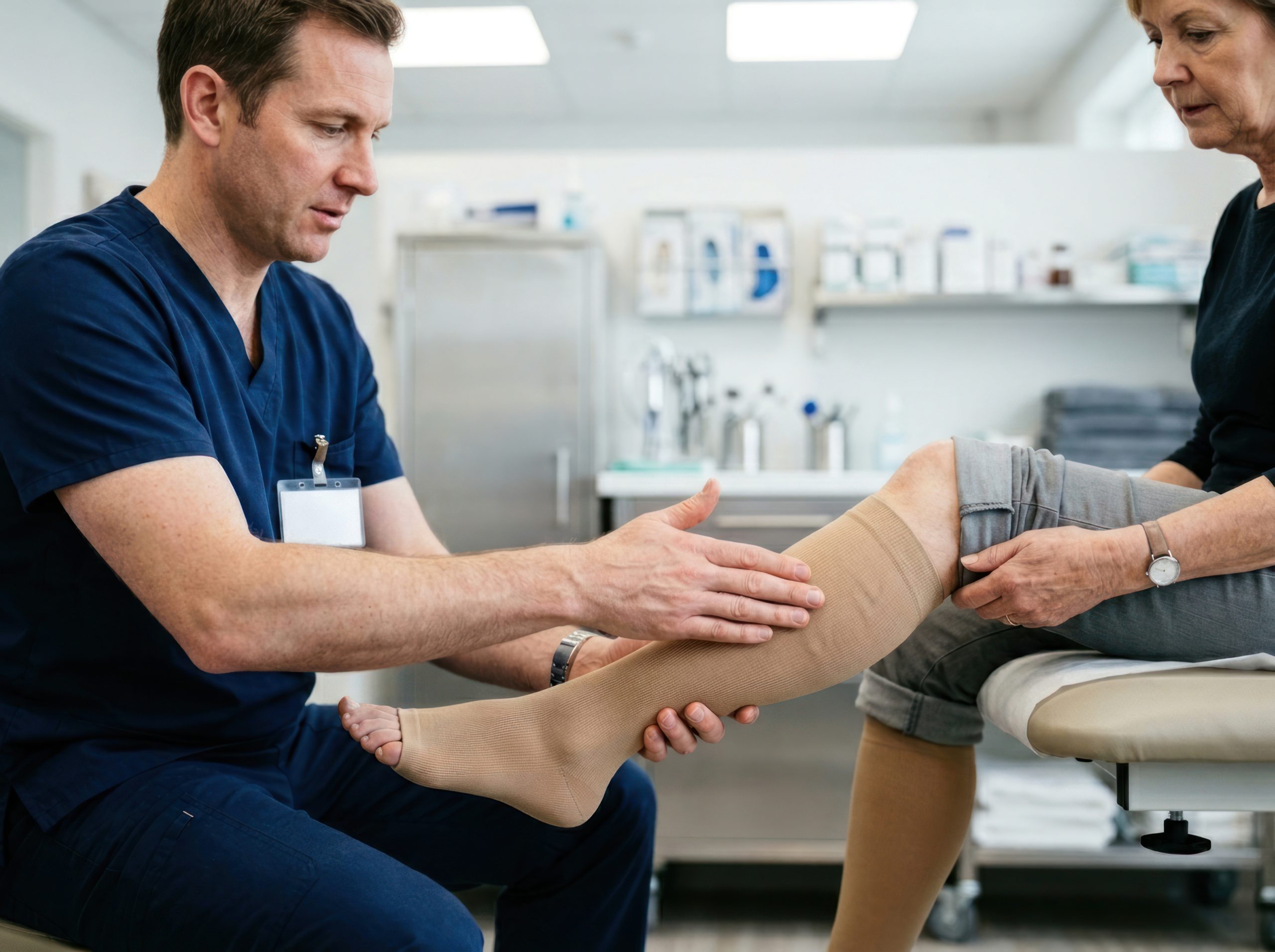
We fit a range of medical-grade compression socks and stockings in different lengths, sizes, colours and styles, so the choice can match both your needs and your day-to-day comfort. Options generally include:
- Knee-high socks, a common starting point for swelling and tired legs
- Thigh-high stockings, when higher coverage is appropriate
- Full pantyhose or waist-high styles
- Open-toe and closed-toe versions
- A range of compression levels, discussed during your assessment
Compression is measured in mmHg, which describes how firm the garment is. Insurers often look for a specific range, commonly 20 to 30 mmHg, for daily medical use. The right length and pressure depend on your symptoms, your measurements and any guidance from your doctor, which is why we personalize the recommendation rather than apply one option to everyone.
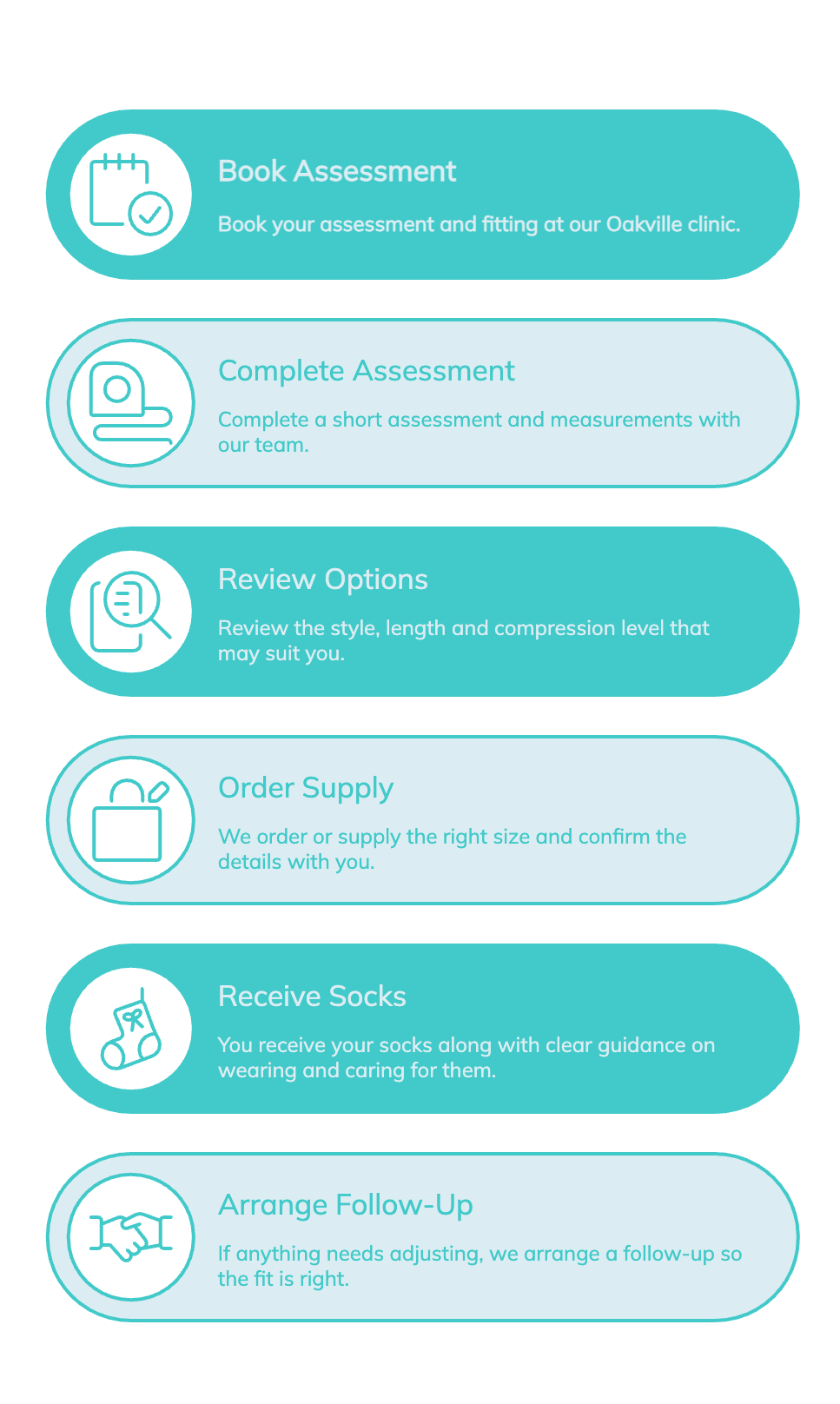
Fitting, Ordering And Follow-Up: The Process Step By Step
We keep the path simple so you always know the next step:
- Book your assessment and fitting at our Oakville clinic.
- Complete a short assessment and measurements with our team.
- Review the style, length and compression level that may suit you.
- We order or supply the right size and confirm the details with you.
- You receive your socks along with clear guidance on wearing and caring for them.
- If anything needs adjusting, we arrange a follow-up so the fit is right.
Using Veterans Affairs Canada or Canadian Armed Forces benefits? Ask our team to check the requirements for your prescribed compression garments before purchasing. Our VAC and CAF care page explains how to contact us about coverage and documentation.
What Should You Expect After Receiving Your Compression Socks?
A little preparation makes the first few weeks easier:
- Putting them on: compression socks are meant to be snug. We show you the easiest way to get them on, and donning aids can help.
- Wear schedule: many people wear them during the day and take them off at night, but follow the specific guidance we give you.
- Comfort: they should feel supportive, not painful. Numbness, tingling, colour changes in the toes or pain are reasons to take them off and call us.
- Skin checks: look over your skin when you remove them, especially if you have reduced sensation or circulation concerns.
- Care: wash as directed to keep the compression working, and replace them when they lose their stretch, often after several months of regular wear.
Everyone responds differently, so we focus on a comfortable, correct fit rather than promising a specific timeline. If something does not feel right, reach out and we will help.
Are Compression Socks Covered By Insurance In Oakville?
It depends on your plan. Many extended health benefit plans may provide some coverage for medical-grade compression socks, but the details vary, so you should confirm with your own insurer before ordering. A few things that are commonly true:
- Insurers often ask for a note from a physician that states a diagnosis, a compression level (frequently 20 to 30 mmHg) and that the socks are for daily use.
- Many plans allow a set number of pairs per year. Your plan documents will spell this out.
- Direct billing is currently available through Green Shield in many cases. For other insurers, you typically pay and submit your receipt.
- If you and a spouse both have coverage, benefits can sometimes be coordinated. We can talk you through how that works.
We can provide receipts and the documentation available through our clinic to help with your claim. We cannot guarantee that your plan will cover the cost, so we recommend checking your eligibility, required forms and any note your insurer needs in advance.
Have an insurance or fitting question? Call us at 905-827-4197 and we will walk you through what your plan is likely to need.
What Does The Evidence Say About Compression Socks?
In plain language, here is the general picture from clinical guidance. None of this guarantees a result, and your situation is assessed individually.
- Graduated compression is widely used to help manage swelling and the symptoms of venous conditions in the legs. It is considered a supportive measure rather than a cure.
- For people who stand or sit for long periods, or who travel for long stretches, compression is often suggested to support circulation and comfort.
- Correct fit and pressure matter. Guidance consistently stresses proper measurement and appropriate compression levels, and caution in people with arterial disease, advanced diabetes or certain skin conditions.
The takeaway is that compression socks can be a helpful, low-risk tool for the right person when fitted properly, while some situations need a physician’s involvement first.


A Typical Example Of How A Fitting Unfolds
The following is a general, de-identified example for illustration. It is not a specific patient and results vary from person to person.
A retail worker on their feet most of the day noticed their ankles swelling by mid-afternoon and their legs feeling heavy by closing time. During the assessment, we reviewed their health history, talked through their daily routine and took leg measurements. We recommended a knee-high graduated compression sock at a level suited to their needs and showed them how to put the socks on and care for them. At a short follow-up, we checked the fit and comfort. The focus throughout was on a correct fit and realistic expectations, not a promised outcome.
Not Ready To Book? Start With Our Fitting Guide
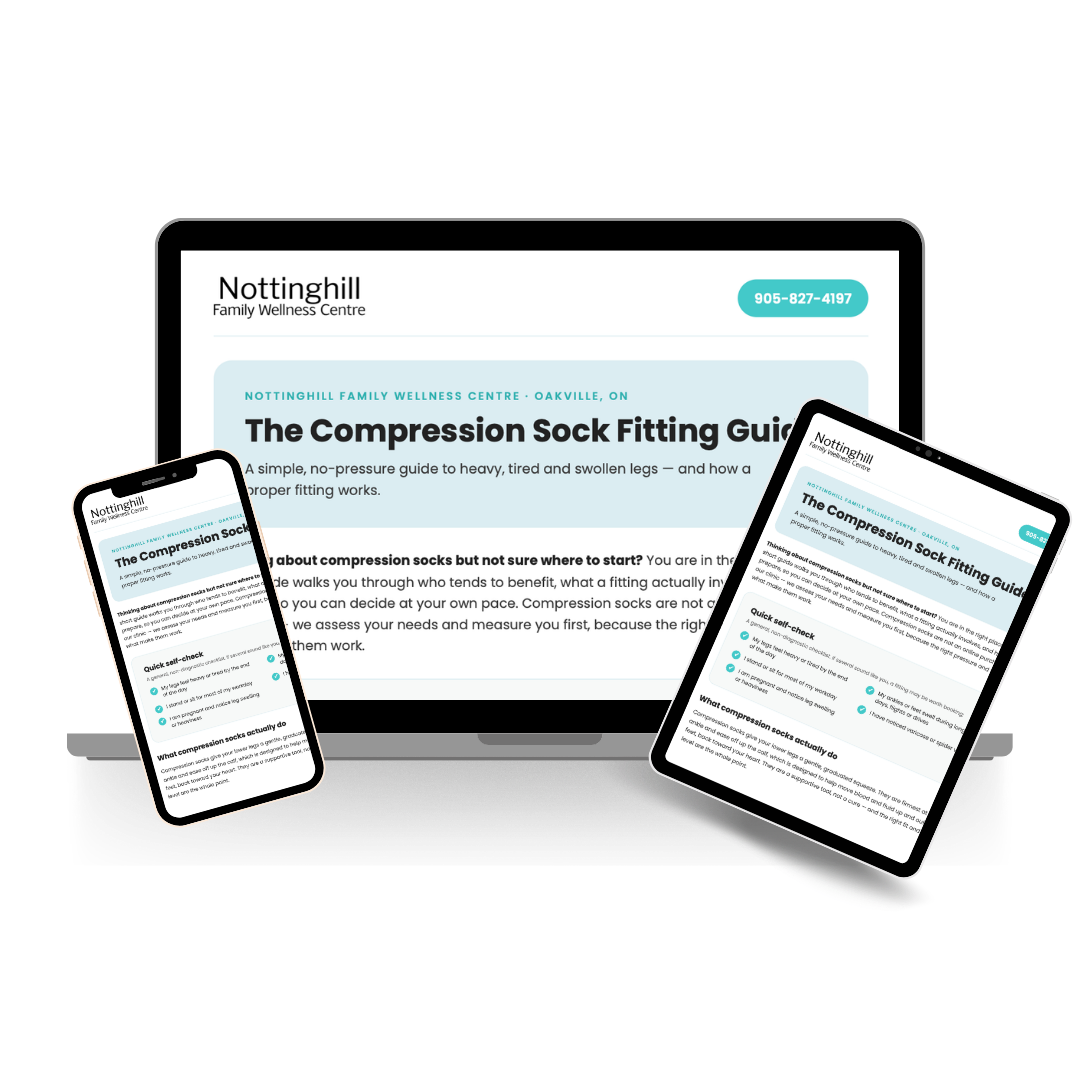
If you are still deciding, our free Compression Sock Fitting Guide walks you through who may benefit, the questions we ask, and how to prepare for a fitting. It is a simple way to learn more at your own pace.
The guide includes a short, non-diagnostic self-check. If several of these sound like you, a fitting may be worth booking:
- My legs feel heavy or tired by the end of the day
- My ankles or feet swell during long days, flights or drives
- I stand or sit for most of my workday
- I have noticed varicose or spider veins
- I am pregnant and notice leg swelling or heaviness
Compression Sock Fittings In Oakville And Nearby Communities
Nottinghill Family Wellness Centre is a chiropractic and wellness clinic in Oakville, Ontario. We have helped patients in the area for years with leg swelling, tired legs and compression sock fittings, and we welcome patients from Burlington, Milton and Hamilton as well. Your first visit is straightforward: we listen to your concerns, review your history, take careful measurements, and talk through the options so you can make an informed decision.
Book your compression sock assessment in Oakville
1131 Nottinghill Gate, Oakville, ON L6M 1K5
Prefer to learn more first? Download the Compression Sock Fitting Guide above.

References And Medical Review
- Thrombosis Canada, Air Travel-related Thrombosis (clinical guide). Canadian clinical guidance noting that graduated compression stockings reduce the symptoms of leg swelling and may help prevent DVT during travel, with the most benefit seen in travelers who have additional risk factors, while routine use is not recommended for travelers without added risk. https://thrombosiscanada.ca/clinical_guides/pdfs/91_22.pdf
- NHS inform, Compression stockings and socks. Patient guidance explaining that compression stockings and socks improve blood flow in the lower legs and help prevent blood and fluid from building up, and that they are used for conditions such as chronic venous insufficiency, varicose veins, deep vein thrombosis, swelling and leg ulcers. https://www.nhsinform.scot/tests-and-treatments/medicines-and-medical-aids/medical-aids/compression-stockings-and-socks/ NHS inform
- Cleveland Clinic, Compression Therapy: Types and Benefits. An overview of how compression garments apply gentle pressure to the lower legs, ankles and feet to improve blood flow and reduce pain and swelling, noting that knee-high stockings are the most common type and that the amount of compression needed depends on the condition. https://my.clevelandclinic.org/health/treatments/23449-compression-therapy Cleveland Clinic
- Society for Vascular Surgery and American Venous Forum, clinical practice guidelines on chronic venous disease. These guidelines identify compression therapy as a foundational, first-line component of managing chronic venous disease and venous leg ulcers, helping blood flow back to the heart, reducing swelling and supporting wound healing. Center for Vein Restoration
- National Institute for Health and Care Excellence (NICE), guidance on compression and venous leg disease. Guidance emphasizing that compression stockings should be prescribed only after assessment of arterial circulation, skin condition and the person’s ability to use them, with attention to correct sizing, regular review and shared decisions with the patient. Vein Solutions
Reviewed by: Dr. Steve Knighton, Doctor of Chiropractic, College of Chiropractors of Ontario (CCO).
Last reviewed: September 11th 2026.
Reviewed for: clinical accuracy, patient safety, scope-of-practice accuracy and service appropriateness.
Next review: at least annually, or sooner if products, evidence, policy or regulatory guidance change.
FAQs
- Do I need an appointment, or can I just buy compression socks?
- How long does a compression sock fitting take?
- Can I wear compression socks all day?
- What does mmHg mean?
- How are compression socks measured?
- Are compression socks covered by insurance?
- Do compression socks get rid of varicose veins?
- Is there any downside to wearing them?
- Can you help if my swelling is from a medical condition?
- Do you fit patients from Burlington, Milton and Hamilton?
You need an appointment. We do not sell compression socks online or off the shelf without a fitting. A short assessment and measurement help make sure the style, length and compression level are right for you, which is where most of the benefit comes from.
Usually a single, focused appointment. We review your reason for use and health history, take your measurements, and discuss the options that may suit you. We will give you a clear time estimate when you book.
In many cases, yes. A properly fitted sock is often worn through the day and removed at night, but the right schedule depends on you. We give you specific guidance, and you should take the socks off and contact us if you notice numbness, tingling, colour changes in the toes or pain
It stands for millimetres of mercury, the unit used to describe how firm the compression is. Graduated socks are firmest at the foot and ankle and ease toward the calf. Insurers often look for a range such as 20 to 30 mmHg for daily medical use.
We take several leg measurements for an accurate fit, typically your foot, your ankle and lower calf, and your upper calf or below the knee. Thigh-high garments need a couple of additional measurements higher up the leg. Good measurement is what makes the socks comfortable and effective.
It depends on your plan. Many extended health plans may offer some coverage, often with a physician's note and a compression level around 20 to 30 mmHg. Coverage varies, so confirm the details with your insurer. We can provide receipts and the documentation available through our clinic.
No. Compression socks are not a cure for varicose veins. They are a supportive tool that may help with comfort and swelling and support circulation. If you are concerned about your veins, an assessment is a sensible first step, and we will refer you on if a physician's care is appropriate.
For most people with a proper fit and no underlying contraindications, compression socks are well tolerated. Some people notice they need to use the washroom a little more at first as fluid moves out of the legs. Certain conditions need caution, which is one more reason we assess first.
It depends. We can support some situations and fit appropriate garments, and we work alongside your family doctor. If your symptoms point to something that needs medical assessment, we will tell you and help you get to the right care.
Yes. Our Oakville clinic regularly sees patients from nearby communities including Burlington, Milton and Hamilton. Booking ahead helps us schedule enough time for your assessment and fitting.
Content Reviewed By: Dr. Steve Knighton, B.Sc., D.C. on October 10, 2026
Chiropractic License Number: 5580